
Charlotte to Usulután
Usulután → CharlotteFTL freight transportation service between Charlotte and Usulután. Reliable logistics solutions for your business.
Route Description
Everything you need to know about the corridor Charlotte - Usulután
The Charlotte-Usulután corridor represents a vital logistics link connecting the industrial powerhouse of North Carolina with the growing commercial hub of eastern El Salvador. This 2,550 km cross-border route facilitates the movement of goods between the United States and Central America, serving as a strategic artery for companies engaged in international trade. The corridor traverses diverse landscapes and crosses multiple international borders, requiring specialized expertise in customs procedures and cross-border documentation.
The economic significance of this route is underscored by the complementary industrial activities in both regions. Charlotte serves as a major distribution center for automotive parts, electronics, and consumer goods, while Usulután's industrial parks and free trade zones attract manufacturing and assembly operations. This creates a dynamic flow of raw materials, components, and finished products between the two locations. The corridor also supports the agricultural sector, facilitating the export of produce and the import of farming equipment.
Transportation infrastructure along this route includes major highways such as I-85, I-10, and CA-1, providing reliable connectivity through key transit points. The route typically involves crossing at major ports of entry where C-TPAT-certified carriers can expedite processing. Control Terrestre's expertise in managing cross-border operations ensures seamless coordination of documentation, compliance with customs regulations, and efficient transit times. Our strategic partnerships with local carriers in both countries provide the flexibility and reliability needed to maintain consistent service on this critical international corridor.
Services for this Route
Available services for the corridor Charlotte - Usulután
 Origin
Charlotte
Charlotte, North Carolina stands as a strategic logistics hub in the southeastern United States, offering exceptional connectivity through its extensive transportation network. The city's location provides access to major interstate highways including I-85 and I-77, facilitating efficient distribution throughout the region. Charlotte's robust infrastructure includes the Charlotte Douglas International Airport, one of the busiest in the country, and the nearby ports of Charleston and Wilmington, creating multiple options for multimodal freight movement.
The region's economy is anchored by diverse industries including banking and finance, automotive manufacturing, energy, and technology. Major employers in the area include Bank of America, Duke Energy, and numerous Fortune 500 companies that rely on sophisticated supply chain operations. Charlotte's concentration of warehouses, distribution centers, and industrial parks makes it an ideal origin point for full truckload shipments, with specialized facilities capable of handling everything from standard palletized goods to oversized equipment and temperature-sensitive products.
 Destination
Usulután
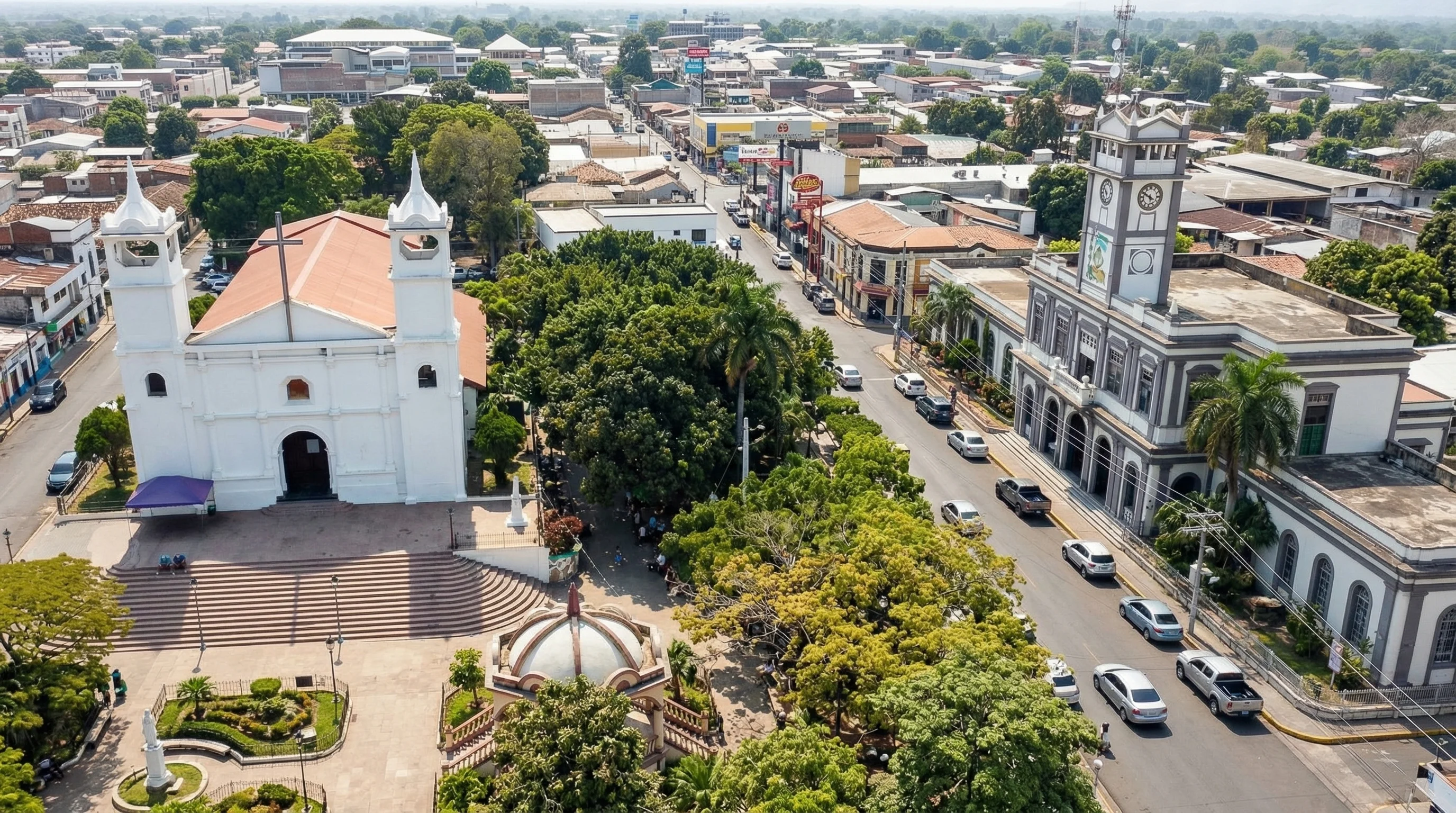
Usulután, located in eastern El Salvador, serves as a strategic gateway to Central America's growing markets and manufacturing sectors. The city's position near major transportation routes provides access to the region's expanding industrial corridors and free trade zones. Usulután's infrastructure includes connections to the CA-1 Pan-American Highway and proximity to the Port of La Unión, facilitating both domestic distribution and international trade throughout Central America.
The local economy benefits from a mix of agricultural activities and emerging manufacturing operations, with particular strength in food processing, textiles, and assembly operations. The region's industrial parks attract foreign investment and support the production of goods destined for both regional and international markets. Usulután's development as a logistics center is further enhanced by its role in supporting the surrounding agricultural areas, creating demand for specialized transportation services including refrigerated and dedicated freight solutions.










