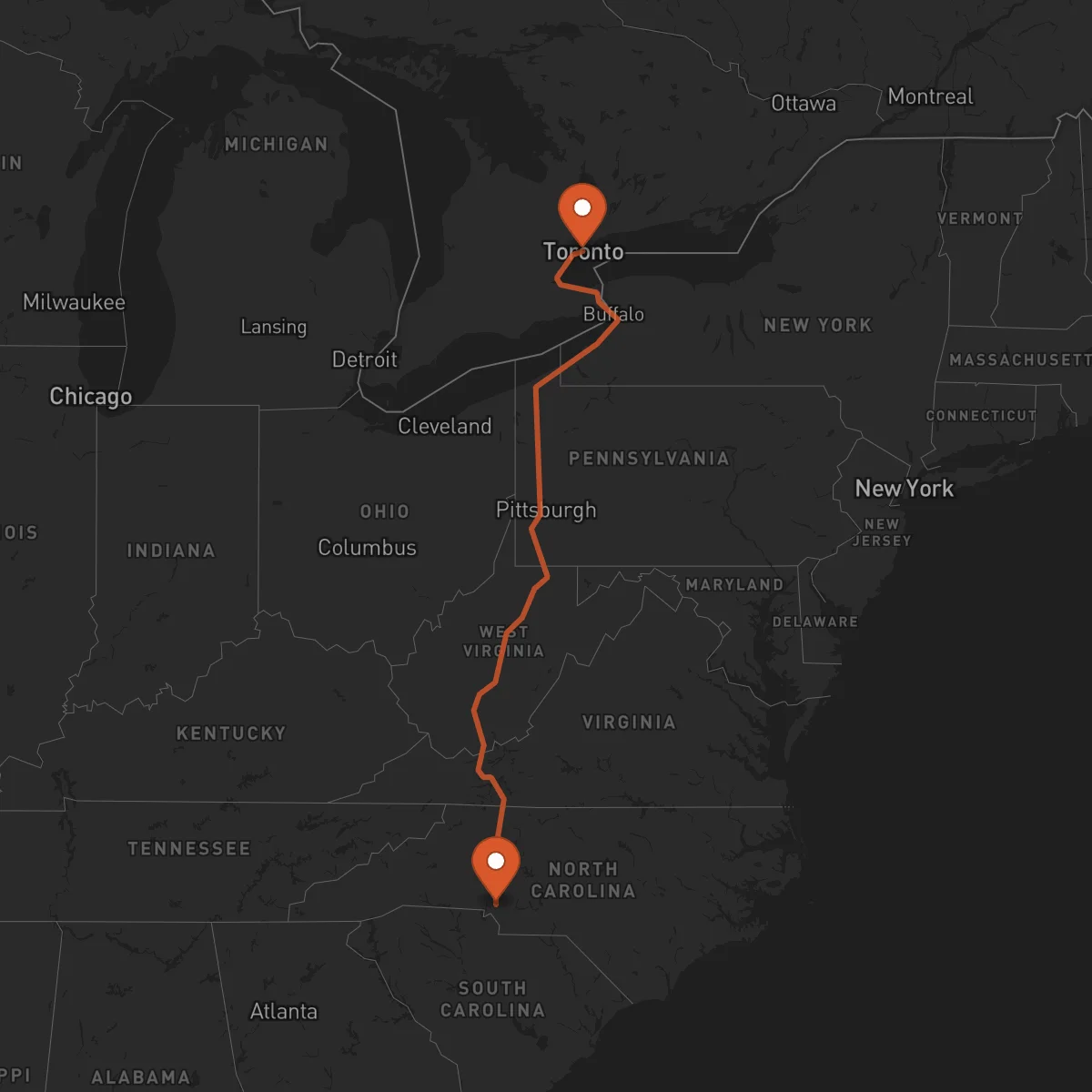
Charlotte to Toronto
Toronto → CharlotteFTL freight transportation service between Charlotte and Toronto. Reliable logistics solutions for your business.
Route Description
Everything you need to know about the corridor Charlotte - Toronto
The logistics corridor between Charlotte, North Carolina, and Toronto, Ontario, represents a vital cross-border freight route connecting two major economic hubs in North America. This 945-kilometer corridor links the southeastern United States manufacturing powerhouse with Canada's largest financial and commercial center. The route traverses the Appalachian Mountains and crosses through multiple states and provinces, making it a strategic artery for North American trade. Control Terrestre specializes in facilitating seamless freight movement along this corridor, ensuring your cargo reaches its destination efficiently and reliably.
Services for this Route
Available services for the corridor Charlotte - Toronto
 Origin
Charlotte
Charlotte serves as a strategic logistics hub in the southeastern United States, with its location providing excellent access to major manufacturing centers in the Carolinas and Georgia. The city is a financial services powerhouse, hosting the headquarters of major banks, while also being a significant manufacturing center for automotive, aerospace, and energy sectors. Charlotte's transportation infrastructure includes the Charlotte Douglas International Airport, extensive highway networks including I-85 and I-77, and rail connections that facilitate efficient cargo movement throughout the region.
 Destination
Toronto stands as Canada's primary economic engine and the fourth-largest city in North America, offering unparalleled access to the Canadian market. The city's strategic location on Lake Ontario provides multimodal transportation options, while its extensive highway network connects to major Canadian and U.S. markets. Toronto's economy is diverse, with strong financial services, technology, manufacturing, and healthcare sectors. The city's transportation infrastructure includes Pearson International Airport, the Port of Toronto, and major highways such as the 401, making it an ideal destination for cross-border freight operations.










