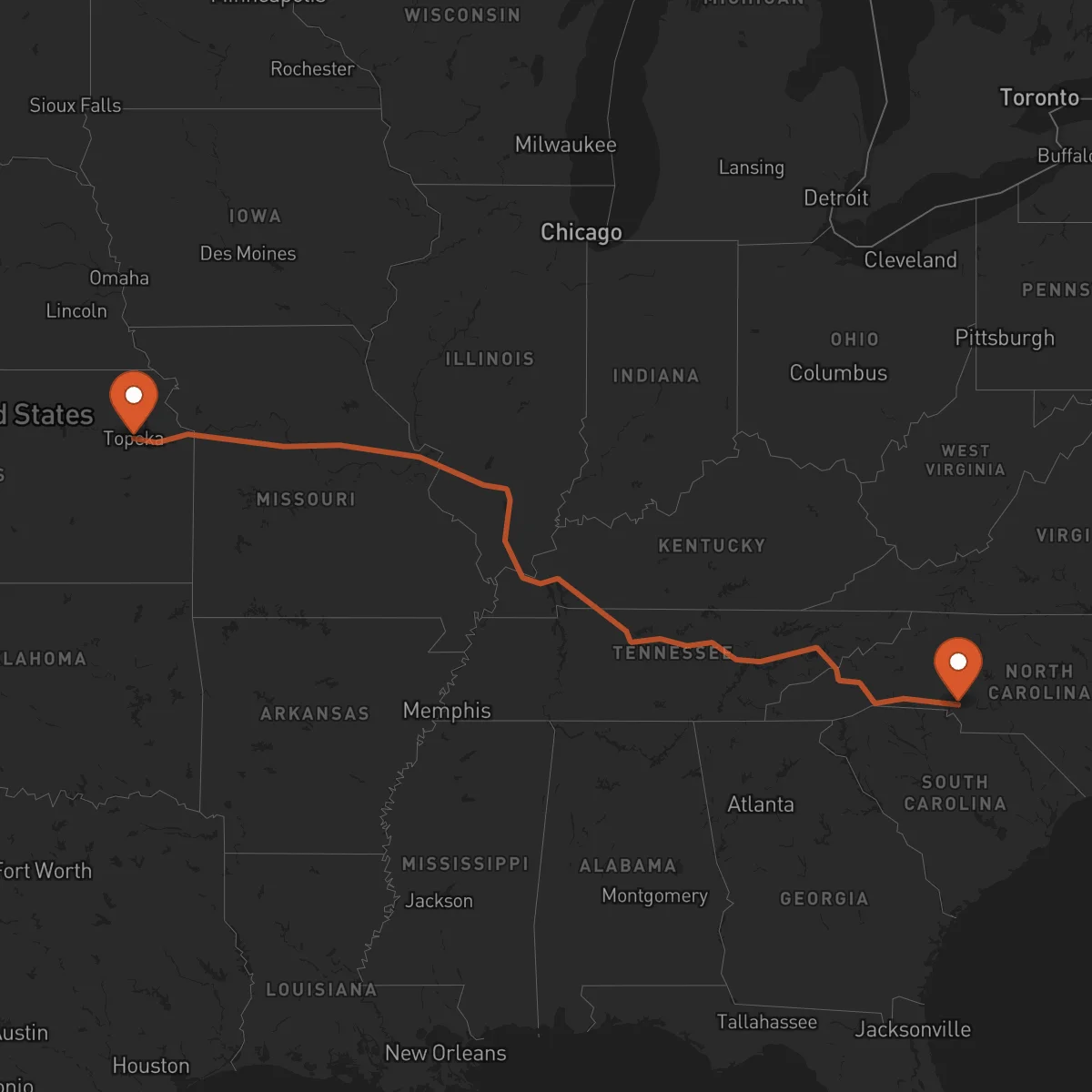
Charlotte to Topeka
Topeka → CharlotteFTL freight transportation service between Charlotte and Topeka. Reliable logistics solutions for your business.
Route Description
Everything you need to know about the corridor Charlotte - Topeka
The logistics corridor connecting Charlotte, North Carolina to Topeka, Kansas represents a vital transportation link across the southeastern United States to the Midwest. This 1380 km route traverses diverse economic regions, connecting major manufacturing hubs with agricultural and industrial centers. The corridor facilitates the movement of goods between the dynamic Charlotte metropolitan area and the growing logistics market in Topeka, supporting supply chains that span multiple industries and economic sectors.
The route primarily follows major interstate highways, including I-77, I-70, and I-335, providing reliable and efficient transportation infrastructure. This well-established corridor supports the movement of manufactured goods, agricultural products, and industrial equipment between the Southeast and Midwest regions. The transportation network along this route offers multiple options for freight movement, ensuring consistent delivery schedules and flexible routing options for businesses operating across these regions.
Control Terrestre specializes in providing comprehensive FTL (Full Truckload) transportation services along this strategic corridor. Our experienced team understands the unique requirements of moving freight between Charlotte and Topeka, offering dedicated equipment and professional drivers who are familiar with the route's specific challenges and opportunities. We provide customized solutions for businesses needing reliable, full truckload transportation between these important economic centers.
Services for this Route
Available services for the corridor Charlotte - Topeka
 Origin
Charlotte
Charlotte, North Carolina serves as a major logistics hub in the southeastern United States, offering strategic access to both coastal and inland markets. The city's location provides excellent connectivity through major interstate highways, including I-77 and I-85, facilitating efficient distribution throughout the region. Charlotte's robust transportation infrastructure includes the Charlotte Douglas International Airport and the Port of Wilmington, creating a comprehensive multimodal logistics network that supports diverse freight movements.
The Charlotte metropolitan area is home to a diverse economic base, with strong presence in banking and financial services, automotive manufacturing, energy, and technology sectors. Major employers include Bank of America, Duke Energy, and various manufacturing facilities that require consistent freight transportation. The region's industrial parks and distribution centers are strategically located to maximize logistics efficiency, making Charlotte an ideal origin point for businesses requiring reliable transportation to destinations across the country.
 Destination
Topeka
Topeka, Kansas represents a growing logistics market in the Midwest, strategically positioned to serve both regional and national distribution needs. The city's location provides access to major transportation routes, including I-70 and the Topeka Regional Airport, creating efficient connections to markets across the central United States. Topeka's transportation infrastructure supports various freight movements, with proximity to rail yards and highway systems that facilitate seamless cargo transfers.










