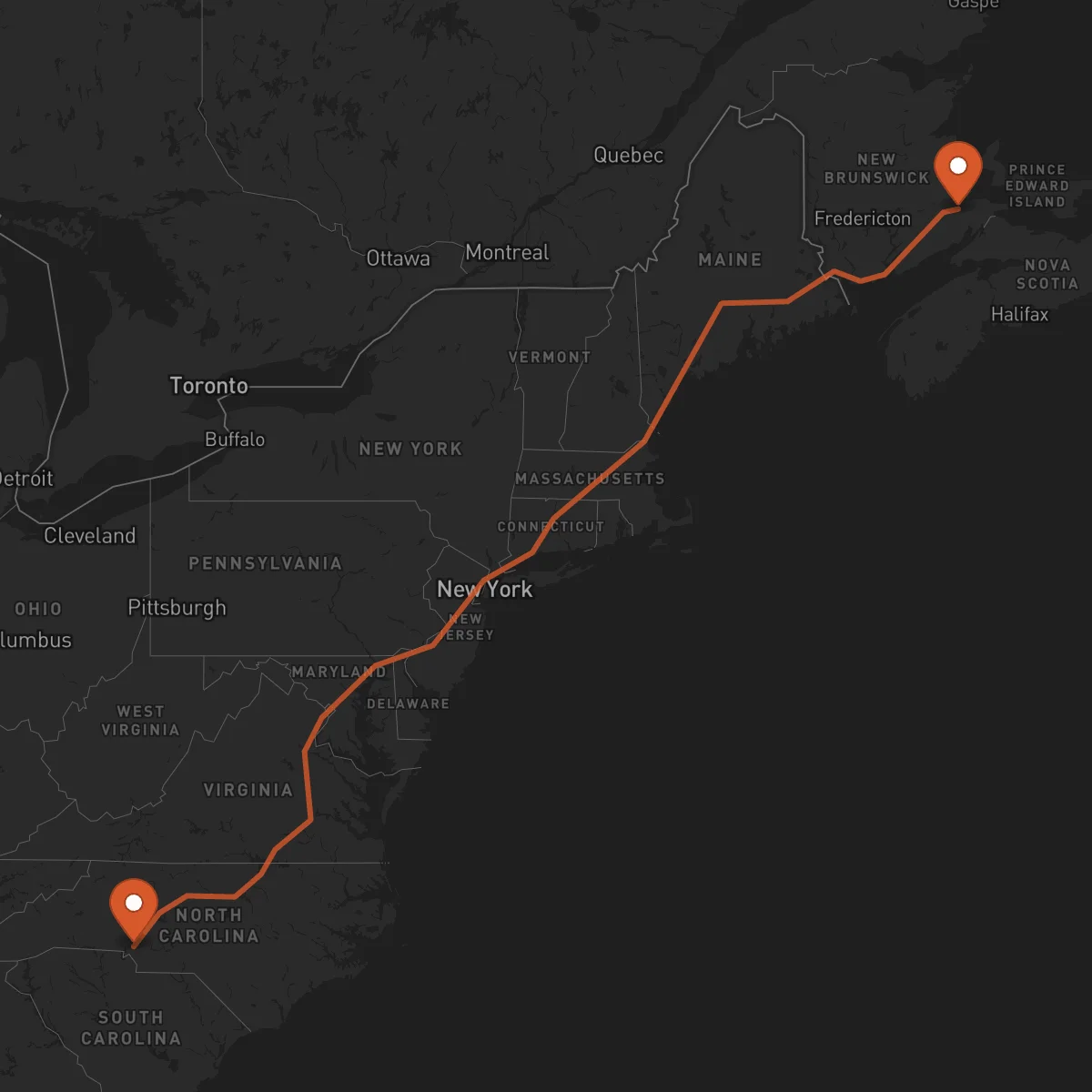
Charlotte to Moncton
Moncton → CharlotteFTL freight transportation service between Charlotte and Moncton. Reliable logistics solutions for your business.
Route Description
Everything you need to know about the corridor Charlotte - Moncton
The Charlotte-Moncton corridor represents a vital cross-border logistics connection between the southeastern United States and Atlantic Canada. This 1809 km route traverses diverse landscapes and economic regions, connecting the industrial powerhouse of North Carolina with the maritime gateway of New Brunswick. The corridor serves as a critical link for companies requiring reliable transportation between these two strategic locations.
The route primarily follows major transportation arteries including I-77, I-81, and I-95, connecting through key hubs such as Washington D.C., Baltimore, and New York before crossing into Canada. This infrastructure provides multiple routing options to optimize transit times and costs. The corridor passes through major manufacturing, distribution, and logistics centers, making it ideal for companies in automotive, aerospace, electronics, and industrial goods sectors.
Control Terrestre specializes in managing the complexities of cross-border operations on this corridor. Our experienced team navigates customs procedures, regulatory compliance, and documentation requirements to ensure seamless movement of goods between the United States and Canada. We provide dedicated FTL services with real-time tracking, specialized equipment options, and experienced drivers familiar with cross-border protocols. Our strategic partnerships with certified carriers ensure consistent service quality and reliable transit times for your critical shipments.
Services for this Route
Available services for the corridor Charlotte - Moncton
 Origin
Charlotte
Charlotte, North Carolina serves as a major logistics hub in the southeastern United States, strategically positioned to support distribution networks throughout the region. The city's central location provides excellent access to major transportation corridors including I-77, I-85, and I-40, connecting businesses to markets across the eastern seaboard and beyond. Charlotte's robust infrastructure includes the Charlotte Douglas International Airport, one of the busiest airports in the world, and the Norfolk Southern and CSX rail networks, offering multimodal transportation options.
The region's economy is diverse, with strong presence in banking and finance, automotive manufacturing, energy, and technology sectors. Major employers include Bank of America, Duke Energy, and numerous automotive suppliers serving the nearby manufacturing facilities. This economic diversity creates consistent demand for freight transportation services, particularly for full truckload shipments moving between production facilities, distribution centers, and end customers.
 Destination
Moncton
Moncton, New Brunswick represents a strategic logistics gateway to Atlantic Canada, positioned at the geographic center of the Maritime provinces. The city's location at the intersection of the Trans-Canada Highway and key regional routes makes it an ideal distribution point for companies serving New Brunswick, Nova Scotia, and Prince Edward Island. Moncton's transportation infrastructure includes the Greater Moncton Roméo LeBlanc International Airport and the CN rail network, providing comprehensive multimodal capabilities.
The local economy benefits from strong sectors in transportation and logistics, aerospace, information technology, and retail distribution. Moncton's designation as a bilingual city (English and French) enhances its role as a commercial center for both domestic Canadian and international trade. The port of Halifax, while not in Moncton, is accessible within a few hours' drive, making Moncton an important inland logistics hub for companies utilizing maritime shipping services for international trade.










