Charlotte to Durham
Durham → CharlotteFTL freight transportation service between Charlotte and Durham. Reliable logistics solutions for your business.
Route Description
Everything you need to know about the corridor Charlotte - Durham
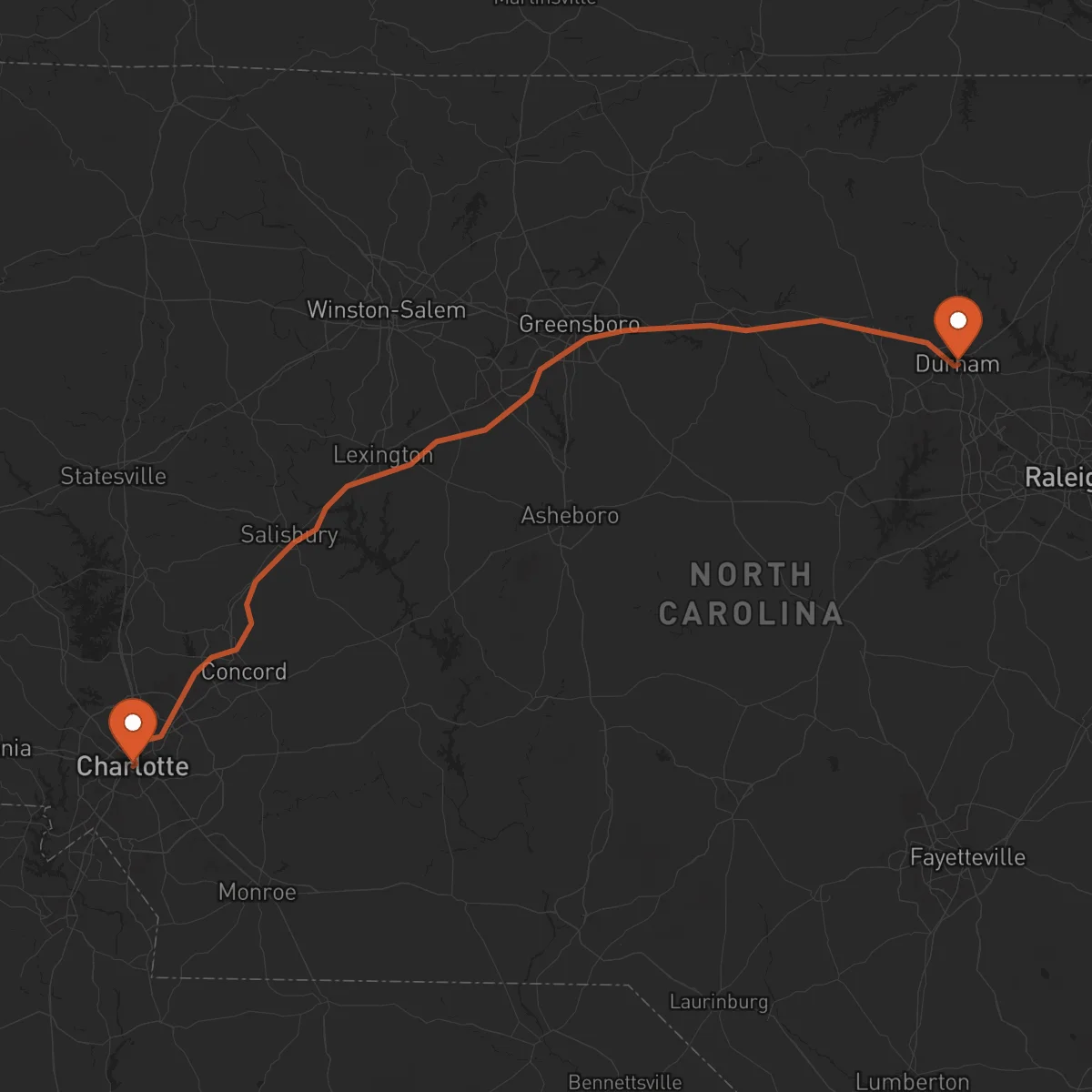
The logistics corridor connecting Charlotte to Durham represents a vital link in North Carolina's transportation network, spanning approximately 195 kilometers through the heart of the state's economic engine. This route serves as a critical artery for commerce between two of North Carolina's most dynamic urban centers, facilitating the movement of goods that power the region's diverse economy. The corridor traverses the Piedmont region, connecting the state's largest city with its renowned Research Triangle, creating a seamless flow of commerce between manufacturing hubs, research facilities, and distribution centers.
The Charlotte-Durham corridor benefits from exceptional infrastructure, primarily utilizing Interstate 85, one of the nation's most important freight corridors. This highway provides direct, efficient access between the two cities, featuring multiple lanes, modern rest areas, and advanced traffic management systems. The route passes through several key economic zones, including the Greensboro-Winston-Salem-High Point triad, creating additional opportunities for logistics operations and last-mile delivery services. The region's commitment to infrastructure development ensures reliable transit times and minimal disruptions to freight movement.
This corridor serves a diverse range of industries, with manufacturing, technology, healthcare, and research sectors dominating the freight flow. Charlotte's status as a major financial center and transportation hub complements Durham's strengths in research and development, creating a symbiotic relationship that drives freight demand. The Research Triangle Park area, located between Durham and Raleigh, generates significant high-value, time-sensitive shipments requiring specialized handling and expedited services. Additionally, the corridor supports the agricultural sector, with products moving between rural areas and urban distribution centers.
Control Terrestre optimizes operations on this corridor through our network of certified transportation partners and specialized equipment. We understand the unique requirements of time-sensitive shipments between these economic centers, offering dedicated services that ensure your cargo moves efficiently and securely. Our expertise in navigating this route, combined with real-time tracking and communication, provides the reliability that businesses in both Charlotte and Durham demand. Whether you're shipping manufacturing components from Charlotte's industrial zones or delivering research materials to Durham's laboratories, we tailor our FTL solutions to meet your specific needs, ensuring your supply chain remains uninterrupted.
Services for this Route
Available services for the corridor Charlotte - Durham
 Origin
Charlotte
Charlotte stands as a powerhouse of commerce and transportation in the southeastern United States, strategically positioned to serve as a major logistics hub. The city's location at the intersection of major interstates, including I-85 and I-77, provides exceptional connectivity to regional and national markets. Charlotte's infrastructure includes the Charlotte Douglas International Airport, one of the busiest airports in the world by aircraft movements, and the Norfolk Southern Railway's extensive network, creating multiple transportation options for freight movement. The city's commitment to logistics development is evident in its modern warehousing districts and distribution centers strategically located near major transportation arteries.
The economic landscape of Charlotte is diverse and robust, with the financial services sector leading the way as the second-largest banking center in the United States. This industry generates significant freight demand for office equipment, technology infrastructure, and secure document transportation. Manufacturing also plays a crucial role, with companies producing everything from textiles and furniture to advanced aerospace components. The energy sector, particularly in renewable technologies and traditional power generation, creates specialized shipping needs for heavy equipment and sensitive materials. Charlotte's growing technology ecosystem and healthcare industry further diversify the freight profile, requiring everything from temperature-controlled shipments to high-security transport of valuable equipment.
 Destination
Durham
Durham occupies a unique position as the anchor of North Carolina's renowned Research Triangle, creating a distinctive logistics environment characterized by high-value, specialized freight movements. The city's strategic location within the triangle formed by Raleigh, Durham, and Chapel Hill provides access to a concentration of research institutions, universities, and technology companies unmatched in the region. Durham's transportation infrastructure includes major highways like I-85 and I-40, facilitating efficient connections to both regional and national markets. The city's commitment to smart growth and sustainable development extends to its logistics operations, with modern distribution facilities designed to handle the specialized needs of research and technology sectors.
The economic foundation of Durham rests on innovation, research, and education, with the Research Triangle Park serving as a global center for technology and life sciences. This creates a unique freight profile dominated by high-value, time-sensitive shipments including laboratory equipment, pharmaceutical products, and advanced technology components. The healthcare sector, anchored by major medical institutions, generates specialized shipping needs for medical supplies, equipment, and specimens requiring careful handling. Durham's growing startup ecosystem and established technology companies create demand for just-in-time delivery of components and rapid prototyping materials. The city's commitment to research and development also means frequent shipments of experimental materials, prototypes, and specialized equipment that require dedicated handling and security measures.










