Charlotte to Concord
Concord → CharlotteFTL freight transportation service between Charlotte and Concord. Reliable logistics solutions for your business.
Route Description
Everything you need to know about the corridor Charlotte - Concord
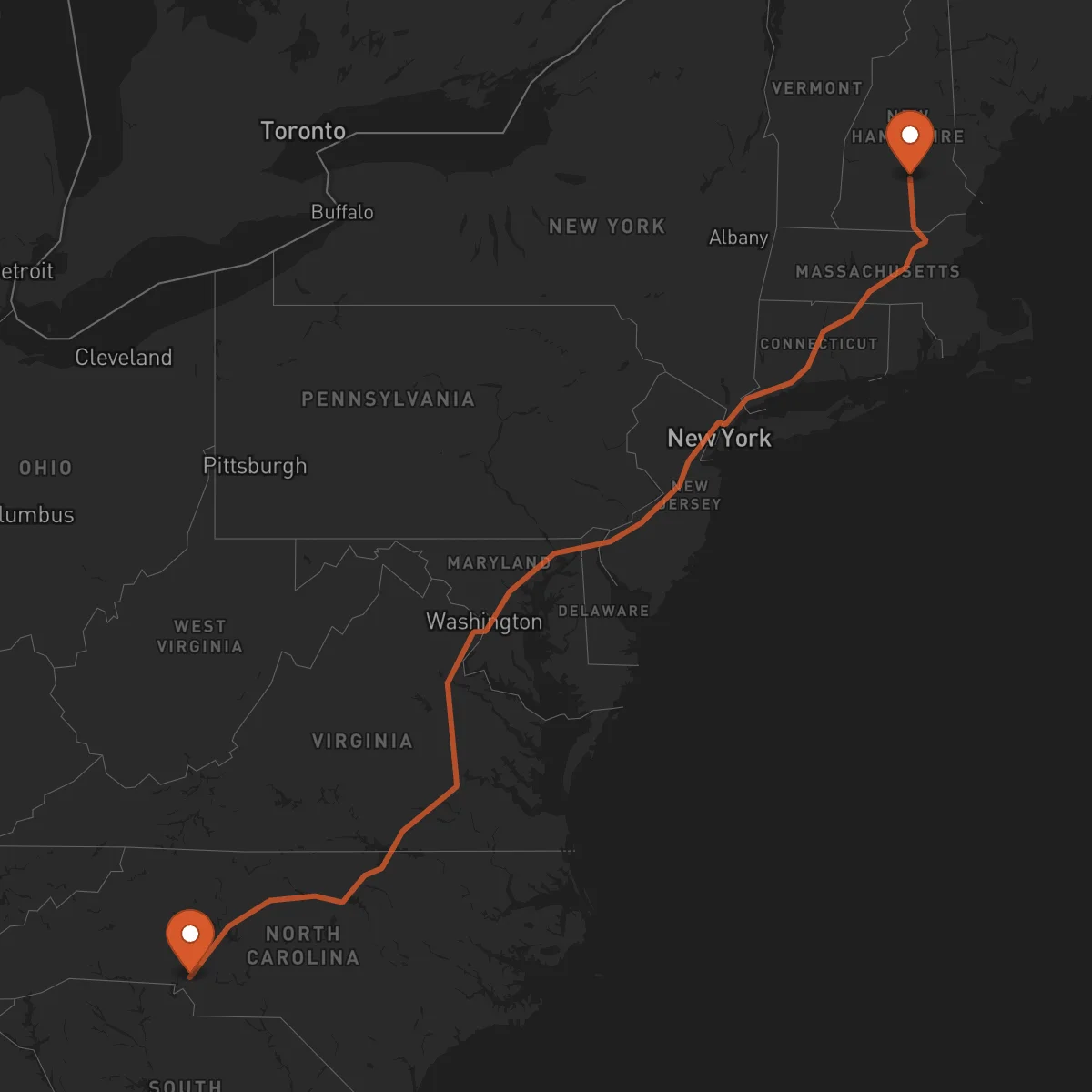
The logistics corridor connecting Charlotte, North Carolina, to Concord, New Hampshire, represents a vital transportation link spanning approximately 1,194 kilometers across the eastern United States. This north-south route traverses diverse landscapes and connects two significant economic hubs, facilitating the movement of goods between the bustling Southeast and the industrious Northeast. The corridor serves as a crucial artery for businesses operating across multiple states, enabling efficient distribution networks that support regional commerce and industry.
The economic significance of this corridor is underscored by the complementary industrial strengths of both regions. Charlotte's robust financial services sector and growing technology industry create demand for specialized equipment and technology products, while Concord's manufacturing base and healthcare sector require consistent supply chains for raw materials and finished goods. The route passes through major metropolitan areas including Washington D.C., Baltimore, and Philadelphia, providing access to millions of consumers and businesses along the way.
Transportation infrastructure along this corridor is well-developed, with Interstate 85 and Interstate 95 forming the primary north-south arteries. These major highways offer multiple lanes, rest areas, and truck stops designed to accommodate commercial freight traffic. The route also connects to numerous state highways and secondary roads, providing flexibility for last-mile delivery and specialized routing needs. Control Terrestre leverages this comprehensive infrastructure network to provide reliable full truckload (FTL) services, ensuring that your cargo moves efficiently and securely from origin to destination.
Services for this Route
Available services for the corridor Charlotte - Concord
 Origin
Charlotte
Charlotte, North Carolina, serves as a strategic logistics hub in the southeastern United States, offering exceptional connectivity and infrastructure for freight transportation. The city's location provides access to major transportation networks, including Interstates 77, 85, and 485, which facilitate seamless movement of goods throughout the region and beyond. Charlotte Douglas International Airport, one of the busiest in the nation, enhances the city's logistics capabilities by providing air cargo services that complement ground transportation options.
The economic landscape of Charlotte is diverse and dynamic, with strong presence in financial services, energy, healthcare, and advanced manufacturing. The city hosts the headquarters of major banking institutions and energy companies, creating substantial demand for reliable freight services to support their operations. Charlotte's growing technology sector and automotive manufacturing facilities, including plants operated by major manufacturers, further contribute to the robust logistics ecosystem. The Port of Charleston, located approximately 300 miles away, provides ocean freight connectivity that extends Charlotte's reach to international markets.
 Destination
Concord
Concord, New Hampshire, occupies a strategic position in New England's logistics network, offering unique advantages for freight transportation and distribution. The city's location provides access to the region's major highways, including Interstate 93 and Interstate 89, which connect to Boston, Montreal, and other key Northeast markets. Manchester-Boston Regional Airport, located nearby, offers additional air cargo capabilities that complement ground transportation services.
The economic environment in Concord and surrounding New Hampshire reflects the state's business-friendly climate and strong industrial base. The region is known for its advanced manufacturing, particularly in high-tech industries, precision engineering, and medical device production. Healthcare services represent another significant sector, with numerous hospitals and medical facilities requiring consistent supply chains for equipment and pharmaceuticals. New Hampshire's proximity to Boston and other major Northeast markets creates opportunities for efficient distribution while benefiting from the state's favorable tax environment. The region's educated workforce and focus on innovation make it an attractive destination for companies requiring reliable logistics support.










