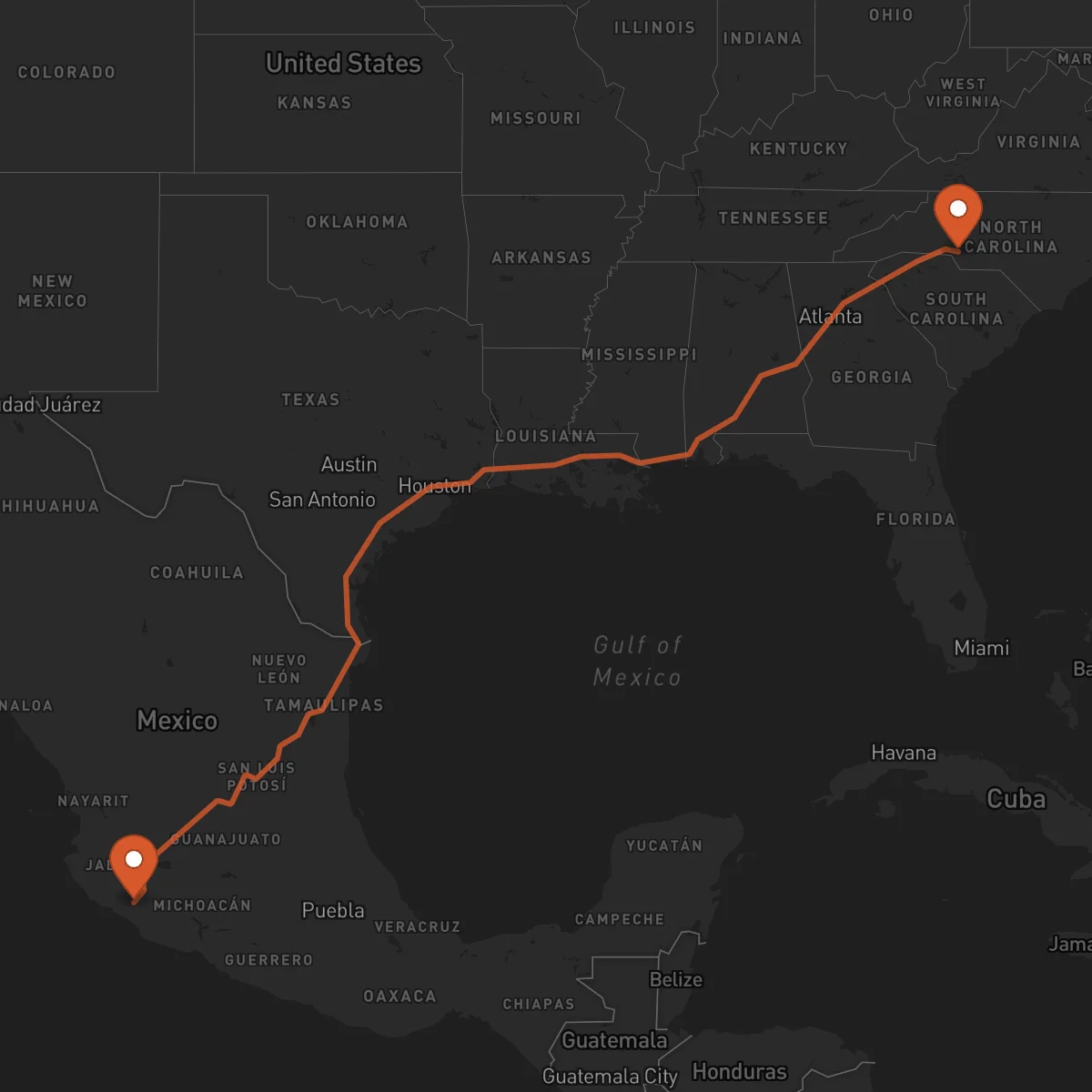
Charlotte to Colima
Colima → CharlotteFTL freight transportation service between Charlotte and Colima. Reliable logistics solutions for your business.
Route Description
Everything you need to know about the corridor Charlotte - Colima
The logistics corridor connecting Charlotte, North Carolina to Colima, Mexico represents a vital cross-border trade route spanning approximately 2,864 kilometers. This corridor serves as a crucial link between the southeastern United States manufacturing hub and Mexico's Pacific coast industrial centers. The route facilitates the movement of diverse cargo types, from automotive components and electronics to agricultural products and consumer goods, supporting the robust trade relationship between these two regions.
The transportation infrastructure along this corridor includes major interstate highways such as I-85, I-40, and Mexican Federal Highways 85D and 54D. These well-maintained roadways ensure reliable transit times for full truckload shipments. The corridor crosses at key border points, with Laredo being the primary entry point into Mexico, offering efficient customs processing for qualified carriers. Control Terrestre's expertise in cross-border operations ensures seamless transitions through these checkpoints, minimizing delays and maintaining cargo security throughout the journey.
This corridor particularly benefits industries such as automotive manufacturing, electronics, and agriculture. Charlotte's proximity to major automotive assembly plants and its status as a financial services center creates significant outbound freight volumes. Meanwhile, Colima's strategic location near Guadalajara's manufacturing corridor and its port facilities make it an ideal destination for both finished goods and raw materials. Control Terrestre's specialized services, including dedicated transportation and expedited freight options, provide tailored solutions for businesses leveraging this important trade route.
Services for this Route
Available services for the corridor Charlotte - Colima
 Origin
Charlotte
Charlotte, North Carolina serves as a strategic logistics hub in the southeastern United States, offering excellent connectivity through its extensive transportation infrastructure. The city is served by major interstate highways including I-85 and I-77, providing direct access to regional and national freight networks. Charlotte Douglas International Airport ranks among the busiest cargo airports in the country, while the nearby ports of Charleston and Wilmington offer ocean freight options. The region's robust rail network, operated by Norfolk Southern and CSX, further enhances its multimodal capabilities.
The Charlotte metropolitan area is a powerhouse for several key industries, including banking and financial services, energy, and advanced manufacturing. The region hosts major corporate headquarters and has seen significant growth in the automotive and electric vehicle sectors. This industrial diversity generates substantial freight volumes, particularly in full truckload shipments of manufactured goods, automotive parts, and technology products. The city's central location in the Southeast makes it an ideal origin point for cross-border shipments to Mexico and other destinations.
 Destination
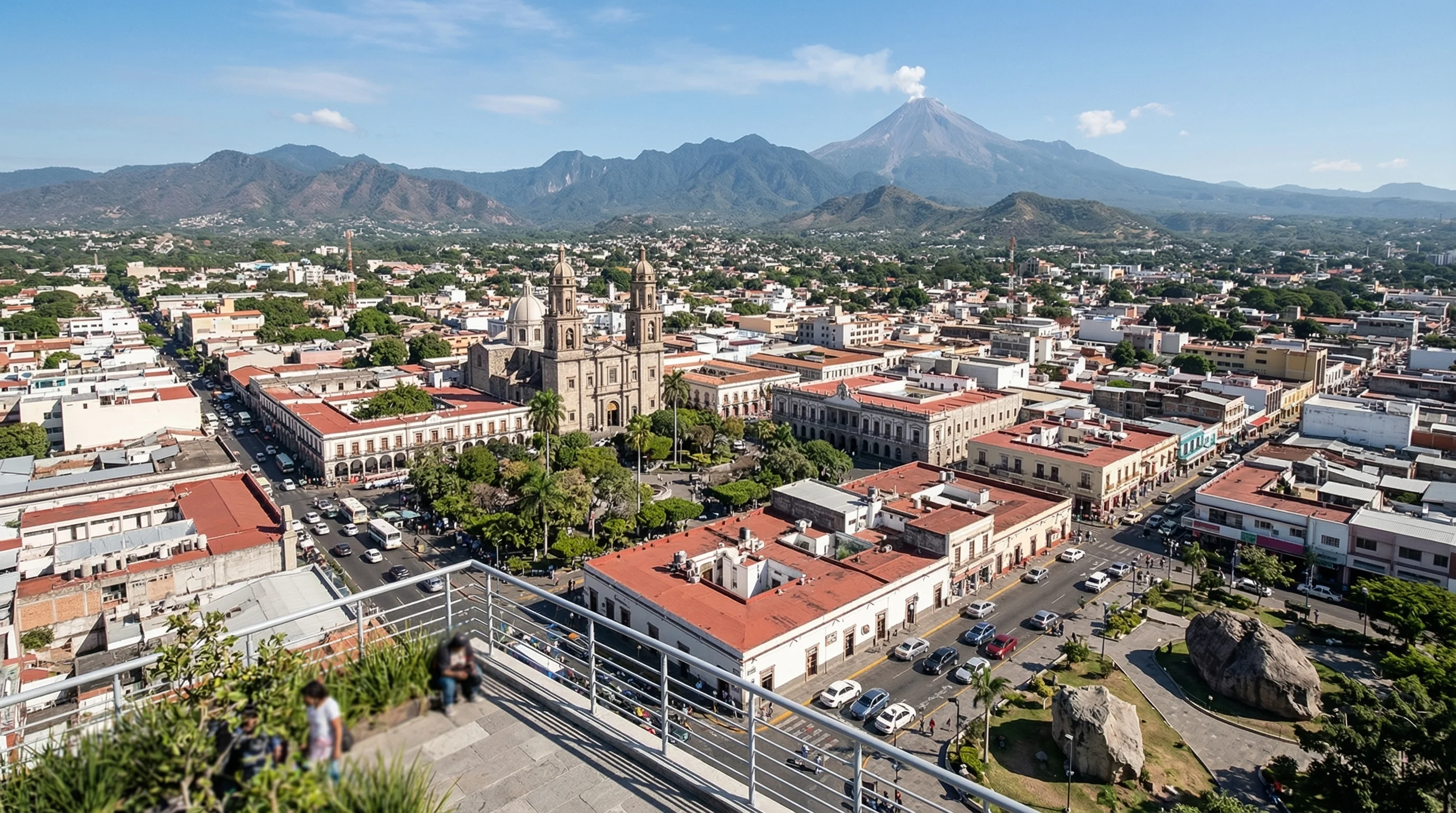
Colima, located on Mexico's Pacific coast, occupies a strategic position in the country's logistics network. The state benefits from its proximity to Manzanillo, Mexico's busiest port, which handles a significant portion of the nation's containerized cargo. The region is well-connected through Federal Highways 54D and 80, providing efficient ground transportation links to major industrial centers. Colima's infrastructure includes the Playa de Oro International Airport and robust telecommunications networks, supporting its role as a distribution hub.
The local economy of Colima is diverse, with strong presence in agriculture, particularly in the production of limes, coconuts, and palm oil. The state has also attracted investment in manufacturing, especially in the automotive and electronics sectors. Colima's strategic location near Guadalajara, one of Mexico's primary industrial corridors, enhances its importance in the supply chain. The region's growing industrial base creates demand for reliable full truckload transportation services, particularly for time-sensitive shipments and specialized cargo moving between Mexico and the United States.










