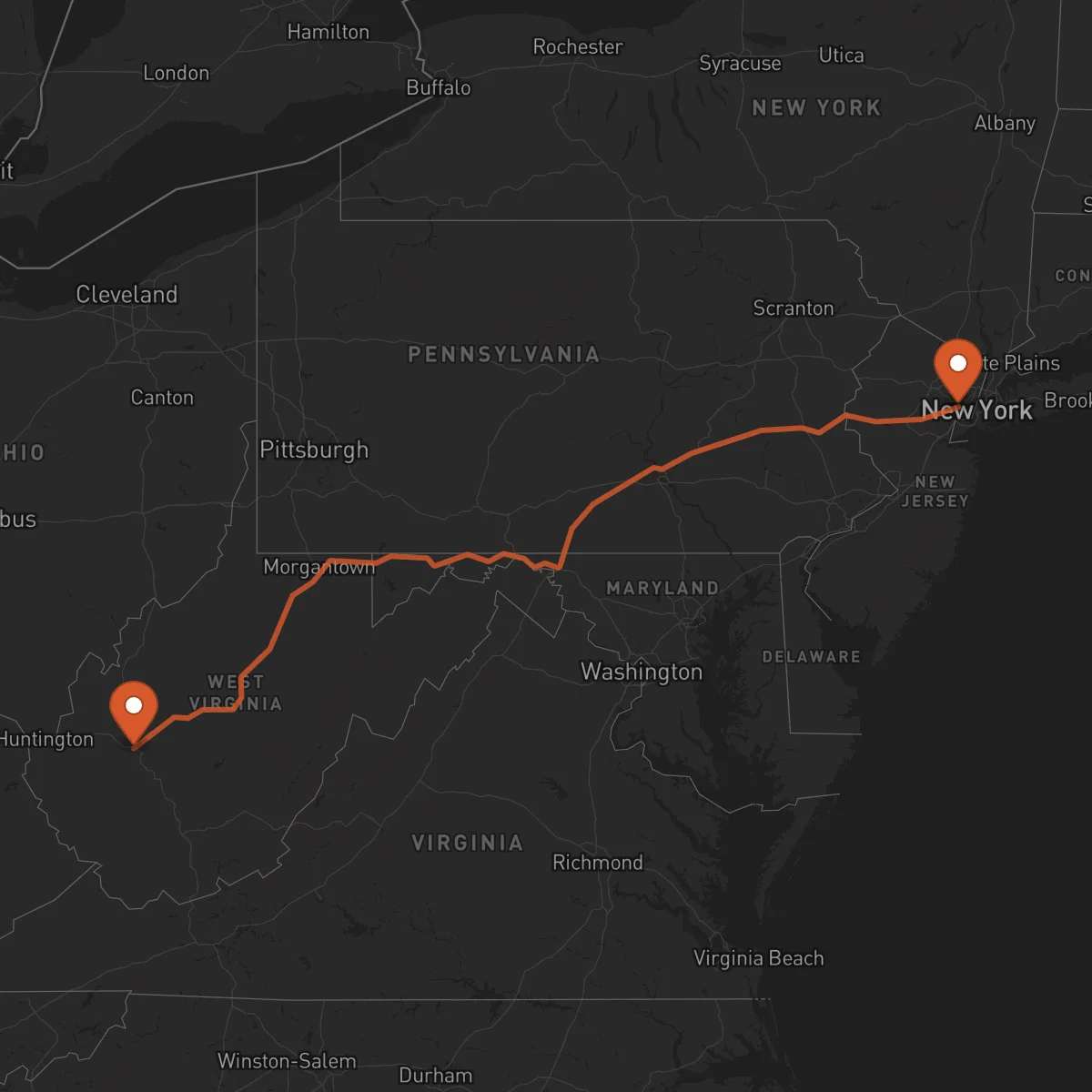
Charleston to Newark
Newark → CharlestonFTL freight transportation service between Charleston and Newark. Reliable logistics solutions for your business.
Route Description
Everything you need to know about the corridor Charleston - Newark
The Charleston to Newark corridor represents a vital logistics link connecting the Appalachian region with the major economic hub of the Northeast. This 692 km route traverses key industrial and commercial zones, facilitating the movement of goods between West Virginia's resource-rich territory and New Jersey's bustling port and distribution centers. The corridor's strategic importance lies in its ability to connect inland manufacturing and energy production with coastal markets and international trade gateways.
The economic context of this corridor is defined by its role in supporting both regional and national supply chains. Charleston, situated in the heart of Appalachia, serves as a gateway to the region's mining, chemical, and energy industries, while Newark stands as a critical node in the Northeast's logistics network, with its proximity to New York City and access to major ports. This corridor enables the efficient flow of raw materials, manufactured goods, and consumer products between these distinct economic zones.
Key industries utilizing this route include energy and natural resources, manufacturing, automotive, and retail distribution. The corridor supports the movement of coal and natural gas from West Virginia's mines and wells, as well as finished products from the region's manufacturing facilities. Newark's position as a major distribution center makes it a crucial destination for goods destined for the densely populated Northeast corridor.
Control Terrestre facilitates seamless operations on this corridor through our extensive network of certified carriers and specialized equipment. Our expertise in full truckload (FTL) transportation ensures that your cargo moves efficiently and securely between Charleston and Newark, leveraging our strategic partnerships and advanced logistics solutions to meet your specific transportation needs.
Services for this Route
Available services for the corridor Charleston - Newark
 Origin
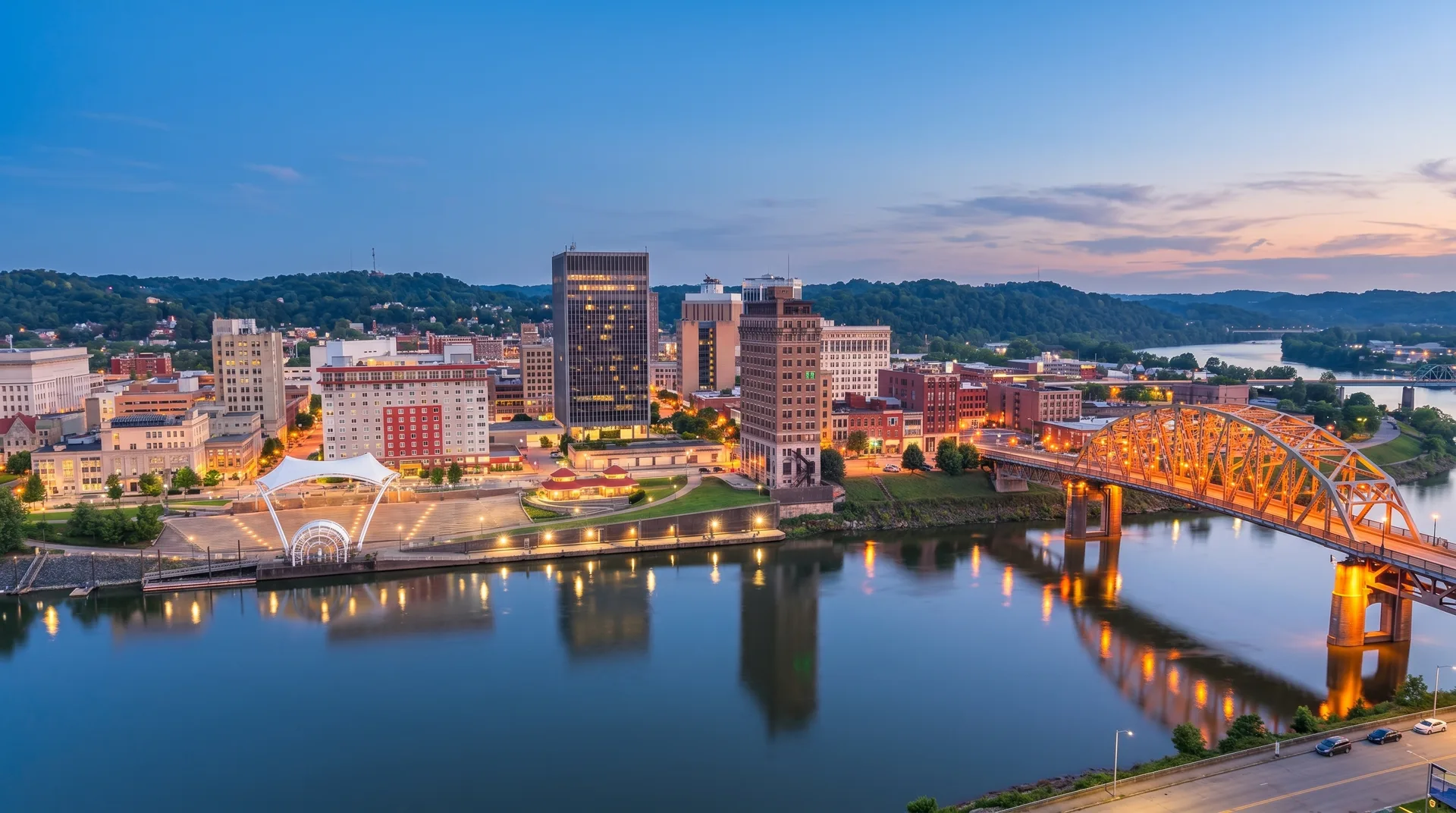
Charleston
Charleston, West Virginia, serves as a strategic logistics hub in the Appalachian region, offering unique advantages for freight transportation. The city's location provides access to the region's abundant natural resources, including coal, natural gas, and timber, making it a critical origin point for energy and raw material shipments. Charleston's transportation infrastructure includes major highways such as I-64 and I-77, which connect the city to regional and national networks, facilitating efficient movement of goods to markets across the country.
The economic landscape of Charleston is characterized by its strong presence in energy production, chemical manufacturing, and healthcare services. The city's industrial base, supported by nearby mining operations and natural gas fields, creates a steady demand for reliable freight transportation to move both raw materials and finished products. Charleston's Logan Airport provides additional logistics options for time-sensitive or high-value cargo, complementing the city's robust ground transportation network.
 Destination
Newark
Newark, New Jersey, stands as a premier logistics destination on the East Coast, offering unparalleled access to major markets and transportation networks. The city's strategic location, just 8 miles from New York City and within the New York metropolitan area, makes it an ideal hub for distribution and warehousing operations. Newark's Port Newark-Elizabeth Marine Terminal, one of the busiest ports on the East Coast, provides direct access to international shipping lanes, while Newark Liberty International Airport offers extensive air cargo services.
The economic profile of Newark is diverse and dynamic, with strong representation in finance, insurance, healthcare, and advanced manufacturing. The city's proximity to major consumer markets in the Northeast, combined with its extensive transportation infrastructure including I-95, I-78, and the New Jersey Turnpike, makes it a critical node in regional and national supply chains. Newark's warehousing and distribution facilities are equipped to handle a wide range of cargo types, from consumer goods to industrial equipment, supporting the efficient movement of freight throughout the Northeast.










