Charleston to Miami
Miami → CharlestonFTL freight transportation service between Charleston and Miami. Reliable logistics solutions for your business.
Route Description
Everything you need to know about the corridor Charleston - Miami
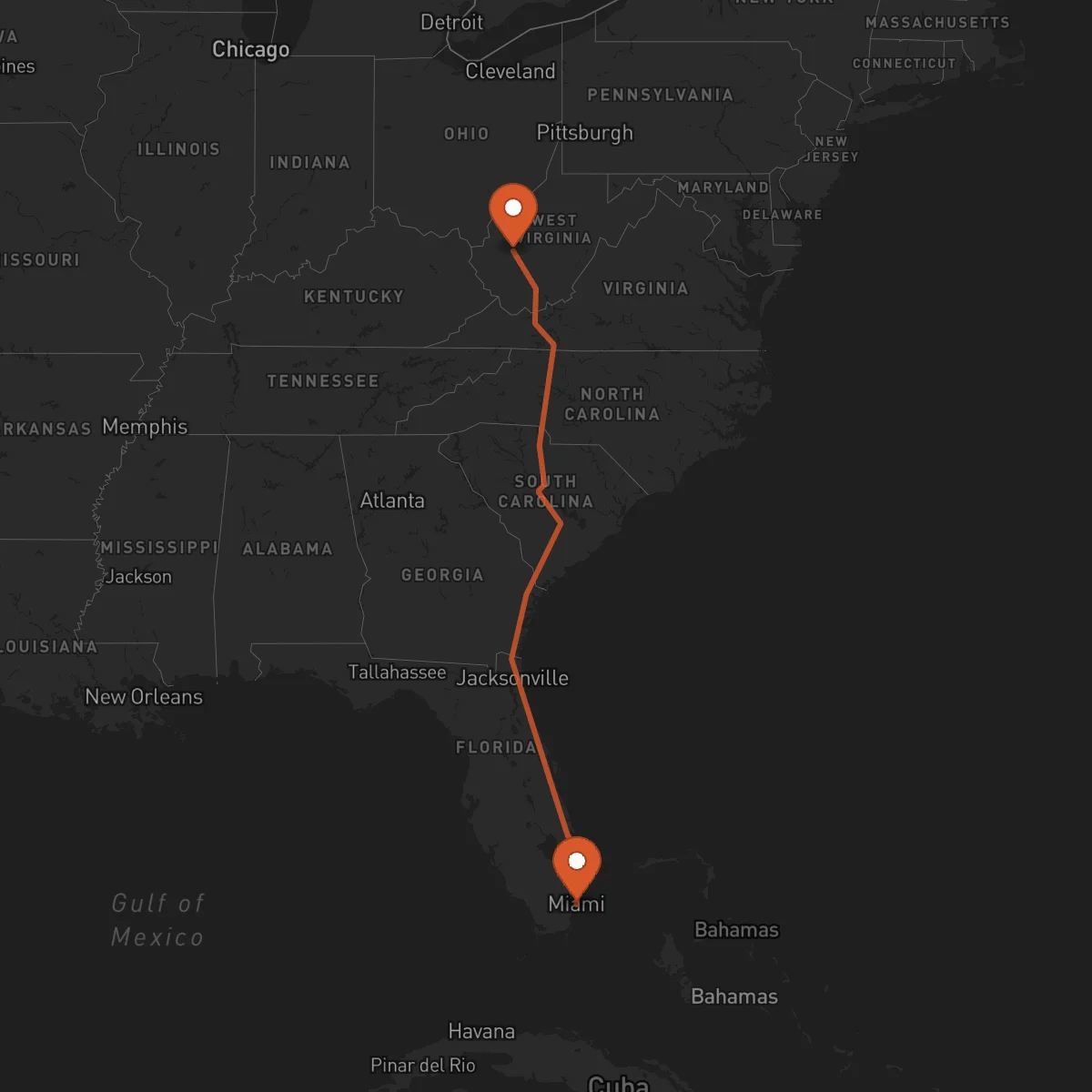
The Charleston to Miami corridor represents a vital domestic logistics route connecting the Appalachian region with South Florida. This 1406 km transportation axis facilitates the movement of goods between West Virginia's industrial base and Miami's international trade hub. The corridor traverses multiple states, crossing diverse terrain and connecting key economic regions along the eastern United States.
The route serves as a crucial link between Charleston's manufacturing and energy sectors and Miami's position as a gateway for Latin American trade. Industries along this corridor include automotive parts, chemicals, agricultural products, and consumer goods. The transportation infrastructure consists primarily of major interstate highways including I-77, I-26, I-95, and the Florida Turnpike, providing reliable freight movement throughout the year.
Control Terrestre optimizes operations on this corridor through our network of certified carriers and specialized equipment. Our dedicated FTL services ensure that your cargo moves efficiently from origin to destination without intermediate handling. We understand the specific requirements of temperature-sensitive shipments, hazardous materials, and oversized freight that frequently travel this route. Our real-time tracking and experienced drivers guarantee your freight arrives safely at its Miami destination, maintaining the integrity of your supply chain throughout the journey.
Services for this Route
Available services for the corridor Charleston - Miami
 Origin
Charleston
Charleston, West Virginia serves as a strategic logistics hub in the Appalachian region, positioned at the confluence of major transportation routes. The city's location provides excellent access to the Midwest and East Coast markets through an extensive network of highways and rail connections. Charleston's economy is anchored by energy production, chemical manufacturing, and healthcare services, creating consistent freight movement patterns throughout the year.
The Kanawha Valley region surrounding Charleston hosts numerous industrial facilities, particularly in the chemical and natural gas sectors. Yeager Airport provides air cargo capabilities, while the Port of Huntington-Tristate on the Ohio River offers additional multimodal transportation options. The city's central location within West Virginia makes it an ideal origin point for distributing goods throughout the eastern United States, with direct highway access to major markets in the Southeast and Mid-Atlantic regions.
 Destination
Miami
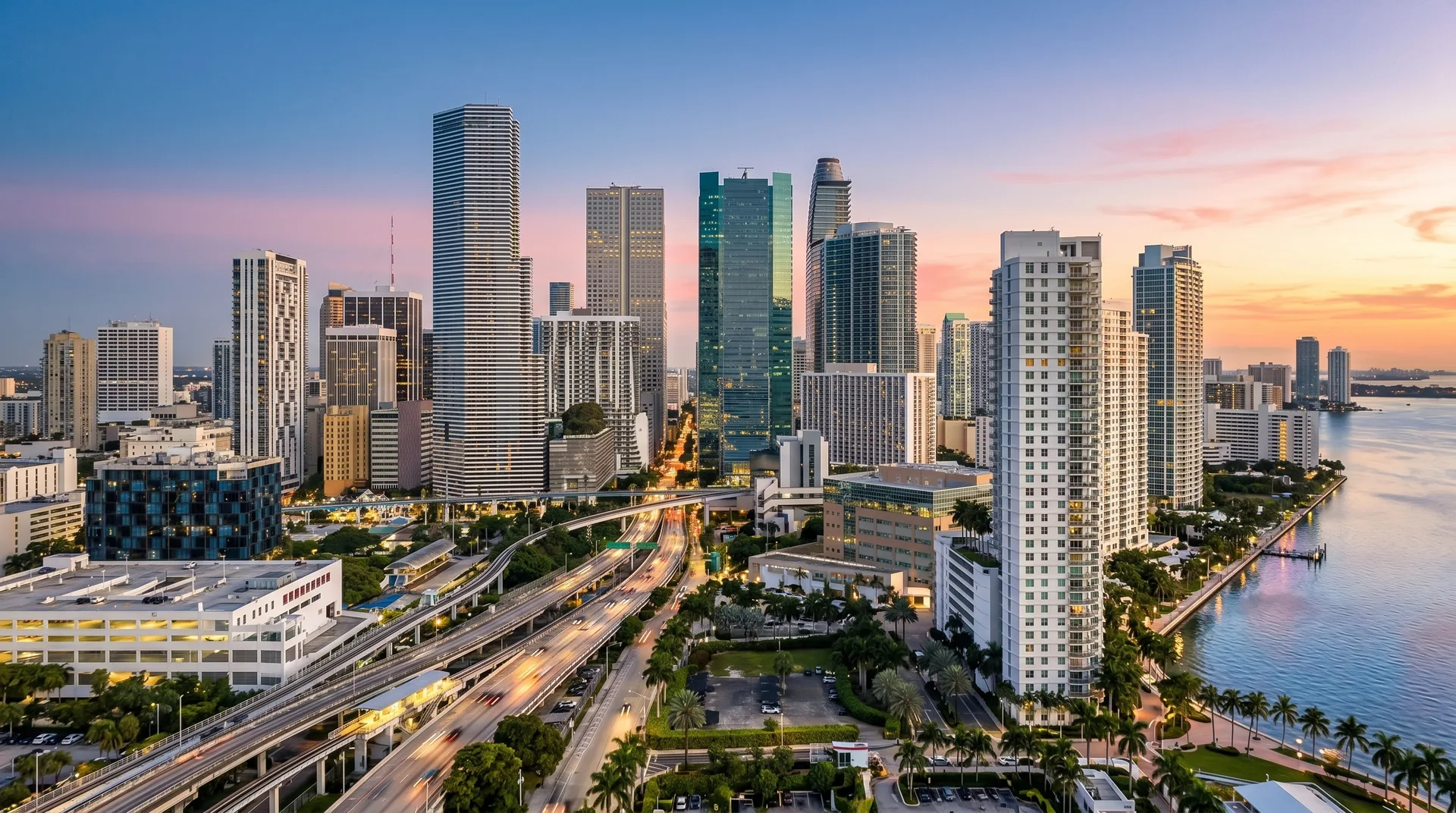
Miami, Florida stands as one of the most strategic logistics hubs in the United States, serving as the primary gateway to Latin American and Caribbean markets. The city's location at the southeastern tip of Florida provides unparalleled access to international trade routes and a year-round climate that supports continuous freight operations. Miami International Airport ranks among the top cargo airports in the nation, while the Port of Miami handles millions of tons of cargo annually.
The Miami metropolitan area hosts a diverse economic base including international trade, tourism, agriculture, and technology sectors. The region's extensive highway network, including I-95 and the Florida Turnpike, connects Miami to the entire southeastern United States. The city's Free Trade Zone status and proximity to major ports create unique opportunities for businesses engaged in import/export activities. Miami's position as a cultural and economic bridge between North and South America makes it an essential destination for freight transportation across multiple industries.










