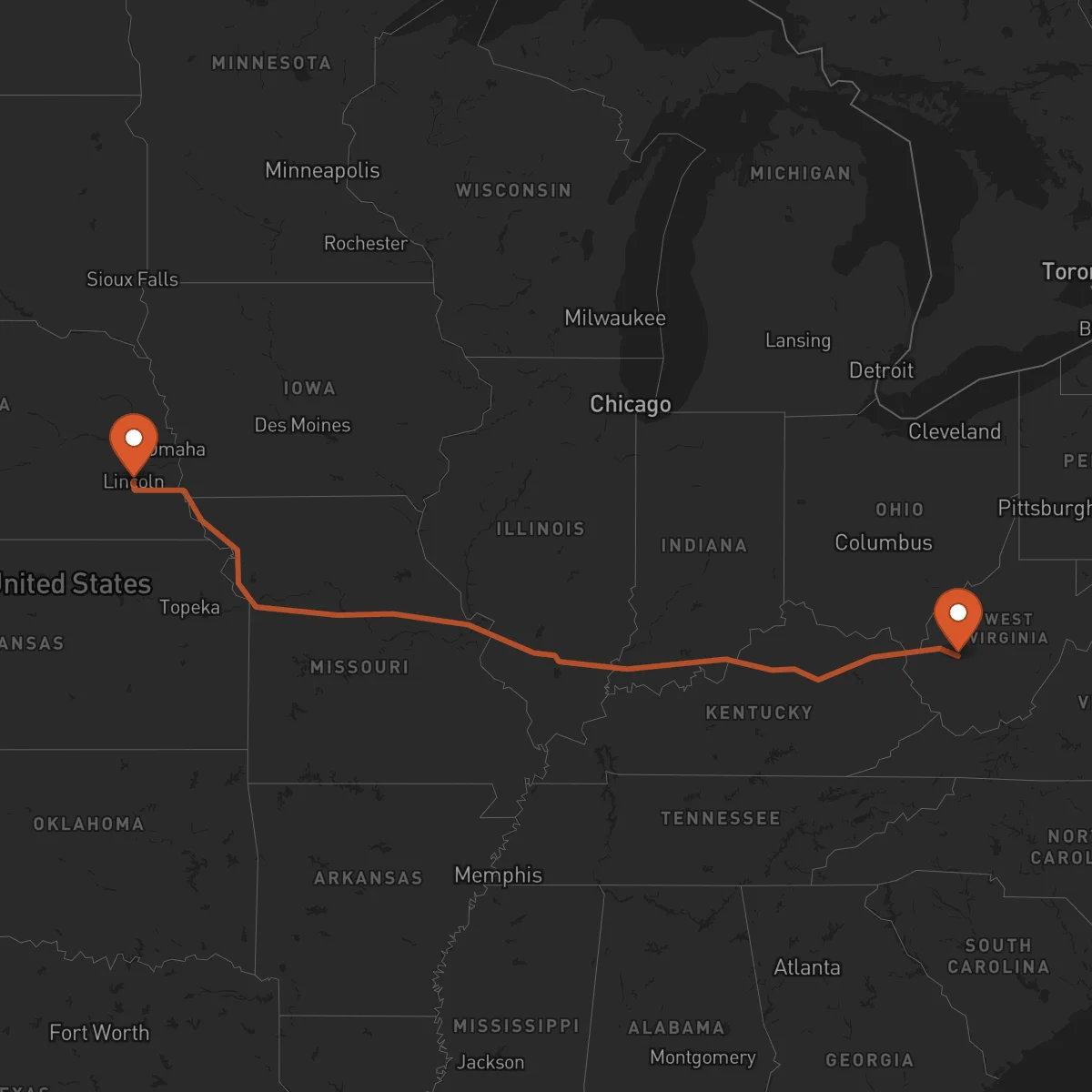
Charleston to Lincoln
Lincoln → CharlestonFTL freight transportation service between Charleston and Lincoln. Reliable logistics solutions for your business.
Route Description
Everything you need to know about the corridor Charleston - Lincoln
The Charleston to Lincoln corridor represents a vital logistics connection between the Appalachian region and the Great Plains, spanning approximately 1,318 kilometers across the heart of the United States. This east-west route traverses multiple states, connecting West Virginia's industrial heritage with Nebraska's agricultural powerhouse. The corridor serves as a crucial link for goods moving between the Midwest and the Eastern Seaboard, facilitating trade and commerce across diverse economic regions.
The economic significance of this corridor is underscored by the complementary industrial profiles of both endpoints. Charleston, situated in the Appalachian region, has evolved from its coal mining roots to embrace manufacturing, healthcare, and technology sectors. Lincoln, as Nebraska's capital and second-largest city, anchors a robust agricultural economy while also developing strengths in insurance, education, and manufacturing. The corridor enables the efficient movement of raw materials from West Virginia to processing facilities in the Midwest, as well as finished goods and agricultural products in the opposite direction.
Key industries leveraging this transportation route include automotive parts manufacturing, agricultural equipment, food processing, and industrial machinery. The corridor particularly benefits companies requiring full truckload (FTL) services for time-sensitive or high-volume shipments. Control Terrestre's network of certified carriers ensures reliable, full truckload transportation along this route, with specialized equipment available for various cargo types including refrigerated goods, oversized equipment, and hazardous materials.
The primary transportation infrastructure includes major interstate highways such as I-64, I-70, and I-80, providing efficient east-west connectivity. These highways offer multiple routing options to accommodate different cargo types and delivery schedules. Control Terrestre's expertise in managing FTL shipments across this corridor ensures that businesses can rely on consistent transit times and professional handling of their freight, supported by our network's C-TPAT and other industry certifications.
Services for this Route
Available services for the corridor Charleston - Lincoln
 Origin
Charleston
Charleston, West Virginia, serves as a strategic logistics hub in the Appalachian region, positioned at the confluence of major transportation routes. The city's location along the Kanawha River historically made it a center for chemical and coal industries, though it has diversified significantly in recent decades. Charleston's economic landscape now includes healthcare, education, retail, and advanced manufacturing sectors, creating diverse freight transportation needs. The city benefits from excellent road connectivity via I-64 and I-77, providing efficient access to both eastern markets and the Midwest. Yeager Airport offers air cargo options, while the Port of Huntington-Tristate, though located nearby, extends Charleston's reach to inland waterway shipping. The region's industrial base, including automotive suppliers and chemical manufacturers, generates substantial full truckload freight volumes requiring reliable transportation services to national markets.
 Destination
Lincoln
Lincoln, Nebraska, stands as a major logistics center in the Great Plains, strategically positioned to serve the agricultural heartland of America. As Nebraska's capital and a growing metropolitan area, Lincoln combines government functions with a strong economic base in insurance, education, and manufacturing. The city's location in the southeastern part of Nebraska provides optimal access to both western and eastern markets, making it a crucial distribution point for agricultural products and manufactured goods. Lincoln benefits from excellent transportation infrastructure, including I-80, which is one of the nation's major east-west corridors. The Lincoln Airport supports air cargo operations, while the city's proximity to major rail hubs enhances intermodal shipping capabilities. The region's agricultural processing industry, along with growing technology and manufacturing sectors, creates consistent demand for full truckload freight services, particularly for time-sensitive agricultural products and industrial equipment.










