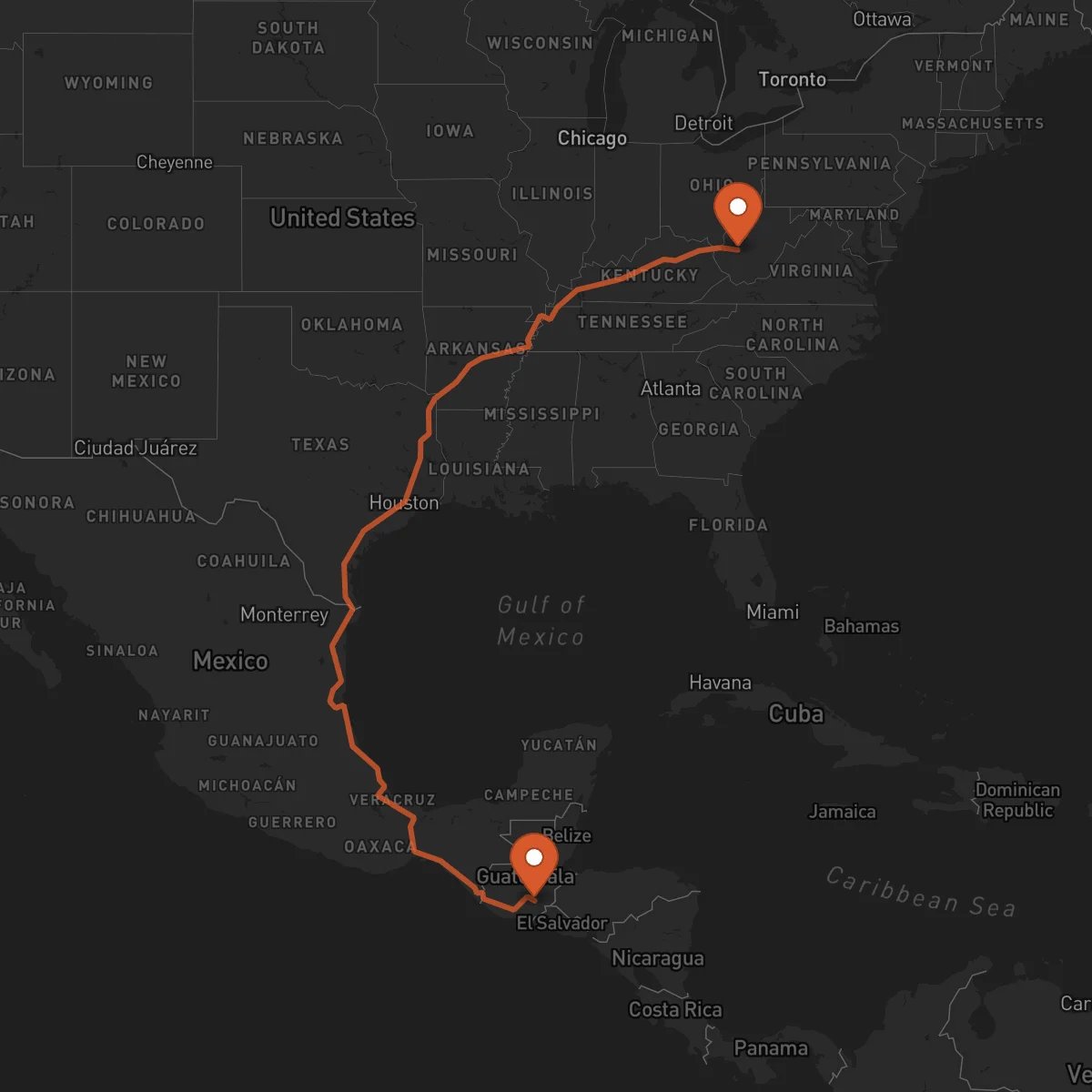
Charleston to Jalapa
Jalapa → CharlestonFTL freight transportation service between Charleston and Jalapa. Reliable logistics solutions for your business.
Route Description
Everything you need to know about the corridor Charleston - Jalapa
The Charleston, West Virginia to Jalapa, Guatemala corridor represents a critical north-south logistics artery connecting the industrial heartland of the United States with the vibrant markets of Central America. This cross-border route is strategically vital for moving full truckload (FTL) freight across diverse economic zones, facilitating trade between U.S. manufacturers and Guatemalan importers and distributors. The corridor traverses a complex geopolitical landscape, requiring seamless navigation of U.S., Mexican, and Guatemalan customs and regulatory frameworks, making expert management essential for efficiency and compliance.
Economically, the corridor serves regions with complementary industrial strengths. The Charleston area is anchored by robust chemical manufacturing, machinery, and polymer production, alongside growing logistics services. Jalapa, Guatemala, functions as a key agricultural and commercial hub for Eastern Guatemala, with significant production of coffee, sugarcane, vegetables, and textiles. This creates a dynamic freight flow: U.S. industrial goods and raw materials move south, while fresh produce, processed foods, and apparel move north. The reliability of this FTL corridor directly impacts supply chain stability for businesses in both regions.
Primary users of this route include manufacturers, agricultural exporters, distributors, and retailers requiring dedicated, time-sensitive cargo movement. The transportation infrastructure relies on a sequential highway network: from Charleston via I-77 and I-40 to connect with major U.S. interstates heading south. The route then proceeds through Mexico via highways such as the Mexico 150D and 190, culminating in the Mexico-Guatemala border crossing at Tecún Umán/El Carmen. Key border considerations include adherence to C-TPAT and FAST certifications for expedited U.S. clearance, Mexican customs procedures, and Guatemalan import regulations. Control Terrestre facilitates these operations by leveraging our alliance of certified carriers proficient in cross-border logistics. Our providers hold essential credentials like C-TPAT, FAST, and BASC, ensuring secure and streamlined customs processing. We coordinate dedicated FTL and specialized cargo services—including reefers for perishables and flatbeds for industrial equipment—managing the full door-to-door journey with a focus on human expertise and environmental responsibility, without offering LTL consolidation on this specialized route.
Services for this Route
Available services for the corridor Charleston - Jalapa
 Origin
Charleston
Charleston, West Virginia, serves as a strategic logistics origin due to its central location within the Appalachian region and its established industrial base. The city is a significant hub for chemical manufacturing, polymer production, machinery, and timber products, creating consistent outbound freight demand. Its infrastructure is anchored by the intersection of Interstates 77 and 64, providing direct north-south and east-west connectivity to major U.S. markets and border crossings. The Kanawha River and regional rail networks offer multimodal options, though our focus is on robust trucking solutions. Charleston's economy generates a steady flow of full truckloads requiring efficient connection to southern corridors, making it a pivotal starting point for cross-border freight into Mexico and Central America.
 Destination
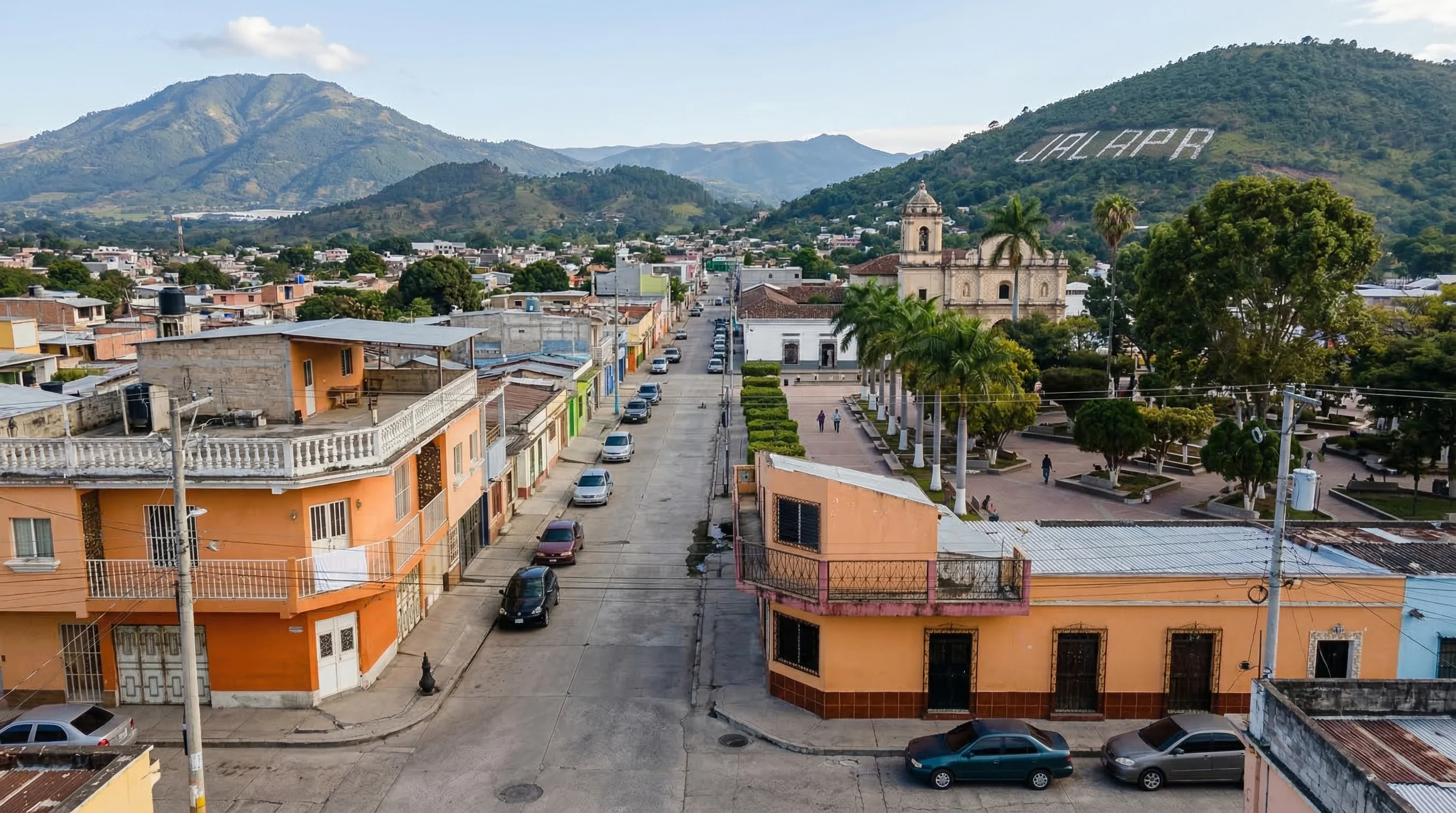
Jalapa, Guatemala, is a strategically important logistics destination as the capital of the Jalapa department, acting as a commercial and agricultural gateway for Eastern Guatemala. The region is renowned for its high-quality coffee production, sugarcane, and a variety of fresh fruits and vegetables, alongside textile manufacturing. This creates substantial inbound demand for industrial goods, packaging materials, and outbound demand for perishable exports requiring refrigerated transport. The city is well-connected via the CA-9 highway, which links it to the major port of Puerto Quetzal on the Pacific coast and to the border crossing at Tecún Umán with Mexico. This road infrastructure is essential for moving FTL cargo from the border to Jalapa's industrial parks and agricultural centers, supporting the region's export-driven economy.










