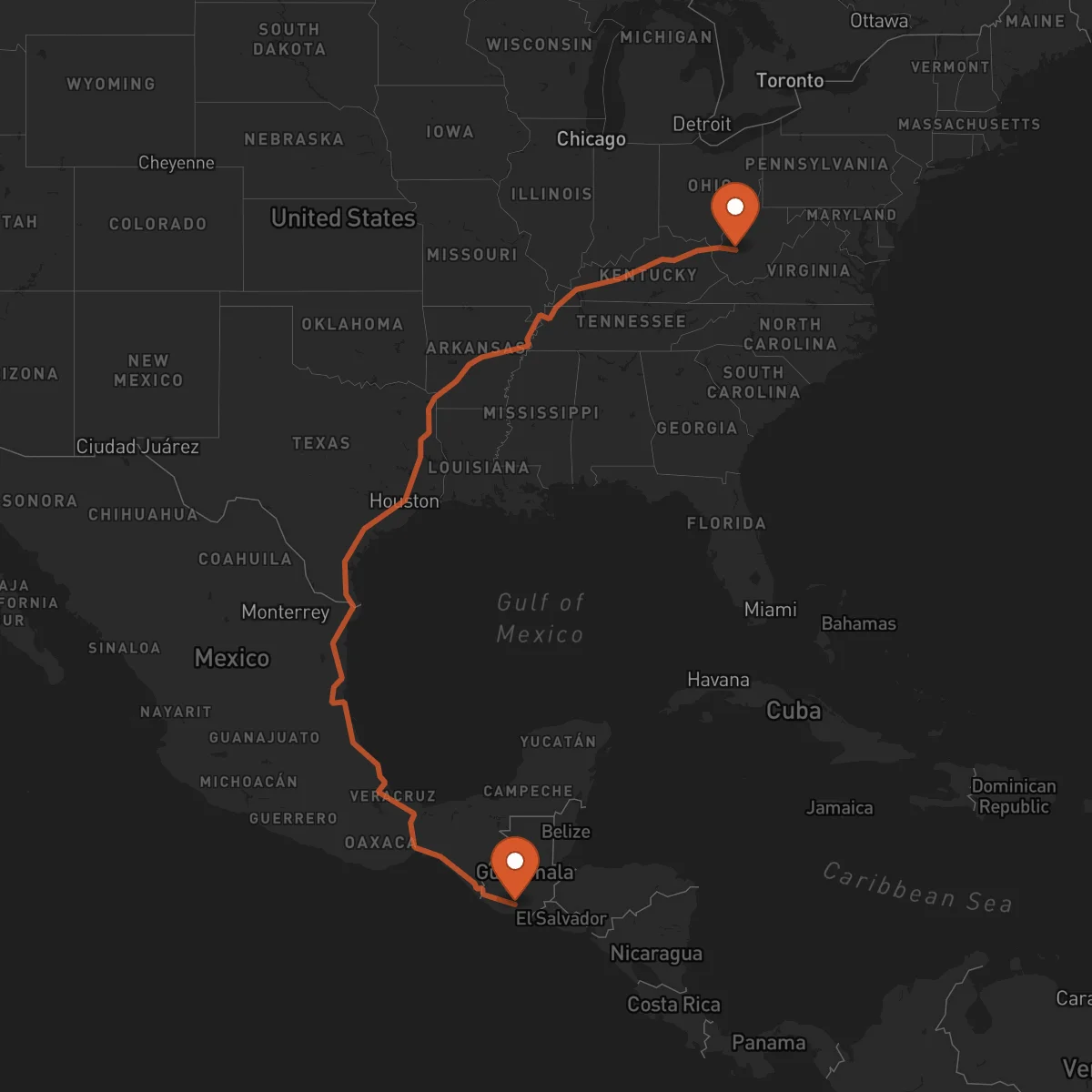
Charleston to Escuintla
Escuintla → CharlestonFTL freight transportation service between Charleston and Escuintla. Reliable logistics solutions for your business.
Route Description
Everything you need to know about the corridor Charleston - Escuintla
The Charleston, West Virginia to Escuintla, Guatemala corridor is a critical North-South artery connecting the Appalachian industrial heartland of the United States with the dynamic export economy of Central America. Spanning approximately 2,822 kilometers, this cross-border route traverses the continental U.S., the entirety of Mexico, and into Guatemala, serving as a vital conduit for goods moving between these key economic zones. Its strategic importance lies in bridging manufacturing and raw material hubs in the U.S. with the agricultural, textile, and consumer goods production centers of Guatemala, which acts as a gateway to the broader Central American market. Control Terrestre facilitates seamless operations on this complex corridor through our robust alliance of certified carriers, specializing exclusively in Full Truckload (FTL) solutions. Our network's expertise in cross-border logistics, combined with provider certifications including C-TPAT, FAST, and BASC, ensures efficient customs clearance and secure transit for diverse cargo, from manufactured parts to specialized goods.
Economically, the corridor links the resource-rich and industrial regions of West Virginia—historically significant for chemicals, machinery, and polymers—with Escuintla's powerhouse economy, driven by agriculture (coffee, bananas, sugar), textiles, and food processing. Major industries utilizing this route include chemical manufacturers shipping feedstocks and additives, agricultural processors moving bulk raw materials and finished goods, and distributors serving retail networks across Central America. The transportation infrastructure is a multi-national tapestry: in the U.S., primary reliance on I-64 east to I-40 south; through Mexico, the federal highway network (e.g., routes 57, 150, 190); and in Guatemala, the CA-1 and CA-9 highways. The most significant international border crossing is typically between the U.S. and Mexico (e.g., El Paso/Ciudad Juárez or Laredo/Nuevo Laredo), followed by the Mexico-Guatemala border at Tecún Umán/La Mesilla. Navigating the customs and regulatory requirements of three nations demands precision, which we provide through our partners' deep experience with documentation, duties, and border protocols.
Control Terrestre's role is to act as the singular, human point of contact for our clients, simplifying this intricate journey. We do not offer consolidated freight; instead, we assign dedicated or spot FTL capacity tailored to the specific needs of the shipment, whether it requires a dry van, refrigerated unit for perishable goods, flatbed for oversized equipment, or a tanker for liquids. Our providers' certifications in programs like FAST (for expedited U.S.-Canada/Mexico crossings) and Clean Transportation are instrumental in mitigating delays at key border points. Furthermore, our 'door-to-door' service model means we manage the entire transit from a Charleston facility to an Escuintla warehouse or plant, including all cross-border coordination. By leveraging our strategic alliances, we provide clients with the reach of a large network and the attention of a dedicated partner, ensuring reliable, professional, and environmentally conscious transportation across this demanding corridor.
Services for this Route
Available services for the corridor Charleston - Escuintla
 Origin
Charleston
Charleston, West Virginia, serves as a strategic logistical origin point for the Appalachian region, positioned at the confluence of the Kanawha and Elk rivers. Its location is enhanced by a robust highway network, with Interstate 64 providing direct east-west access and Interstate 77 connecting north-south through the state to major markets like Columbus, OH, and Charlotte, NC. This infrastructure supports the region's core economic sectors, which are heavily weighted toward chemical manufacturing, polymer production, machinery, and metal fabrication. The area is also historically significant for energy and mining-related logistics. The Yeager Airport and proximity to Port of Huntington Tri-State (via river barge) offer multimodal options, though for FTL freight to Central America, the interstate highway system is the primary and most efficient conduit. Charleston's industrial base generates consistent demand for outbound freight, particularly bulk chemicals, industrial equipment, and manufactured components that require the security and efficiency of a dedicated full truckload service to reach international gateways.
 Destination
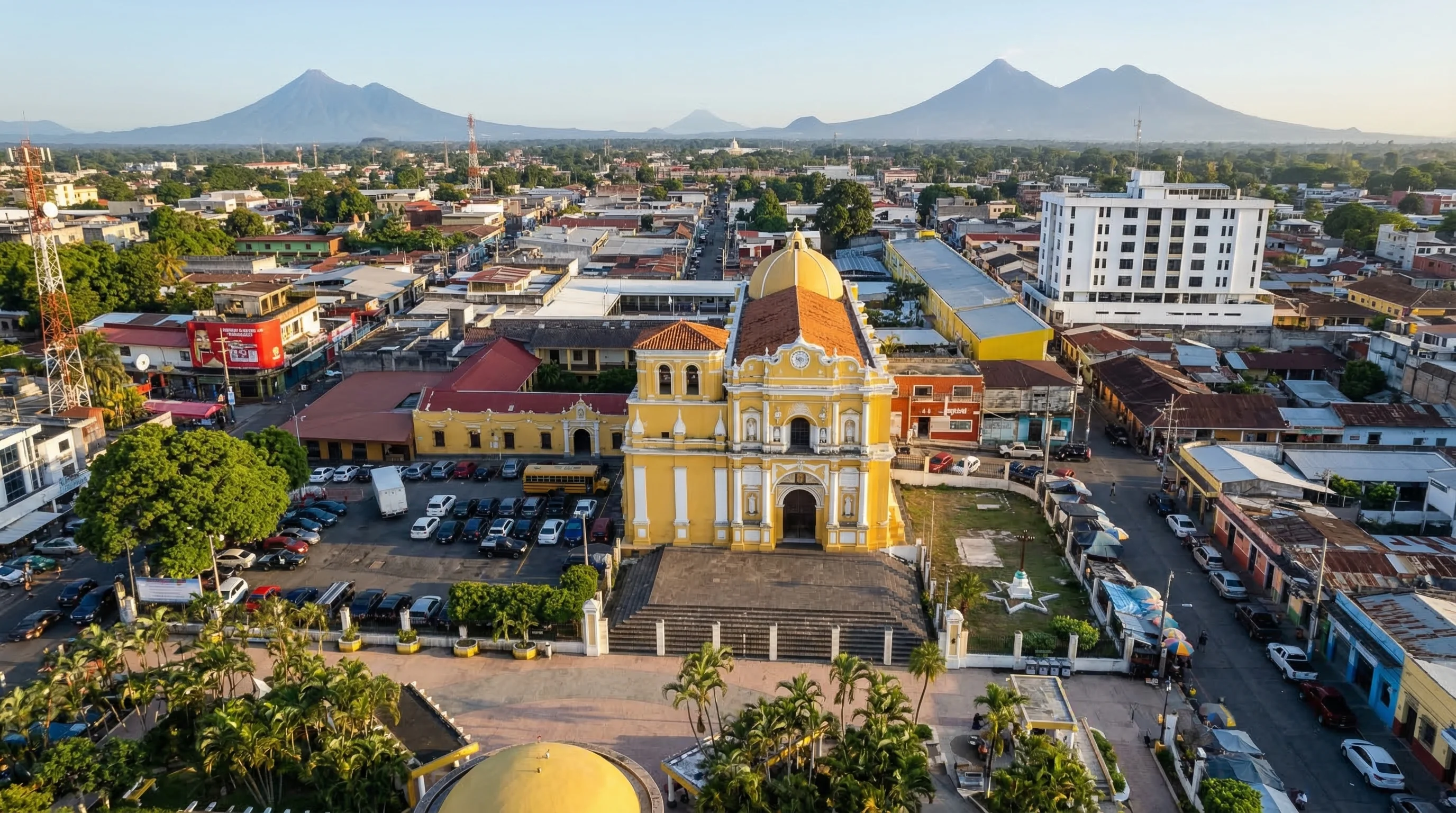
Escuintla, located on the Pacific coast of Guatemala, is a pivotal logistics and industrial hub for Central America. Its strategic value stems from its proximity to the major port of Puerto San José, one of the region's busiest, facilitating direct ocean export and import. The city is the capital of the Escuintla department, an area dominated by large-scale agriculture (sugarcane, coffee, bananas, tropical fruits) and a significant concentration of textile maquilas (export assembly plants). Key industries include food and beverage processing, sugar refining, and textile manufacturing, all of which generate substantial freight volume. The destination is well-connected by Guatemala's primary highway network: the CA-1 (Pacific Coast Highway) runs through the city, linking it to Mexico in the west and to Guatemala City and the Caribbean coast in the east. The CA-9 provides a direct route north to Guatemala City. This infrastructure makes Escuintla an ideal terminal point for FTL shipments, allowing for efficient distribution to production facilities, farms, and the port for onward maritime shipping.


Ready to ship your cargo?
Get a personalized quote for your freight.
Quote Now Charleston - Escuintla








