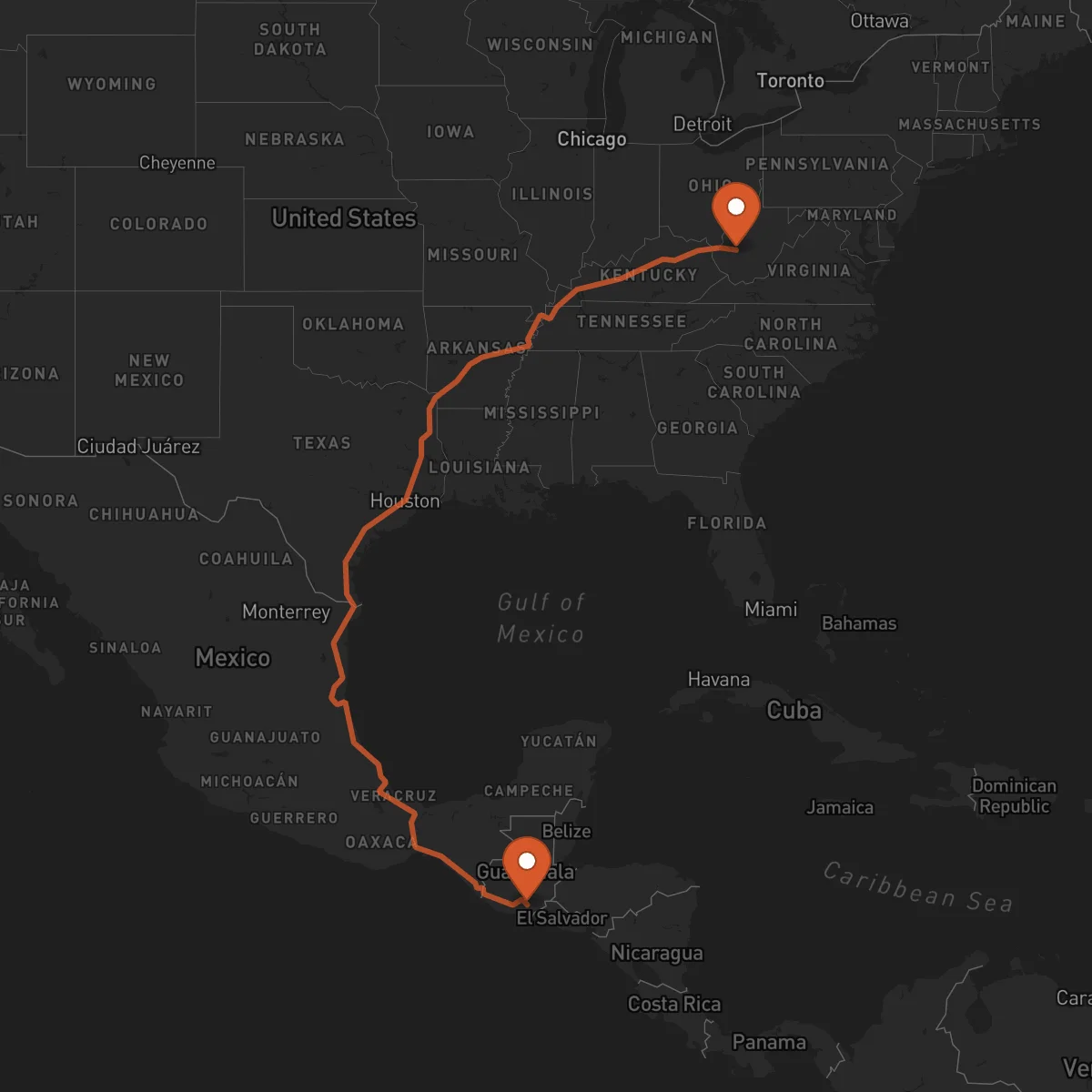
Charleston to Cuilapa
Cuilapa → CharlestonFTL freight transportation service between Charleston and Cuilapa. Reliable logistics solutions for your business.
Route Description
Everything you need to know about the corridor Charleston - Cuilapa
The Charleston, West Virginia to Cuilapa, Santa Rosa, Guatemala corridor is a critical north-south logistics artery connecting the industrial heartland of the United States with the dynamic economies of Central America. This strategic cross-border route facilitates the essential flow of goods, raw materials, and finished products between two key production and consumption zones, underpinning regional trade and supply chain resilience. The corridor's importance is magnified by its role in linking U.S. manufacturing and chemical hubs with Guatemala's agricultural and industrial sectors, creating a vital economic bridge.
Economically, the corridor serves a diverse industrial landscape. From Charleston, outbound freight includes chemicals, polymers, manufactured goods, and machinery. Inbound flows to the U.S. from Guatemala and onward Central American connections are dominated by agricultural products (coffee, bananas, sugar), textiles, and assembly components. The corridor supports just-in-time manufacturing and seasonal agricultural cycles, requiring reliable, capacity-flexible transportation solutions.
Key infrastructure defines this route. The journey primarily utilizes Interstate 77 (I-77) south from Charleston through Virginia, North Carolina, South Carolina, and Georgia to the Mexico-Guatemala border. South of the border, the route continues on Central American highways, notably the Pan-American Highway (CA-1) through Mexico and into Guatemala, terminating near Cuilapa. The principal border crossing for this corridor is at Tecún Umán, Guatemala / Ciudad Hidalgo, Mexico, a major gateway for trade into Central America. Navigating customs procedures, Mexican transit regulations, and Guatemalan import requirements demands experienced partners.
Control Terrestre leverages our alliance of certified providers to seamlessly manage operations on this complex corridor. Our partners hold essential credentials like C-TPAT, FAST, and BASC, which streamline U.S. and Mexican border crossings. We coordinate dedicated FTL, expedited, and specialized shipments (including dry van, refrigerated, and flatbed equipment) to match the specific needs of corridor cargo. We handle the intricate cross-border documentation, customs brokerage coordination, and carrier management, providing our clients with a single, accountable point of contact for their end-to-end freight from Charleston to Cuilapa.
Services for this Route
Available services for the corridor Charleston - Cuilapa
 Origin
Charleston
Charleston, West Virginia, is a strategically significant origin point for long-haul freight, positioned at the confluence of the Kanawha and Elk Rivers. Its logistics strength is derived from its deep historical roots as an industrial and chemical manufacturing center, often called the "Chemical Valley." The region's economy is heavily influenced by the production of chemicals, polymers, and machinery, generating consistent high-value outbound freight. Key industrial clusters along the riverbanks produce materials and equipment destined for national and international markets.
The transportation infrastructure supporting Charleston is robust and multimodal. The city is a major hub for Interstate 77, a primary north-south corridor that provides direct, high-capacity access to Virginia, the Carolinas, and Georgia, and ultimately to the Mexican border. This interstate connectivity is complemented by significant rail infrastructure operated by major Class I railroads, offering intermodal options. The nearby Port of Huntington-Tristate, on the Ohio River, provides additional barge freight connectivity, though our focus remains on the dominant road network. Charleston's location allows for efficient consolidation and dispatch of full truckloads heading south, making it a logical launch point for cross-border shipments into Mexico and Central America.
 Destination
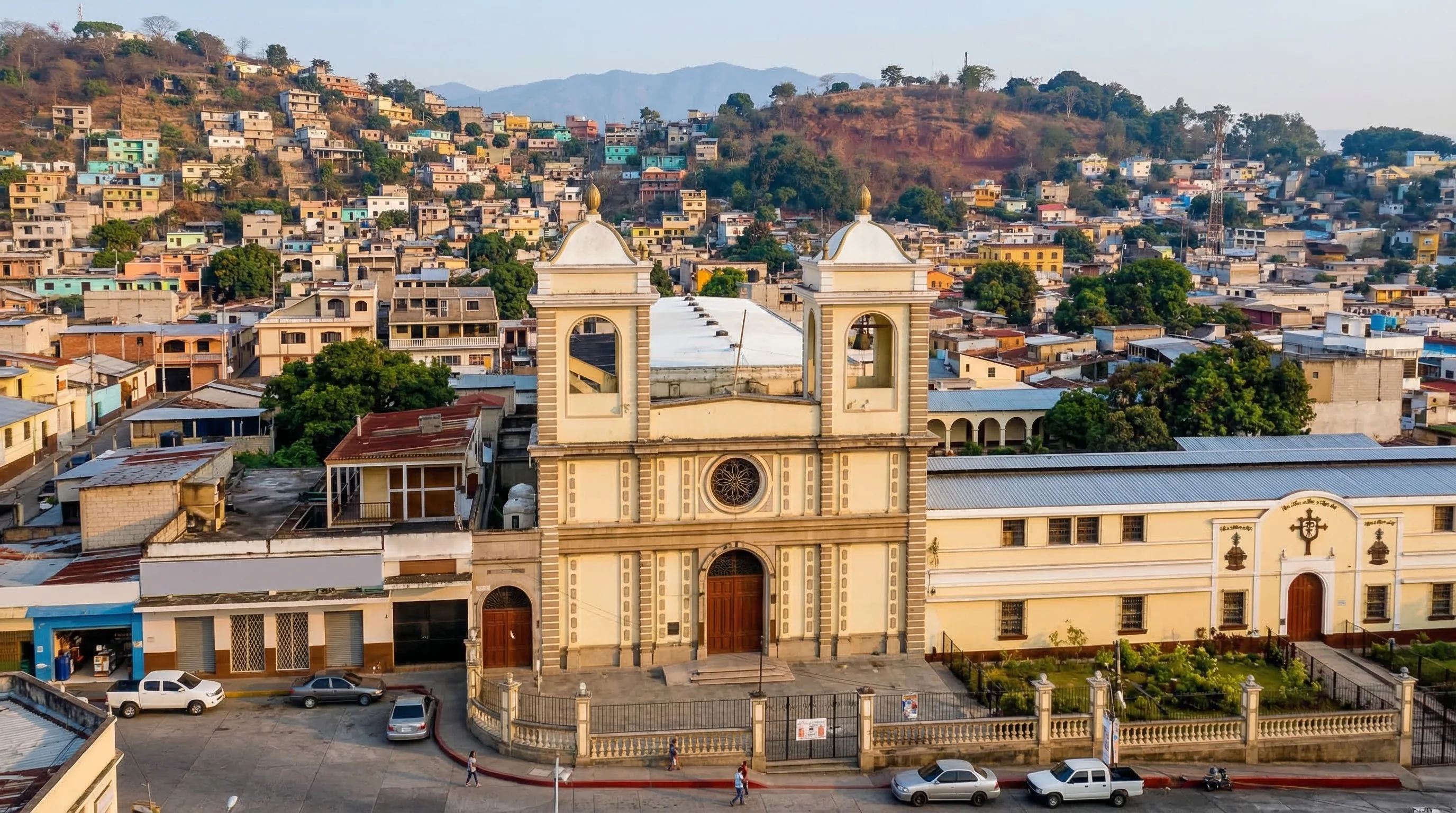
Cuilapa
Cuilapa, located in the Santa Rosa department of Guatemala, serves as a pivotal logistics destination and distribution hub for southeastern Guatemala and a gateway to broader Central American markets. Its strategic value lies in its central position within a major agricultural and growing industrial region. Santa Rosa is a critical agricultural producer, yielding coffee, sugar cane, bananas, and a variety of fruits and vegetables, which require efficient export channels. Furthermore, the area supports light manufacturing, food processing, and assembly operations that rely on inbound raw materials and outbound finished goods.
The local transportation infrastructure is centered on Cuilapa's connectivity to the Pan-American Highway (CA-1). This major highway artery runs east-west through Guatemala, linking Cuilapa directly to the primary border crossing at Tecún Umán (to Mexico) and to the capital, Guatemala City, to the west. This road network is essential for moving goods to and from the port facilities on the Pacific coast (like Puerto Quetzal) and for distribution throughout Central America via the CA-1 corridor. While rail infrastructure in Guatemala is limited, the road network's quality and the CA-1's role as a continental route make trucking the undisputed dominant mode for freight to and from Cuilapa, perfectly aligning with full truckload services.










