Charleston to Cancún
Cancún → CharlestonFTL freight transportation service between Charleston and Cancún. Reliable logistics solutions for your business.
Route Description
Everything you need to know about the corridor Charleston - Cancún
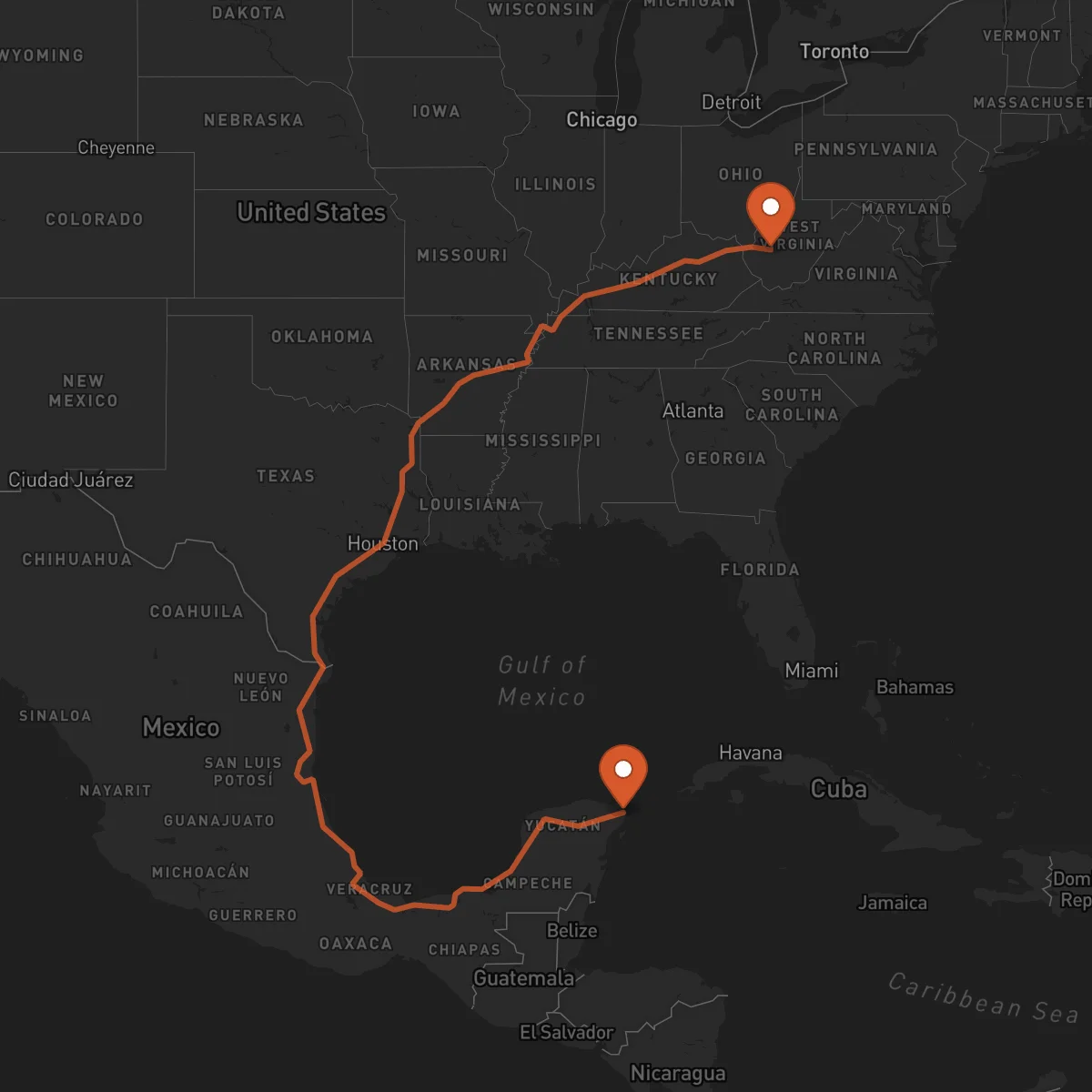
The Charleston to Cancún corridor represents a vital cross-border freight transportation route connecting the industrial heart of West Virginia with the booming tourism and manufacturing hub of Mexico's Caribbean coast. This 1976 km route traverses diverse terrain and crosses multiple state and international borders, requiring specialized logistics expertise to ensure efficient cargo movement. The corridor serves as a critical link for industries seeking to transport goods between the United States and Mexico's fastest-growing region.
The economic significance of this route extends beyond simple transportation. Charleston's strategic location in the Appalachian region provides access to major manufacturing centers, while Cancún's position in Quintana Roo connects to Mexico's expanding aerospace, automotive, and electronics industries. The corridor facilitates trade in automotive parts, electronics, consumer goods, and specialized equipment, supporting the growing economic integration between the two countries.
Key infrastructure along this route includes major highways such as I-64, I-75, and Mexican Federal Highways 180 and 307. The primary border crossing considerations involve customs procedures at key points between Texas and Mexico, requiring compliance with C-TPAT and other security protocols. Control Terrestre's expertise in cross-border operations ensures seamless documentation, customs clearance, and regulatory compliance throughout the journey.
Our specialized team manages every aspect of this corridor, from origin pickup in Charleston to final delivery in Cancún. We coordinate with certified carriers, handle all necessary permits for oversized or specialized cargo, and provide real-time tracking throughout the route. Our deep understanding of both US and Mexican transportation regulations, combined with our strategic partnerships, allows us to optimize transit times and ensure cargo safety across this extensive cross-border route.
Services for this Route
Available services for the corridor Charleston - Cancún
 Origin
Charleston
Charleston, West Virginia serves as a strategic logistics hub in the Appalachian region, offering excellent connectivity to major industrial centers across the eastern United States. The city's location provides direct access to Interstate 64 and Interstate 77, facilitating efficient distribution to markets in the Midwest, Northeast, and Southeast. Charleston's transportation infrastructure includes the Yeager Airport, the Port of Huntington Tri-State (inland port), and extensive rail connections through Norfolk Southern and CSX Transportation.
The region's economy is anchored by energy, healthcare, and manufacturing sectors, with growing emphasis on aerospace and automotive components. Major employers include Appalachian Power, Charleston Area Medical Center, and various chemical and manufacturing companies. The area's skilled workforce and proximity to raw materials make it an ideal origin point for specialized freight, including industrial equipment, automotive parts, and manufactured goods destined for international markets.
 Destination
Cancún
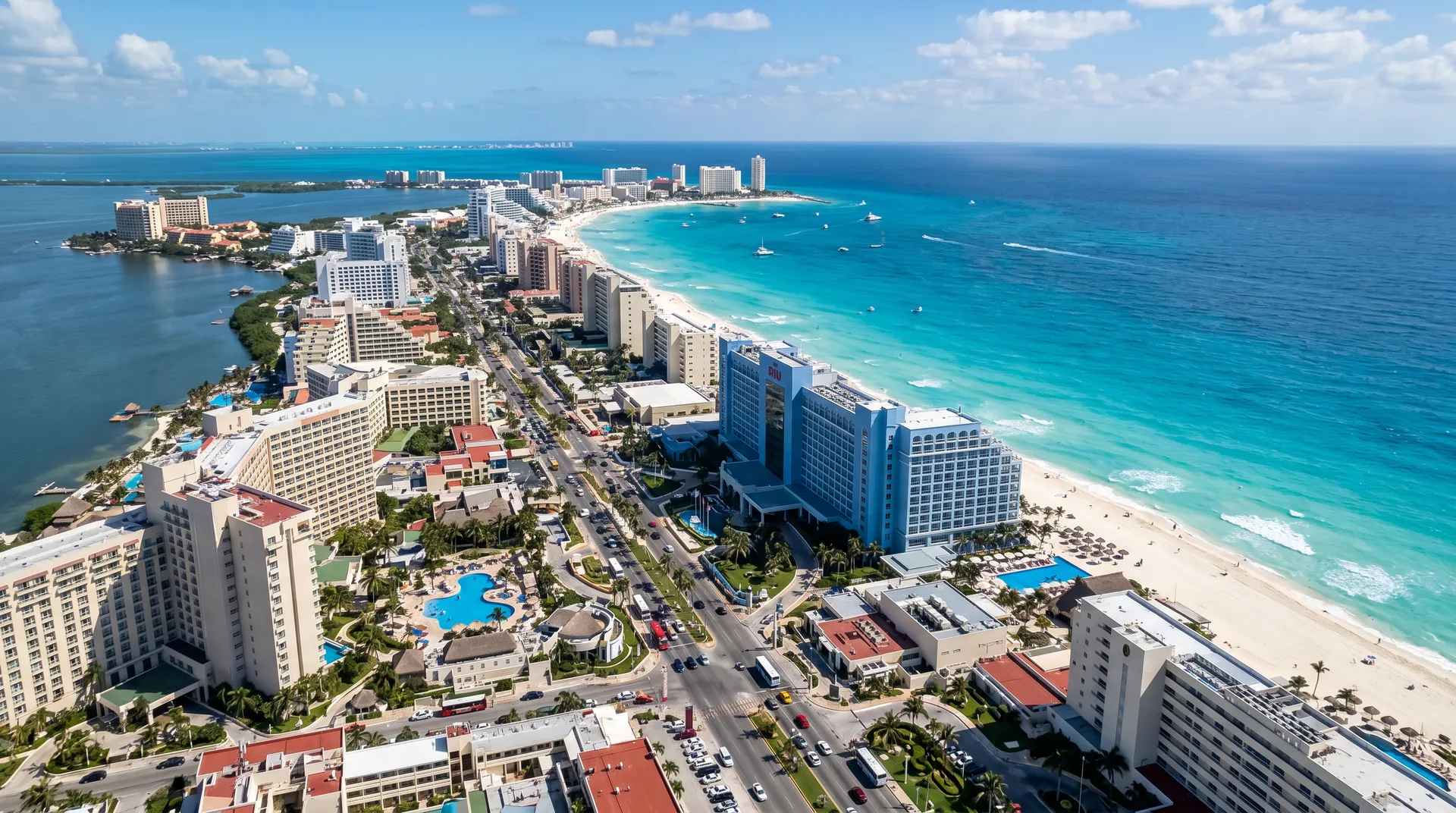
Cancún, located in Quintana Roo, Mexico, is a strategic logistics gateway to the Yucatán Peninsula and the broader Caribbean region. The city's position provides access to Mexico's rapidly expanding aerospace corridor, automotive manufacturing centers, and tourism infrastructure. Cancún International Airport serves as a major cargo hub, while Federal Highway 180 connects to inland manufacturing centers and ports.
The region has experienced significant economic diversification beyond tourism, with growing aerospace, medical device, and electronics manufacturing sectors. Quintana Roo's participation in Mexico's IMMEX program and its proximity to major automotive clusters in the center of the country make it an increasingly important destination for cross-border freight. The area's infrastructure continues to expand, with new industrial parks and improved highway systems supporting the growing demand for efficient logistics solutions.










