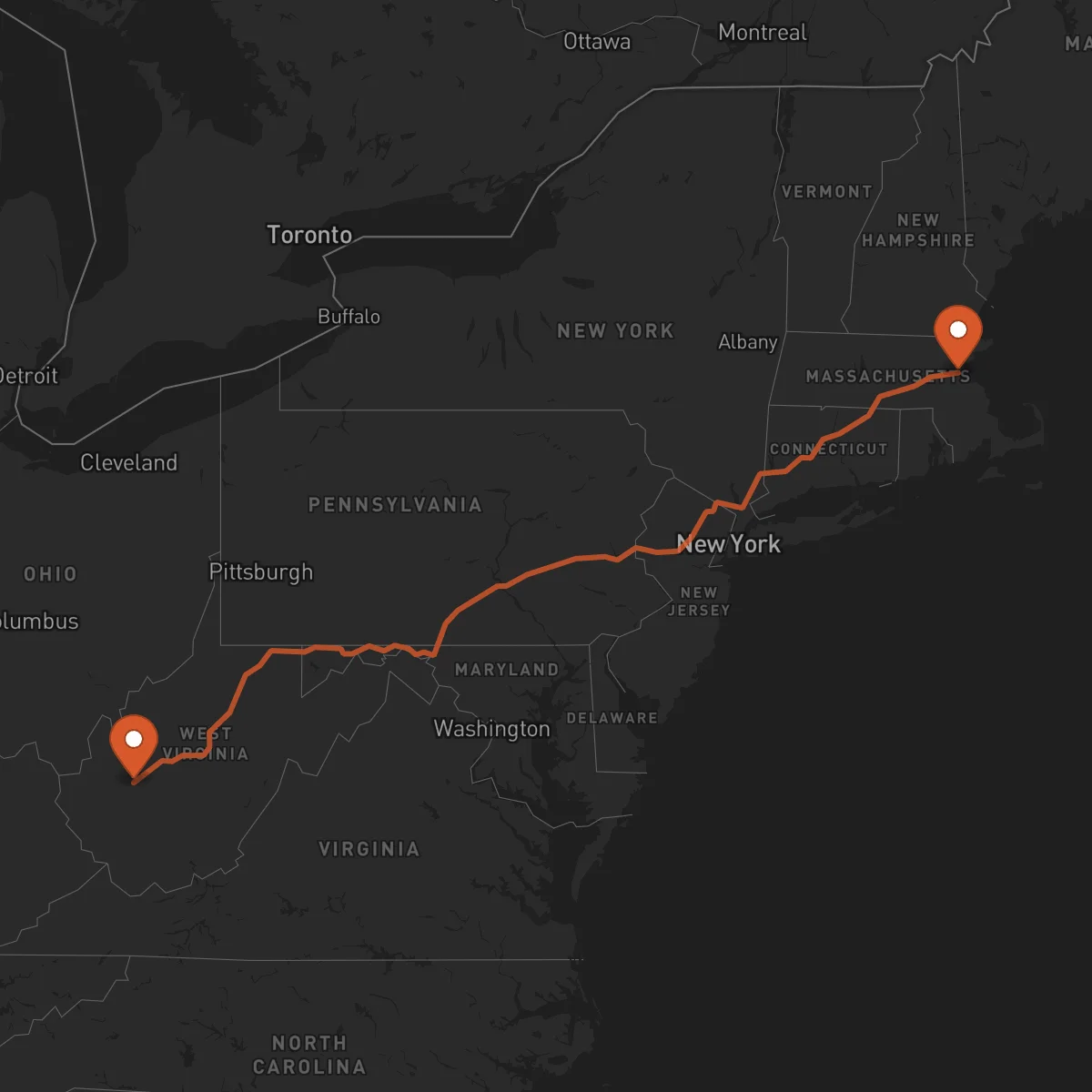
Charleston to Boston
Boston → CharlestonFTL freight transportation service between Charleston and Boston. Reliable logistics solutions for your business.
Route Description
Everything you need to know about the corridor Charleston - Boston
The logistics corridor connecting Charleston, West Virginia to Boston, Massachusetts represents a vital transportation artery spanning approximately 1000 kilometers across the eastern United States. This route traverses diverse economic regions, connecting the Appalachian industrial base with New England's advanced manufacturing and technology hubs. The corridor primarily utilizes Interstate 79 and Interstate 90, providing reliable access through major urban centers and rural landscapes alike.
The economic significance of this corridor is substantial, linking Charleston's energy sector and chemical manufacturing with Boston's pharmaceutical, biotechnology, and higher education institutions. Companies along this route benefit from the efficient movement of raw materials, finished goods, and specialized equipment. The corridor supports industries ranging from automotive parts and industrial machinery to medical supplies and research materials, making it a critical component of the regional supply chain.
Control Terrestre provides comprehensive FTL transportation solutions along this corridor, offering dedicated truckload services that ensure cargo moves directly from origin to destination without intermediate stops. Our strategic partnerships with certified carriers and our expertise in handling specialized freight make us the ideal partner for companies requiring reliable, time-sensitive transportation between Charleston and Boston. We understand the unique requirements of both West Virginia's industrial base and Massachusetts' advanced manufacturing sector, allowing us to provide tailored solutions that meet the specific needs of each client.
Services for this Route
Available services for the corridor Charleston - Boston
 Origin
Charleston
Charleston, West Virginia serves as a strategic logistics hub in the Appalachian region, offering excellent connectivity through Interstate 64, Interstate 77, and Interstate 79. The city's location provides efficient access to major industrial centers in the Midwest and Northeast, making it an ideal origin point for freight distribution. Charleston's economy is anchored by energy production, chemical manufacturing, and healthcare sectors, with numerous facilities requiring regular transportation of specialized materials and equipment.
The city benefits from Yeager Airport and the Port of Huntington-Tristate, providing multimodal transportation options. Charleston's industrial parks and manufacturing facilities generate substantial freight volume, particularly in chemical products, automotive components, and industrial machinery. The region's skilled workforce and established infrastructure make it a reliable origin for time-sensitive and specialized freight shipments requiring FTL transportation services.
 Destination
Boston
Boston, Massachusetts stands as a premier logistics destination on the East Coast, offering unparalleled access to one of America's most dynamic economic regions. The city's strategic position along Interstate 90 and proximity to major ports and airports creates exceptional connectivity for freight movement. Boston's economy thrives on advanced manufacturing, biotechnology, higher education, and healthcare sectors, generating consistent demand for specialized transportation services.
The metropolitan area features extensive warehousing and distribution facilities, particularly in surrounding communities like Woburn, Framingham, and Worcester. Boston's Logan International Airport and Port of Boston provide crucial air and sea freight connections, complementing the robust ground transportation network. The region's concentration of research institutions and pharmaceutical companies creates specific requirements for temperature-controlled and time-sensitive shipments, making reliable FTL services essential for maintaining the area's competitive advantage in global markets.










