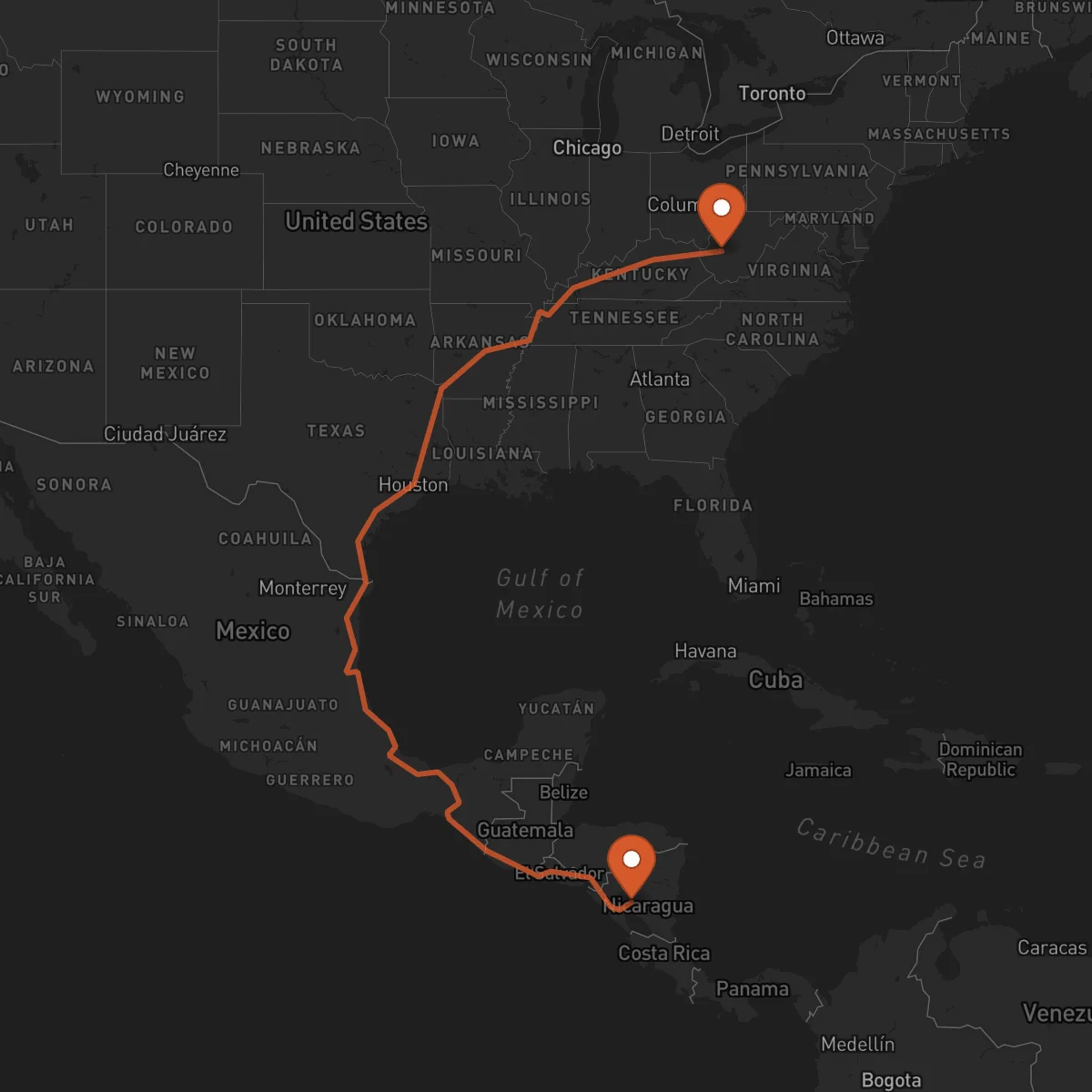
Charleston to Boaco
Boaco → CharlestonFTL freight transportation service between Charleston and Boaco. Reliable logistics solutions for your business.
Route Description
Everything you need to know about the corridor Charleston - Boaco
The Charleston, West Virginia to Boaco, Nicaragua corridor represents a vital cross-border logistics artery connecting the industrial heartland of the United States with the agricultural and growing manufacturing sectors of Central America. Strategically, this route bridges the Appalachian region's production and distribution centers with key markets in Nicaragua and beyond, facilitating essential trade flows. The economic context is defined by the export of U.S.-manufactured goods, machinery, and raw materials southward, balanced by the northbound movement of agricultural products, textiles, and consumer goods from Nicaragua. Major industries leveraging this corridor include automotive parts suppliers, construction materials producers, agricultural commodity handlers, and consumer goods manufacturers seeking efficient market access.
Transportation infrastructure relies primarily on a well-established highway network. The journey begins utilizing the U.S. Interstate system, notably I-64 and I-77, which provide direct access from Charleston to southern border crossings. The route then traverses Mexico via federal highways, a critical overland segment requiring meticulous coordination. The final leg into Nicaragua depends on the Pan-American Highway (CA-1) and regional roads. The principal border consideration is the complex Mexico-Guatemala and Guatemala-Nicaragua crossings, where customs procedures, documentation (such as NAFTA/USMCA certificates of origin), and regulatory compliance are paramount. Our providers' certifications, including C-TPAT and FAST for U.S. border efficiency and BASC for security standards in Latin America, are instrumental in navigating these requirements smoothly.
Control Terrestre facilitates seamless operations on this corridor by leveraging our alliance of specialized carriers with proven expertise in long-haul, cross-border freight. We exclusively manage Full Truckload (FTL) shipments, ensuring dedicated capacity and direct routing for your cargo. Our network includes carriers equipped with the necessary certifications and equipment—from dry vans and reefers to flatbeds for oversized items—to handle the diverse cargo types common on this route. We manage the entire logistics chain, from door pickup in Charleston to final delivery in Boaco, coordinating all border crossings and customs brokerage support. This allows our clients to benefit from a single, reliable point of contact for a complex international route, optimizing supply chain visibility and control without the need for consolidated (LTL) shipping.
Services for this Route
Available services for the corridor Charleston - Boaco
 Origin
Charleston
Charleston, West Virginia, serves as a strategic logistics origin point at the confluence of the Kanawha and Elk rivers. Its location provides a central hub for the Appalachian region, with excellent access to major U.S. Interstate highways I-64 (east-west) and I-77 (north-south), connecting it directly to the Midwest, Southeast, and key southern border gateways. The local economy is historically rooted in energy, chemical manufacturing, and timber, but has diversified to include advanced manufacturing, healthcare, and professional services. This industrial base generates consistent demand for outbound freight transportation of chemicals, polymers, fabricated metals, and machinery. The infrastructure is supported by the Kanawha River barge system for bulk commodities and the Yeager Airport, though ground transportation via the interstate network remains the primary mode for FTL freight destined for international corridors like the one to Nicaragua.
 Destination
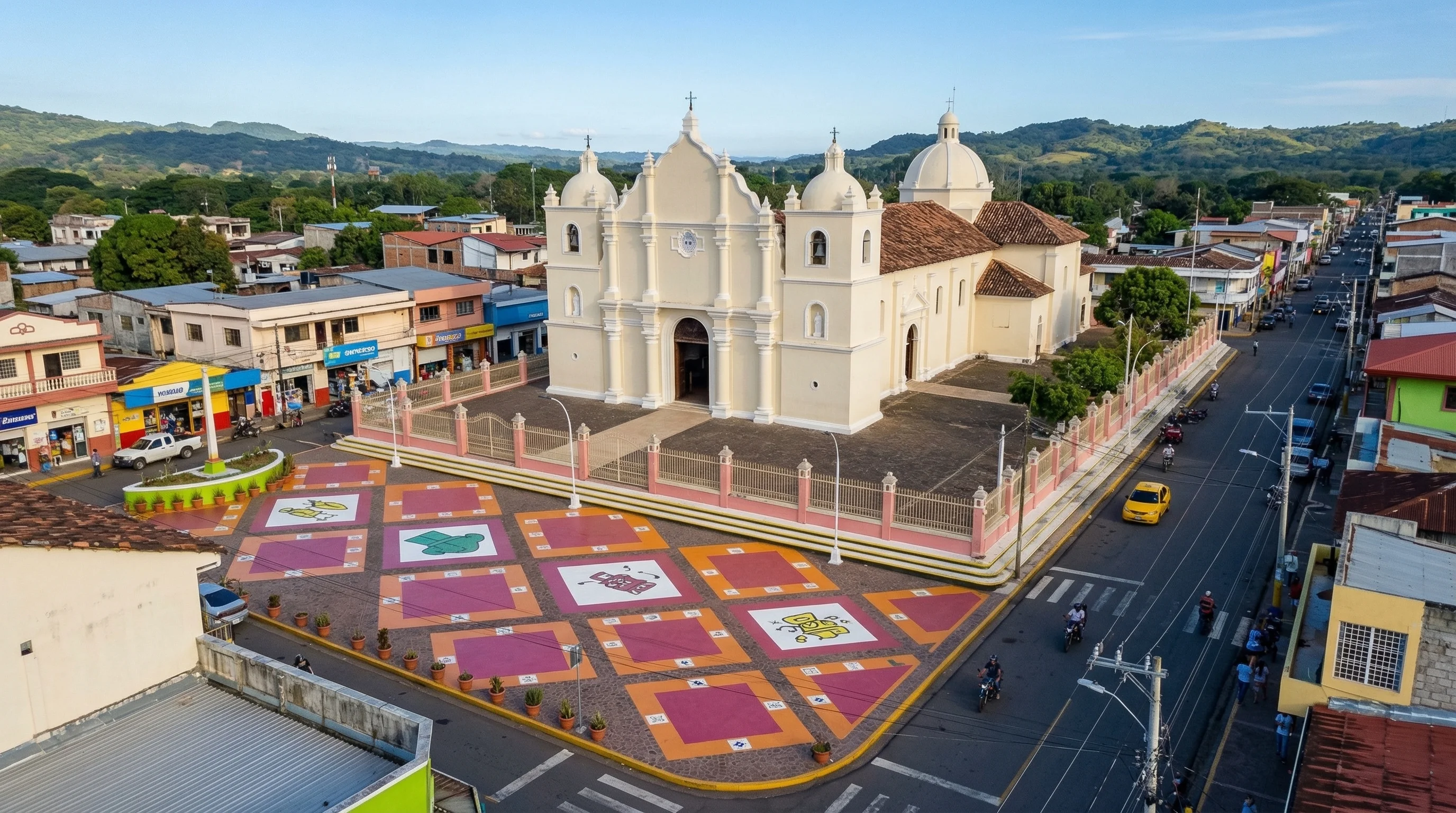
Boaco, the capital of the Boaco department in central Nicaragua, is a strategic agricultural and emerging logistics destination. Its location in the fertile central highlands makes it a key hub for Nicaragua's dairy, beef, coffee, and grain production. The city is connected by the Pan-American Highway (CA-1), providing a direct paved route to Managua (approximately 90 km west) and to the northern and southern regions of the country. This highway link is essential for moving goods to and from the Pacific ports of Corinto and potential future intermodal facilities. The local economy's reliance on agriculture and livestock drives demand for refrigerated transportation (reefers) for perishable exports and dry van capacity for inputs and manufactured goods. Infrastructure includes warehousing and distribution facilities serving the regional farming community, with all overland freight ultimately funneling through the main highway corridor for cross-border movements.










