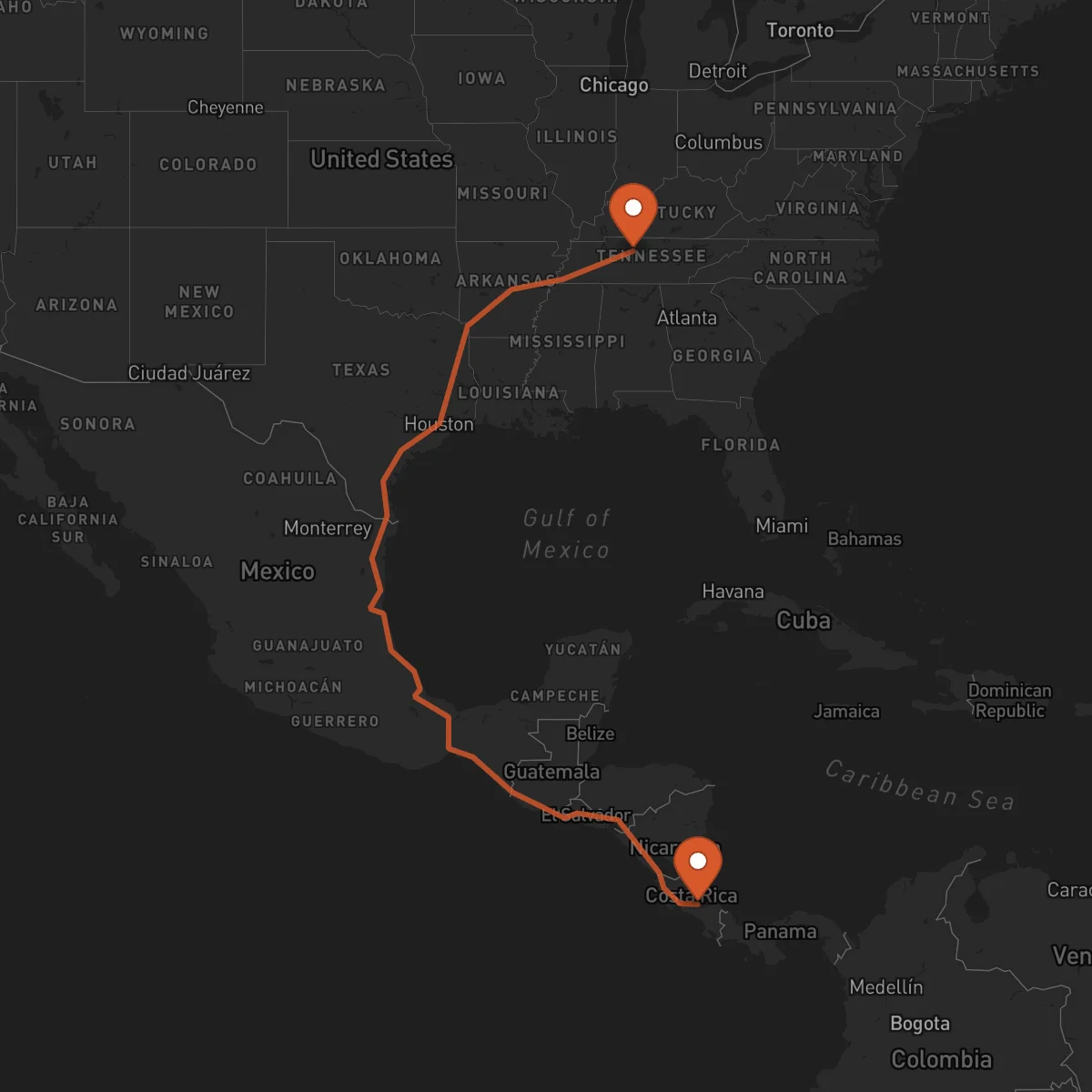
Cartago to Nashville
Nashville → CartagoFTL freight transportation service between Cartago and Nashville. Reliable logistics solutions for your business.
Route Description
Everything you need to know about the corridor Cartago - Nashville
The Cartago-Nashville corridor represents a vital logistics link between Costa Rica's industrial heartland and Tennessee's thriving manufacturing and distribution hub. This 2,938 km cross-border route connects Central America's growing export economy with the United States' southeastern logistics network. The corridor facilitates the movement of diverse cargo types, from automotive components and electronics to agricultural products and industrial machinery. Control Terrestre's expertise in cross-border operations ensures seamless freight transportation through this complex international route, managing all customs requirements and regulatory compliance between Costa Rica, Panama, and the United States.
Services for this Route
Available services for the corridor Cartago - Nashville
 Origin
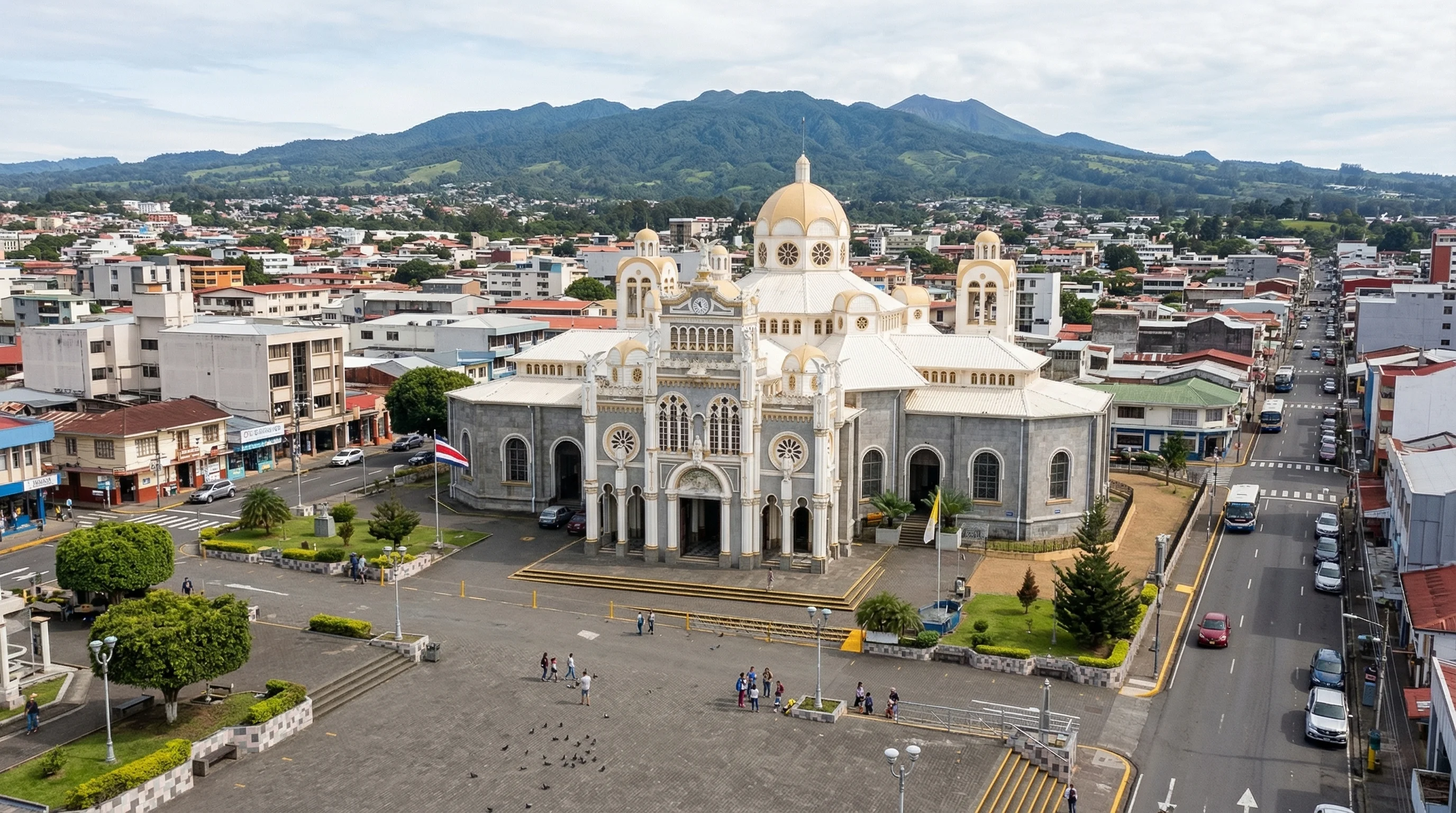
Cartago
Cartago, Costa Rica's historic capital, serves as a strategic logistics center with excellent connectivity to major ports and industrial zones. The region hosts significant automotive, electronics, and agricultural processing industries that drive export activity. Cartago's proximity to Juan Santamaría International Airport and the Atlantic port of Limón provides multimodal transportation options. The city's well-developed road infrastructure, including the Inter-American Highway, enables efficient cargo movement to both Pacific and Atlantic coasts for international shipping.
 Destination
Nashville
Nashville, Tennessee stands as a major logistics hub in the southeastern United States, offering exceptional connectivity through its extensive highway network including I-40, I-24, and I-65. The city's central location provides access to over 75% of the U.S. population within a two-day truck drive. Nashville's economy thrives on automotive manufacturing, healthcare, and music industry-related distribution. The metropolitan area features numerous warehousing facilities, intermodal terminals, and a growing freight forwarding sector that supports regional and national distribution networks.










