Cancún to Sioux Falls
Sioux Falls → CancúnFTL freight transportation service between Cancún and Sioux Falls. Reliable logistics solutions for your business.
Route Description
Everything you need to know about the corridor Cancún - Sioux Falls
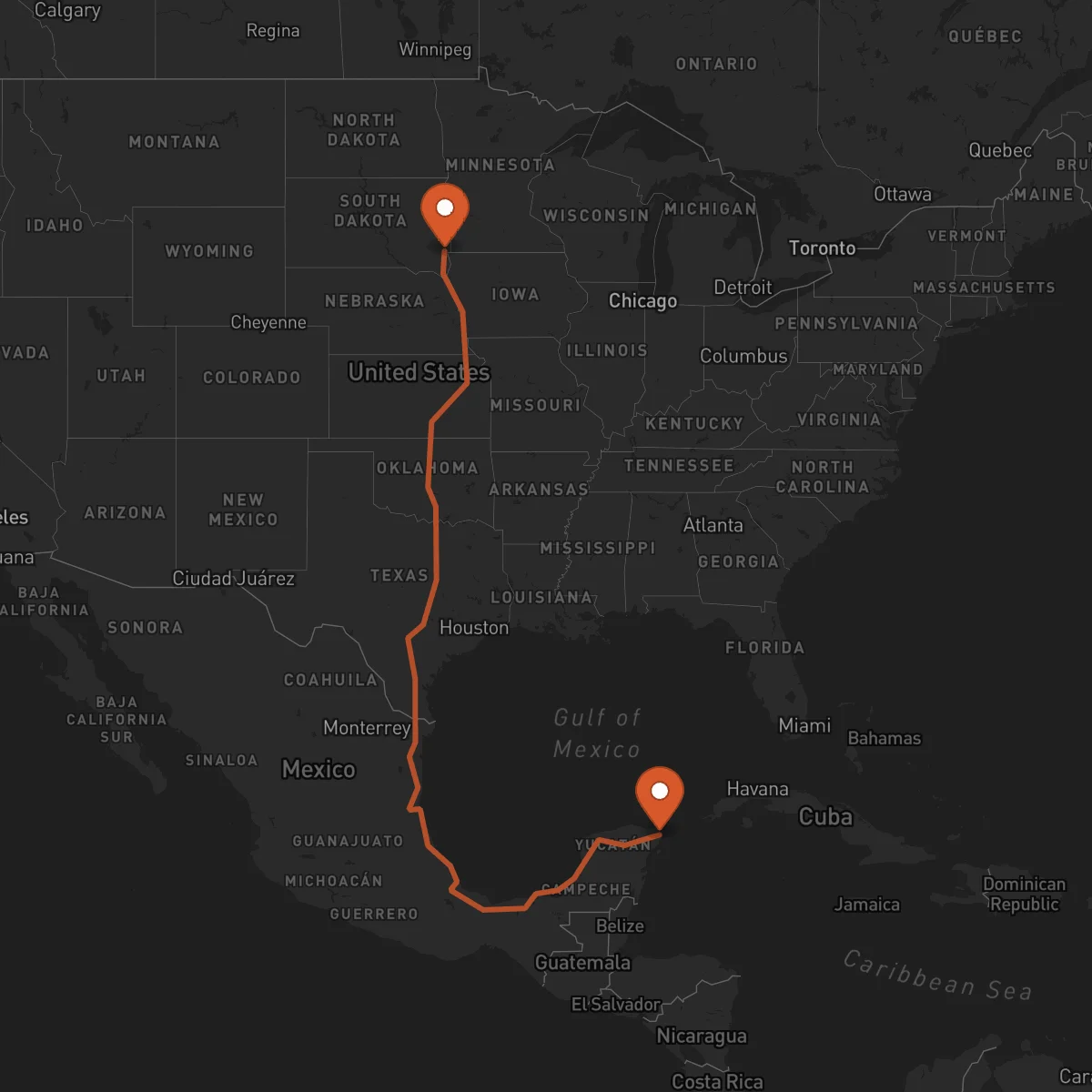
The logistics corridor connecting Cancún, Quintana Roo, México to Sioux Falls, South Dakota, Estados Unidos represents a vital trade link between Mexico's Caribbean coast and the American Midwest. This 2,652 km cross-border route facilitates the movement of diverse cargo types, from automotive components and electronics to agricultural products and consumer goods. The corridor leverages Mexico's growing manufacturing sector and South Dakota's robust distribution networks, creating opportunities for businesses to optimize their supply chains across North America.
The route traverses key industrial regions, passing through central Mexico's manufacturing hubs before crossing into the United States via major border crossings. From there, it continues through the American heartland, connecting with Sioux Falls' strategic location in the Midwest. This corridor benefits from Mexico's trade agreements and the United States-Mexico-Canada Agreement (USMCA), facilitating smoother cross-border operations for qualified freight forwarders like Control Terrestre.
Transportation infrastructure along this corridor includes Mexico's Federal Highway 180 and Federal Highway 45, connecting to U.S. Interstate highways such as I-29 and I-90. These well-maintained routes ensure reliable transit times for full truckload (FTL) shipments. Control Terrestre's expertise in cross-border operations ensures seamless customs clearance and compliance with all regulatory requirements, while our certified carriers provide the necessary security and reliability for sensitive cargo movements between these two points.
Services for this Route
Available services for the corridor Cancún - Sioux Falls
 Origin
Cancún
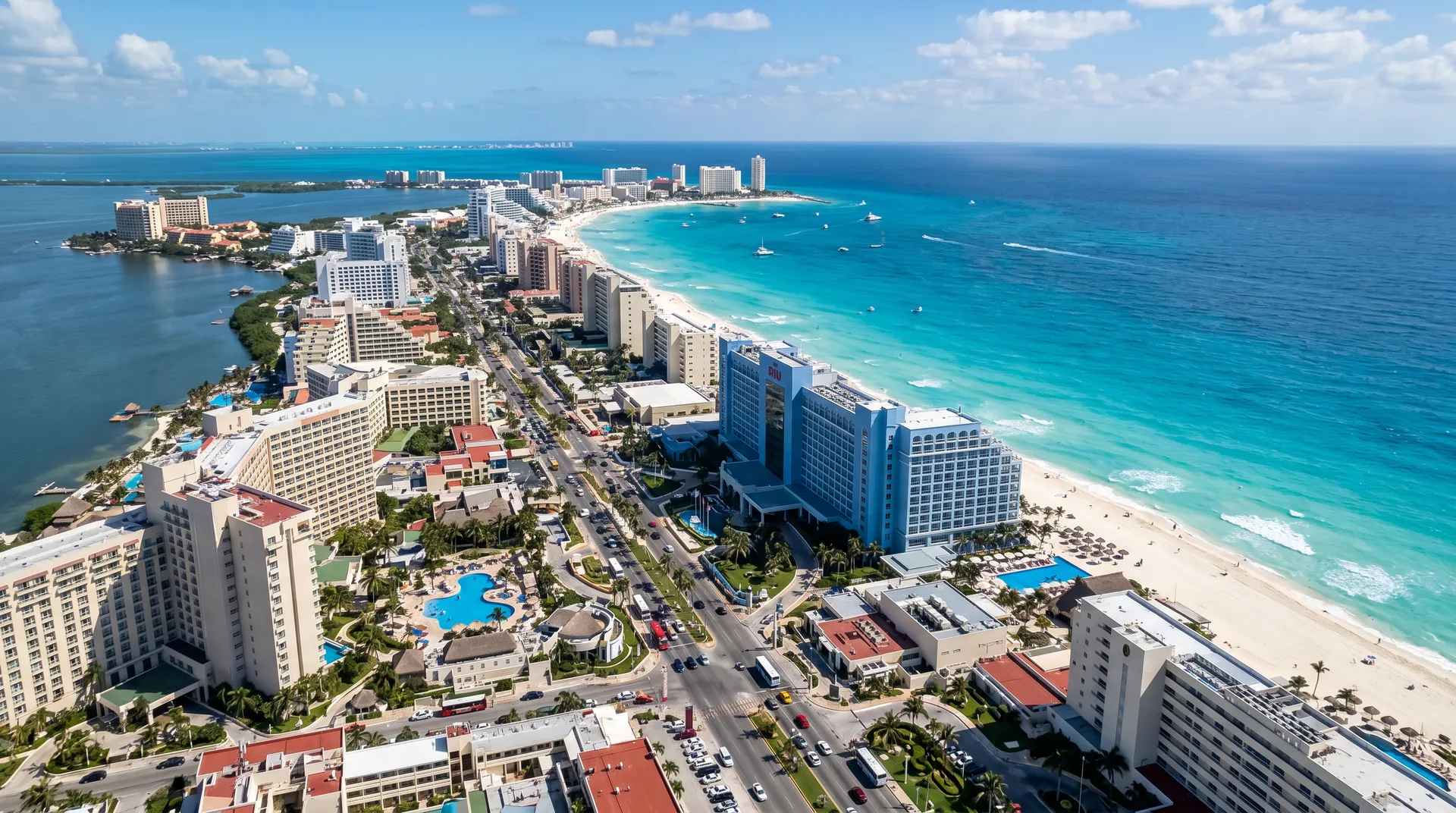
Cancún, located on Mexico's Caribbean coast in Quintana Roo, serves as a strategic logistics hub for the Yucatán Peninsula. Beyond its prominence as a tourist destination, Cancún has developed significant industrial and manufacturing capabilities, particularly in aerospace, automotive, and electronics sectors. The city's proximity to major ports and its well-developed transportation infrastructure, including Cancún International Airport and modern highway connections, make it an ideal origin point for cross-border freight movements.
The region benefits from Quintana Roo's participation in Mexico's trade ecosystem, with access to free trade agreements and specialized economic zones. Cancún's logistics infrastructure includes warehousing facilities, distribution centers, and a growing network of certified carriers equipped to handle diverse cargo types. The city's strategic location provides efficient connections to both domestic Mexican markets and international destinations, particularly the United States and Canada.
 Destination
Sioux Falls
Sioux Falls, South Dakota, stands as a strategic logistics hub in the American Midwest, offering excellent connectivity to major U.S. markets. Located at the intersection of Interstate 29 and Interstate 90, the city provides seamless access to distribution networks across the central United States. Sioux Falls' central location enables efficient three-day delivery to most major U.S. cities, making it an ideal destination for cross-border freight from Mexico.
The city's economy is diverse, with strong presence in financial services, healthcare, retail, and manufacturing sectors. Sioux Falls benefits from South Dakota's business-friendly environment and strategic position within North America's freight transportation network. The metropolitan area hosts numerous warehousing and distribution facilities, supported by a skilled logistics workforce and modern infrastructure. The city's logistics ecosystem is well-equipped to handle cross-border shipments, with established procedures for customs clearance and distribution throughout the Midwest region.










