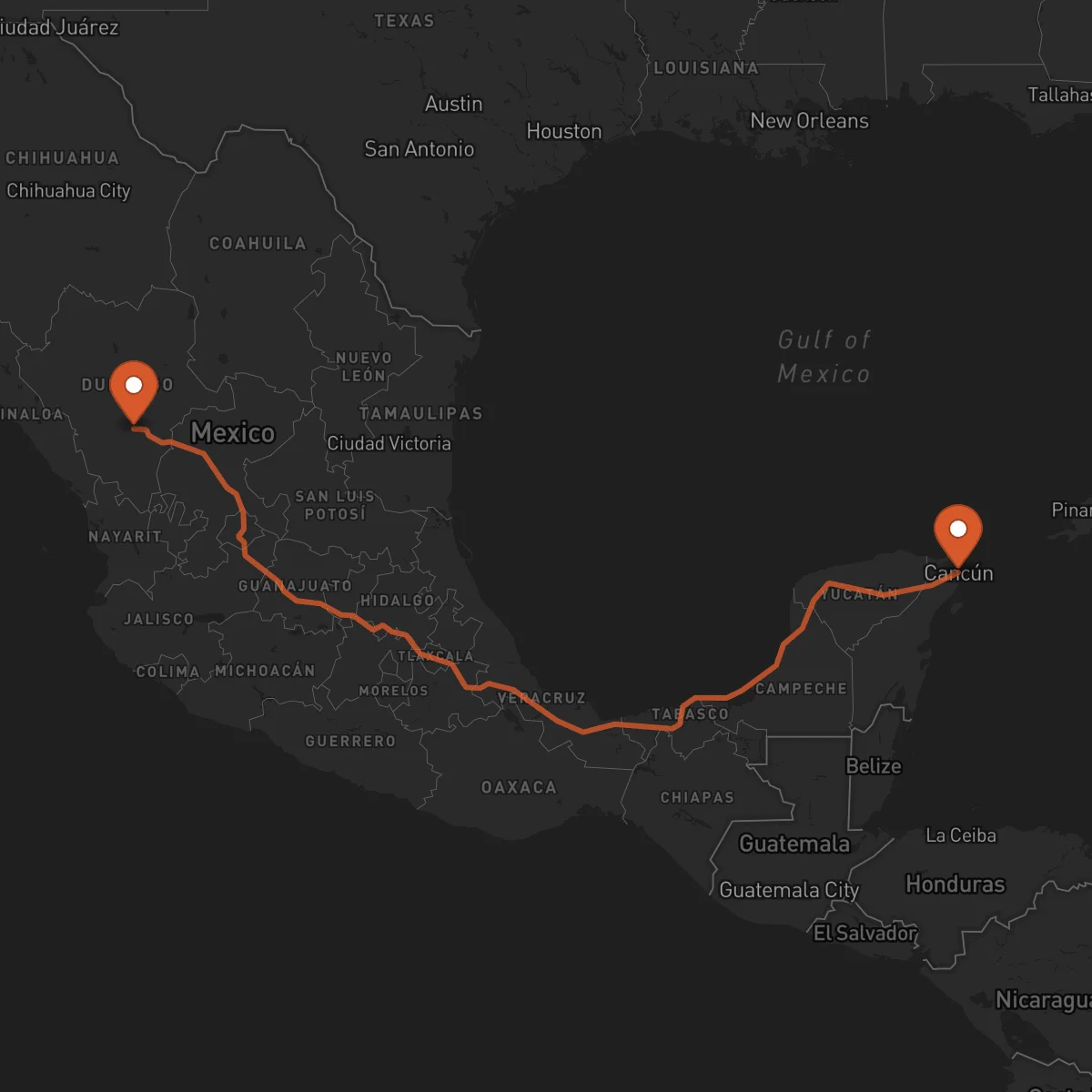
Cancún to Durango
Durango → CancúnFTL freight transportation service between Cancún and Durango. Reliable logistics solutions for your business.
Route Description
Everything you need to know about the corridor Cancún - Durango
The logistics corridor between Cancún and Durango represents a vital connection between the Caribbean coast and the central-northern region of Mexico. This 1,854 km route traverses diverse landscapes, from the tropical beaches of Quintana Roo to the mountainous terrain of Durango, facilitating the movement of goods between two economically distinct regions. This corridor is essential for companies seeking to optimize their supply chain between the southeast and the Bajío-northern region.
The economic significance of this route lies in its ability to connect the tourism and export industries of Cancún with the industrial and mining sectors of Durango. Along the way, it crosses important states such as Veracruz and San Luis Potosí, providing access to key markets and industrial clusters. The corridor serves as a bridge between the Atlantic trade through the Port of Veracruz and the inland industrial production of northern Mexico.
The main industries utilizing this corridor include the automotive and autoparts sector, mining and metallurgy, agricultural products, and consumer goods. Companies in these sectors rely on efficient transportation to maintain their production chains and distribution networks. The corridor also facilitates the movement of raw materials from the north to the manufacturing plants in the southeast, as well as finished products in the opposite direction.
Control Terrestre offers specialized FTL (Full Truckload) services on this corridor, ensuring that your cargo travels directly from origin to destination without intermediate stops. Our transportation solutions are designed to meet the specific needs of each industry, with options for refrigerated transportation, hazardous materials, and specialized equipment for oversized cargo. We understand the importance of transit times and cargo safety, which is why we work with certified carriers and provide real-time tracking throughout the journey.
Services for this Route
Available services for the corridor Cancún - Durango
 Origin
Cancún
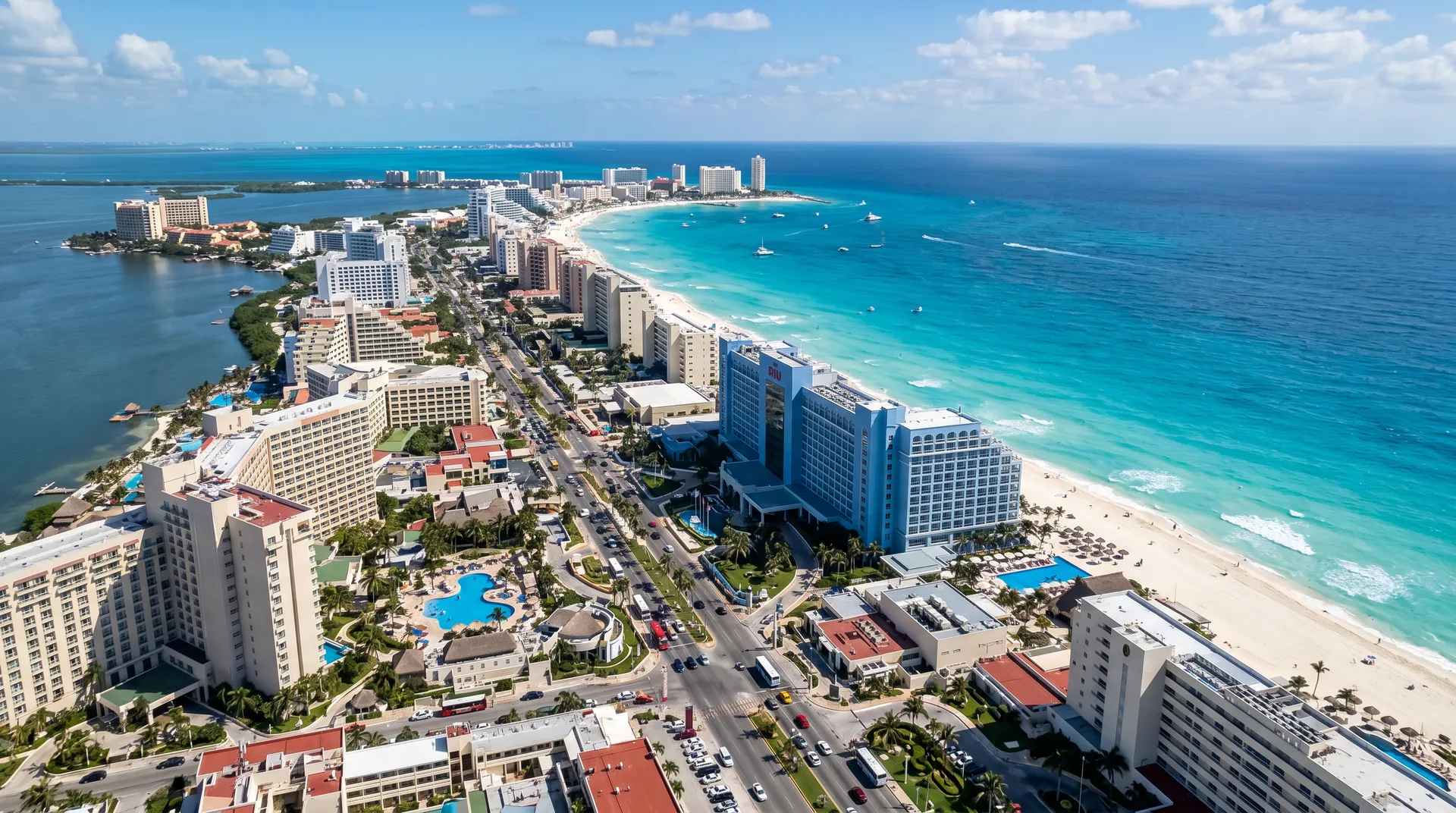
Cancún, located in the northeast of Quintana Roo, is a strategic logistics hub for the Mexican Caribbean. Its proximity to the second busiest international airport in Mexico and its connection to the Port of Veracruz via highway make it an ideal point for import and export operations. The region has experienced significant industrial development, particularly in the automotive and aerospace sectors, thanks to its competitive costs and access to international markets.
The main industries in Cancún and its surroundings include tourism and hospitality, agriculture (particularly tropical fruits and vegetables), fishing, and an emerging manufacturing sector. The region has also seen growth in the technology and renewable energy industries. The available transportation infrastructure includes the Cancún International Airport, which handles both passenger and cargo traffic, as well as a network of highways connecting to the rest of the Yucatan Peninsula and mainland Mexico.
 Destination
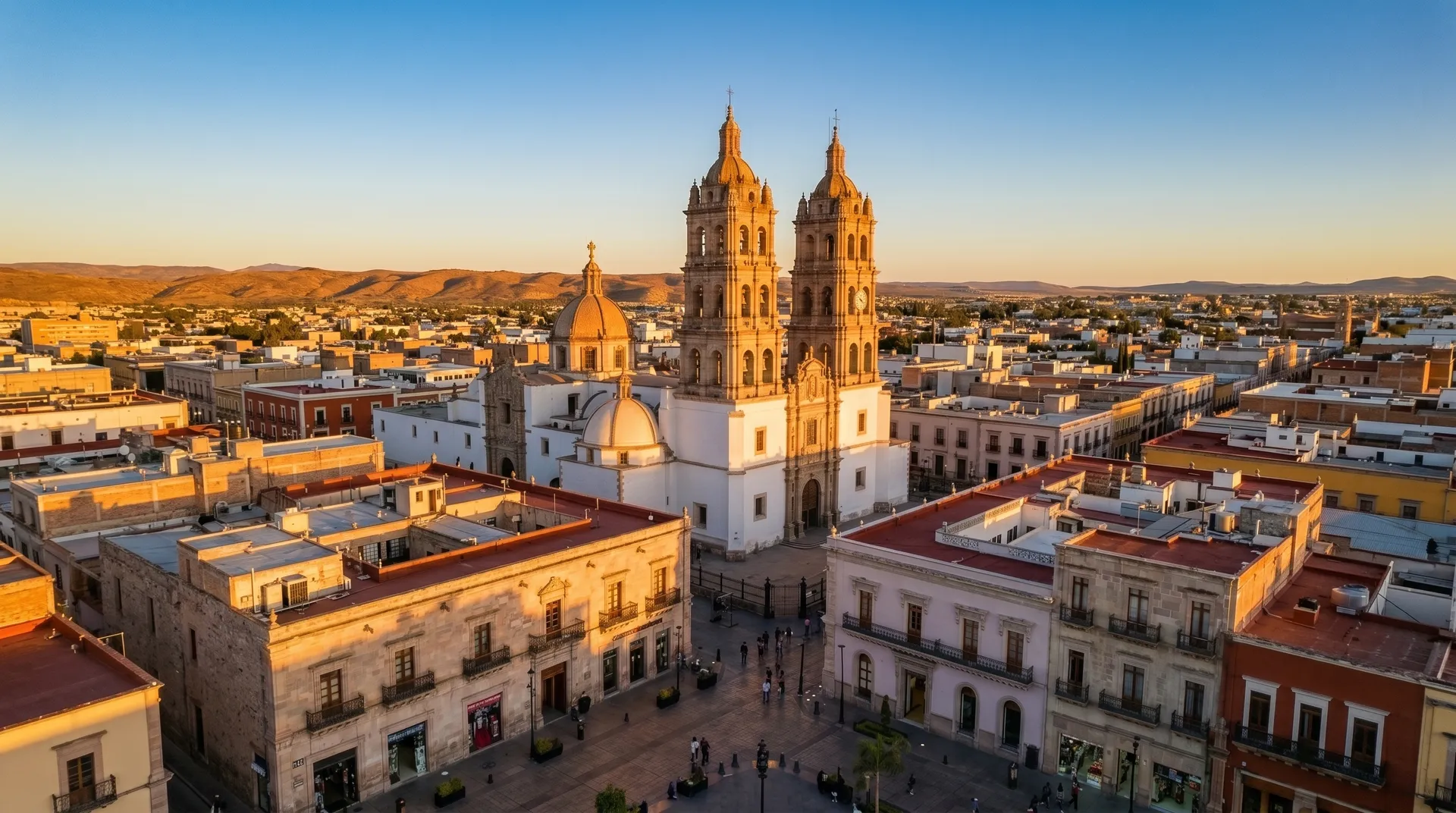
Durango, the capital of the state of the same name, is strategically located in the central-northern region of Mexico. This position makes it a key point for logistics operations connecting the Bajío region with the northern states and the United States. The city serves as a gateway to the mining and industrial regions of Durango, Zacatecas, and part of Coahuila, facilitating the distribution of products to these important economic areas.
The main industries in Durango include mining (particularly silver, gold, and zinc), automotive manufacturing, and agriculture (with a focus on viticulture and fruit production). The region has also developed a significant presence in the aerospace and renewable energy sectors. In terms of transportation infrastructure, Durango has the Durango International Airport and is connected to the national highway network through federal highways such as the 45 and 40, providing access to major cities like Monterrey, Guadalajara, and Mexico City.










