Cancún to Detroit
Detroit → CancúnFTL freight transportation service between Cancún and Detroit. Reliable logistics solutions for your business.
Route Description
Everything you need to know about the corridor Cancún - Detroit
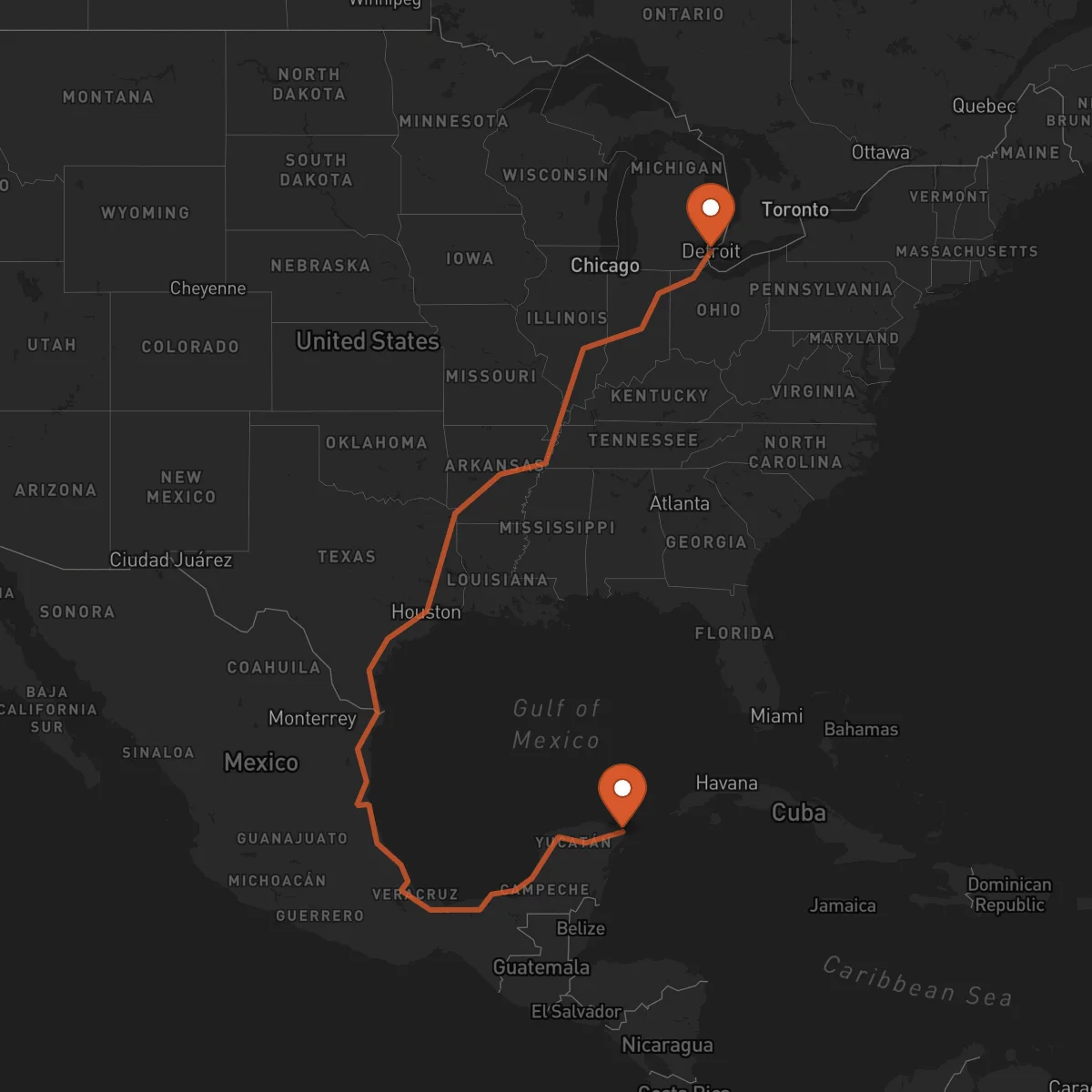
The Cancún-Detroit corridor represents a vital logistics connection between Mexico's Caribbean coast and the heart of the American automotive industry. This 2,380 km route traverses diverse terrain and crosses multiple state lines, serving as a critical supply chain artery for companies operating in both countries. The corridor connects Quintana Roo's growing manufacturing and export sector with Michigan's industrial powerhouse, facilitating the movement of automotive components, consumer goods, and specialized cargo between these two dynamic economic regions.
The transportation infrastructure along this corridor includes major highways such as Mexican Federal Highway 180, US Highway 65, and Interstate 75, providing reliable access through key commercial zones. Companies utilizing this route benefit from Control Terrestre's expertise in managing cross-border operations, including customs clearance and regulatory compliance at major entry points. Our strategic partnerships with certified carriers ensure consistent service quality and security throughout the journey, from the tropical climate of Cancún to the industrial Midwest.
This corridor is particularly valuable for automotive manufacturers, electronics companies, and consumer goods distributors who require efficient transportation between Mexico's production facilities and US assembly plants or distribution centers. Control Terrestre's dedicated FTL services on this route provide the reliability and capacity needed for time-sensitive shipments, with real-time tracking and proactive communication keeping customers informed throughout the transportation process.
Services for this Route
Available services for the corridor Cancún - Detroit
 Origin
Cancún
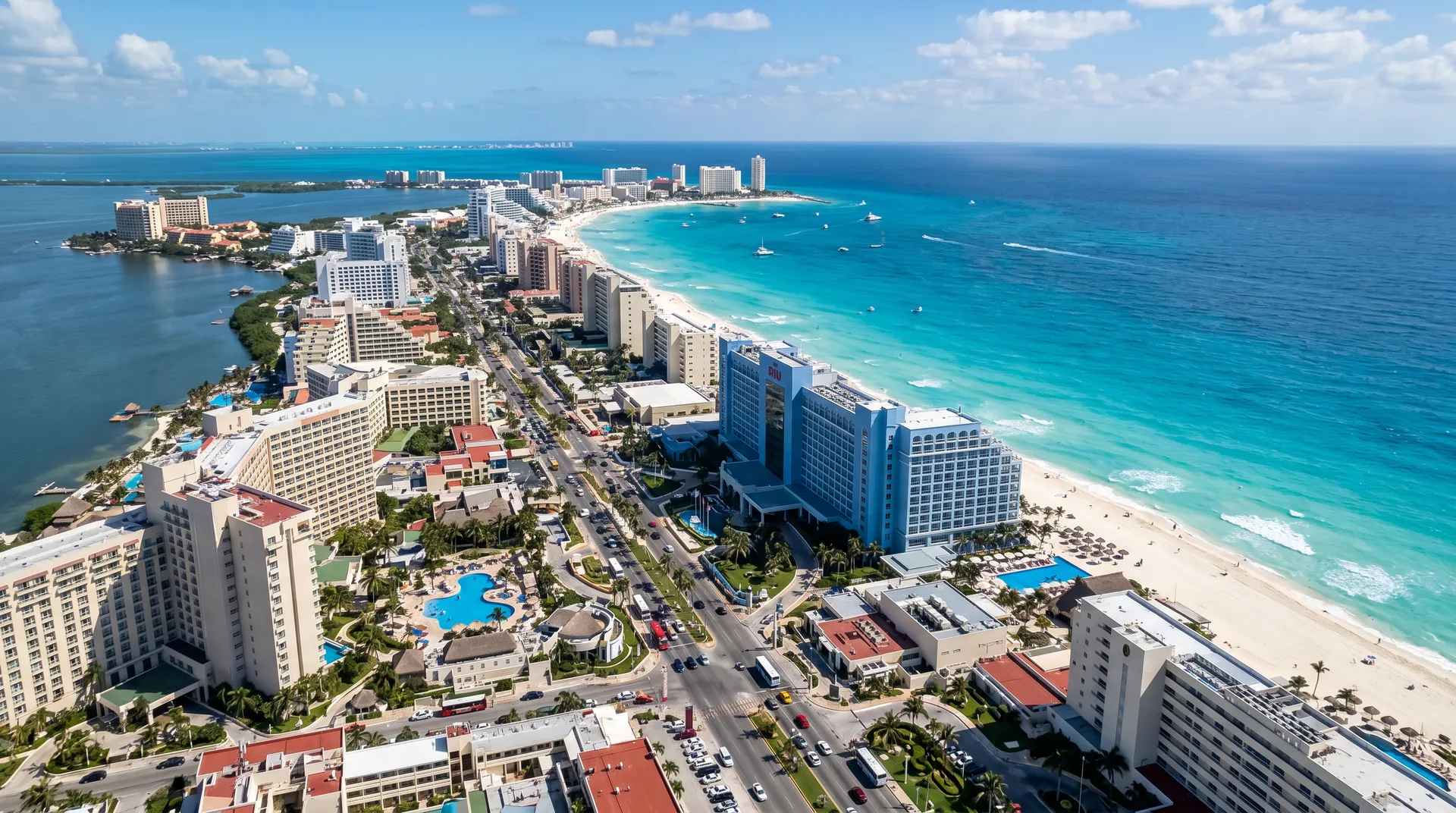
Cancún serves as a strategic logistics hub for Mexico's southeastern region, offering modern port facilities and proximity to major manufacturing centers in the Yucatán Peninsula. The city's growing industrial sector includes automotive parts production, electronics manufacturing, and food processing, all of which require efficient transportation connections to US markets. Cancún's international airport and seaport provide multimodal options for cargo consolidation, while the region's developing industrial parks offer specialized facilities for export-oriented companies. The area's infrastructure continues to expand, with improved highway connections to central Mexico and the US border, making it an increasingly attractive location for companies seeking cost-effective production and distribution operations.
 Destination
Detroit
Detroit stands as the epicenter of North America's automotive industry, with a concentration of manufacturing facilities, assembly plants, and automotive suppliers that create unique logistics demands. The city's strategic location in the Great Lakes region provides access to major transportation networks, including interstate highways, rail connections, and the Port of Detroit for international cargo. Detroit's industrial base extends beyond automotive to include advanced manufacturing, aerospace components, and technology sectors, all requiring reliable supply chain solutions. The region's infrastructure supports efficient distribution throughout the Midwest and beyond, with proximity to Canada enhancing cross-border trade opportunities. Control Terrestre's expertise in serving Detroit's industrial customers ensures seamless integration with local supply chains and just-in-time delivery requirements.










