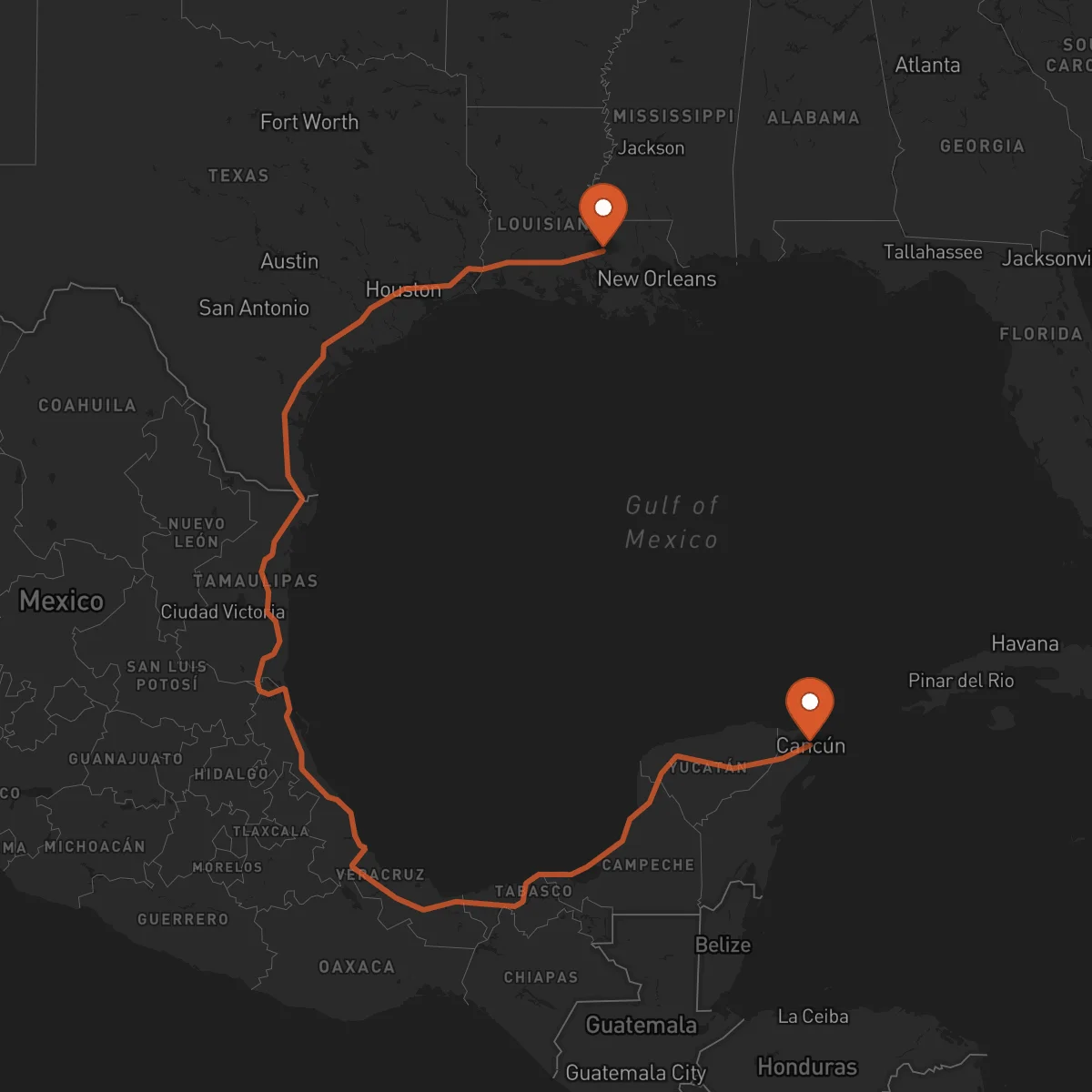
Cancún to Baton Rouge
Baton Rouge → CancúnFTL freight transportation service between Cancún and Baton Rouge. Reliable logistics solutions for your business.
Route Description
Everything you need to know about the corridor Cancún - Baton Rouge
The Cancún to Baton Rouge corridor represents a vital logistics connection between Mexico's vibrant Caribbean coast and the industrial heartland of Louisiana. This cross-border route spans approximately 1,120 kilometers, facilitating the movement of goods between two dynamic economic regions. The corridor serves as a crucial link for companies engaged in trade between Mexico and the United States, particularly those in the automotive, electronics, and agricultural sectors.
The transportation infrastructure along this route includes major highways such as Mexico's Federal Highway 180 and the US Interstate system, providing reliable connectivity. The journey crosses the Mexico-US border, requiring careful coordination of customs procedures and documentation. Control Terrestre's expertise in cross-border operations ensures smooth transit through these critical checkpoints, minimizing delays and maintaining supply chain efficiency.
This corridor is particularly valuable for businesses in Cancún's tourism and manufacturing sectors looking to access Baton Rouge's industrial markets, as well as for Louisiana companies seeking to export to Mexico's growing consumer market. The route supports both full truckload (FTL) shipments and specialized cargo movements, with Control Terrestre offering dedicated services tailored to the specific needs of each shipment. Our strategic partnerships and certified carriers ensure reliable, timely delivery across this important trade lane.
Services for this Route
Available services for the corridor Cancún - Baton Rouge
 Origin
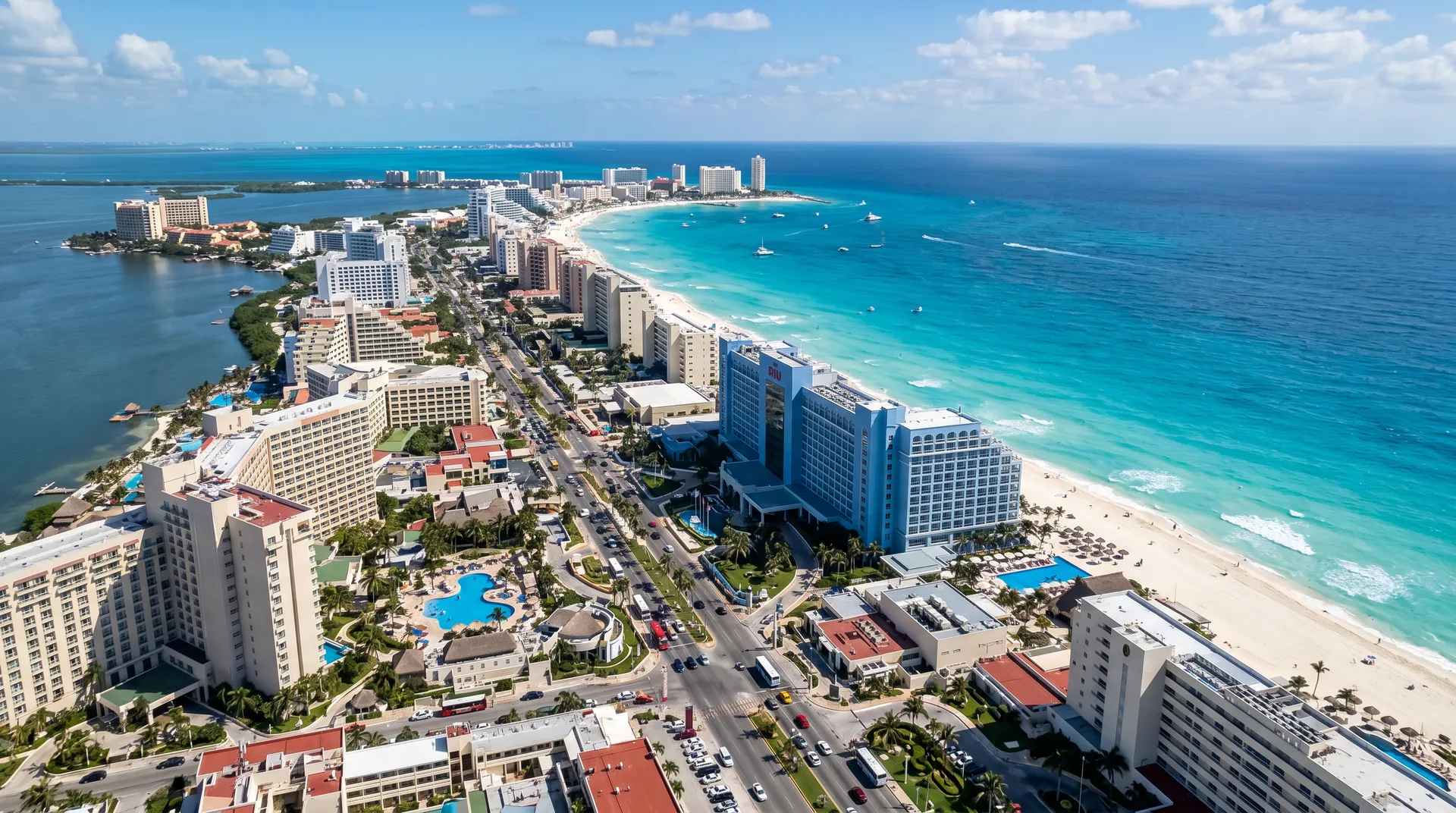
Cancún
Cancún, located in Quintana Roo on Mexico's Caribbean coast, serves as a strategic logistics hub with its proximity to major ports and growing industrial zones. The city's economy is primarily driven by tourism, but it has also developed significant manufacturing and export capabilities, particularly in the automotive and electronics sectors. Cancún's international airport and seaport provide multimodal transportation options, while its location near the Mexico-US border makes it an ideal starting point for cross-border freight movements.
The region benefits from modern transportation infrastructure, including well-maintained highways connecting to major Mexican cities and the US border. Cancún's Free Trade Zone status offers additional advantages for companies engaged in international trade, providing tax benefits and streamlined customs procedures. The city's growing industrial parks are home to numerous maquiladora operations, further enhancing its role as a logistics center for cross-border commerce.
 Destination
Baton Rouge
Baton Rouge, the capital city of Louisiana, is strategically positioned along the Mississippi River and serves as a major industrial and petrochemical hub in the United States. The city's economy is anchored by its robust manufacturing sector, particularly in chemicals, plastics, and advanced materials. Baton Rouge's extensive port facilities on the Mississippi River provide excellent maritime connections, while its location in the heart of the US Gulf Coast offers access to major rail and highway networks.
The city's industrial infrastructure includes specialized facilities for handling hazardous materials, oversized cargo, and temperature-controlled shipments, making it well-equipped to receive diverse freight types from Mexico. Baton Rouge's proximity to other major Gulf Coast cities like New Orleans and Houston further enhances its strategic importance as a logistics destination. The region's strong energy sector and growing technology industry create consistent demand for cross-border freight services, particularly for components and finished goods moving between Mexico and the US.










