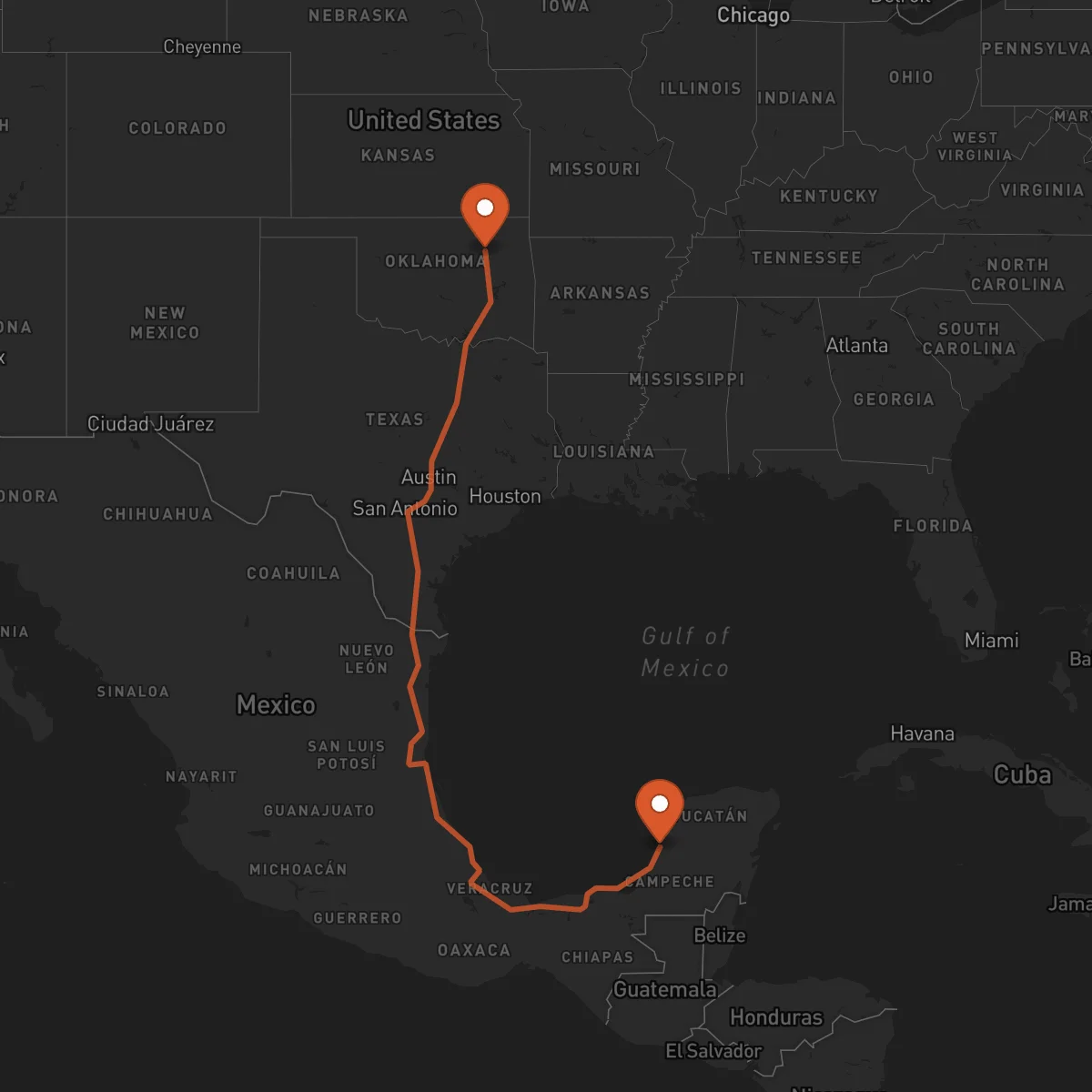
Campeche to Tulsa
Tulsa → CampecheFTL freight transportation service between Campeche and Tulsa. Reliable logistics solutions for your business.
Route Description
Everything you need to know about the corridor Campeche - Tulsa
The Campeche-Tulsa corridor represents a vital logistics connection between Mexico's Gulf coast and the central United States, spanning approximately 1,892 kilometers. This strategic route facilitates the movement of goods from Campeche's industrial and energy sectors to Tulsa's diverse manufacturing and distribution hub. The corridor traverses key Mexican states including Tabasco and Veracruz before crossing the US-Mexico border, typically at Laredo or Brownsville, and continues through Texas, Oklahoma, and into Tulsa. Control Terrestre optimizes this cross-border operation by managing all customs procedures, ensuring compliance with both Mexican and US regulations, and providing real-time tracking throughout the journey. Our expertise in handling the complexities of international freight transportation makes this corridor a reliable option for companies seeking to connect these two important economic regions.
Services for this Route
Available services for the corridor Campeche - Tulsa
 Origin
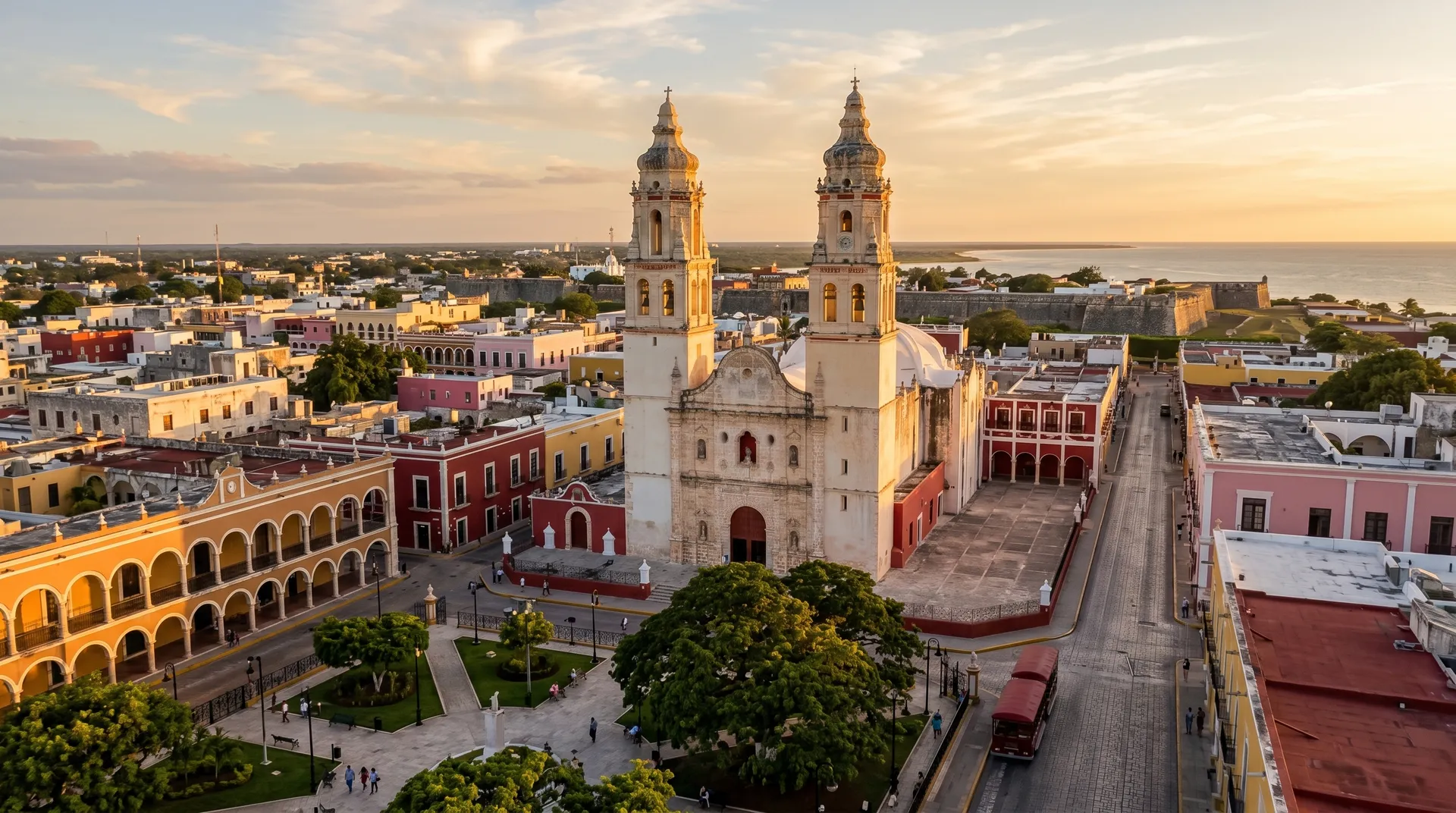
Campeche, located on Mexico's Gulf coast, serves as a strategic logistics gateway with its proximity to major ports and industrial zones. The state is renowned for its energy sector, particularly oil and gas operations in the Campeche Sound, which creates substantial freight transportation needs. The region's infrastructure includes the Federal Highway 180 connecting to other major routes, and the nearby port of Ciudad del Carmen facilitating maritime connections. Campeche's industrial parks and manufacturing facilities generate consistent demand for full truckload services to US destinations, making it an important origin point for cross-border freight movements.
 Destination
Tulsa
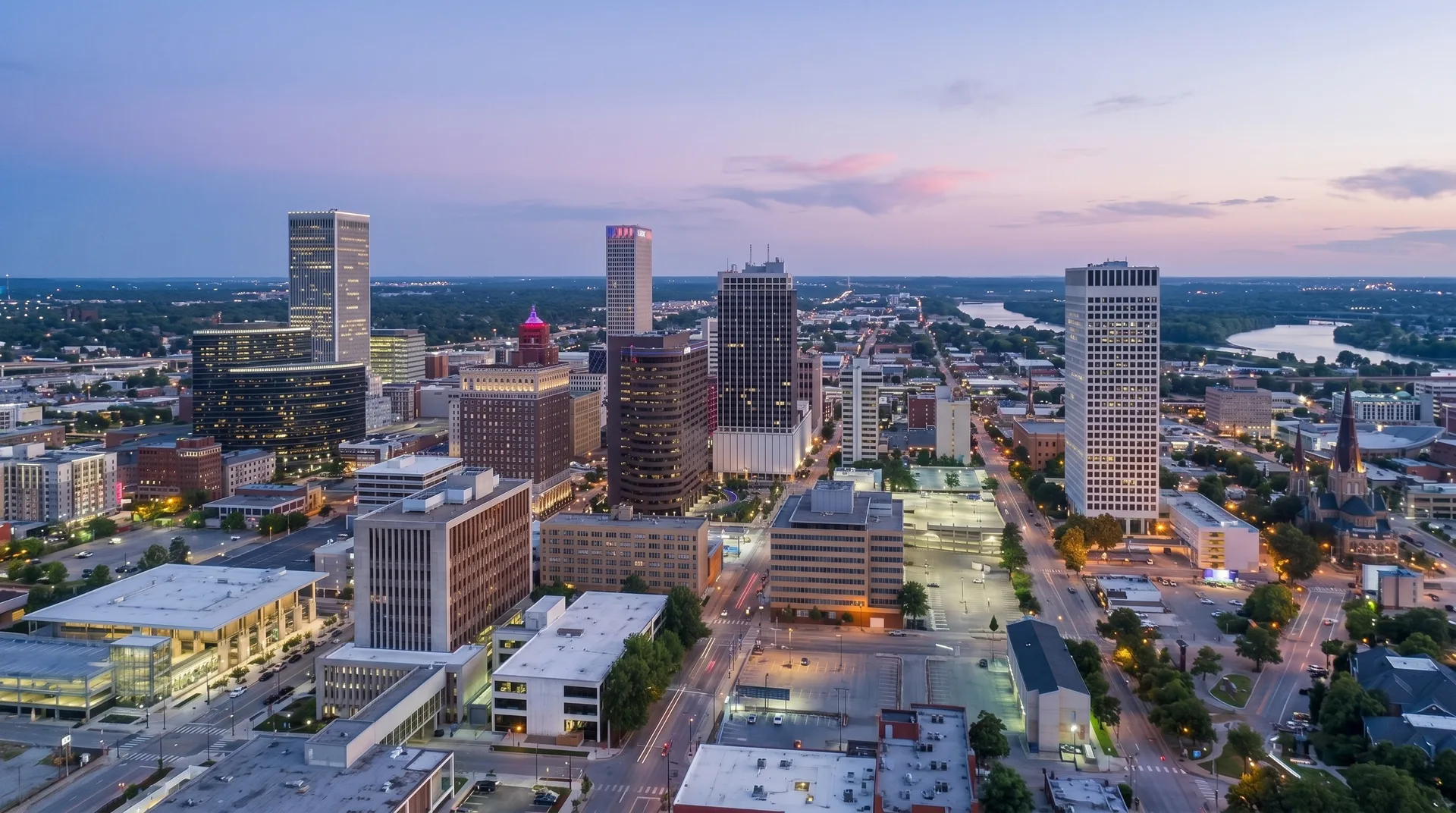
Tulsa, Oklahoma stands as a major logistics and distribution center in the southern United States, strategically positioned along the I-44 and I-35 corridors. The city's diversified economy encompasses aerospace, energy, manufacturing, and logistics sectors, creating robust demand for inbound freight transportation. Tulsa benefits from excellent infrastructure including the Tulsa Port of Catoosa (inland waterway access), multiple interstate highways, and a central location that provides 48-hour ground access to 90% of the US. The city's logistics ecosystem includes warehousing, distribution centers, and advanced supply chain facilities, making it an ideal destination for full truckload shipments from Mexico.










