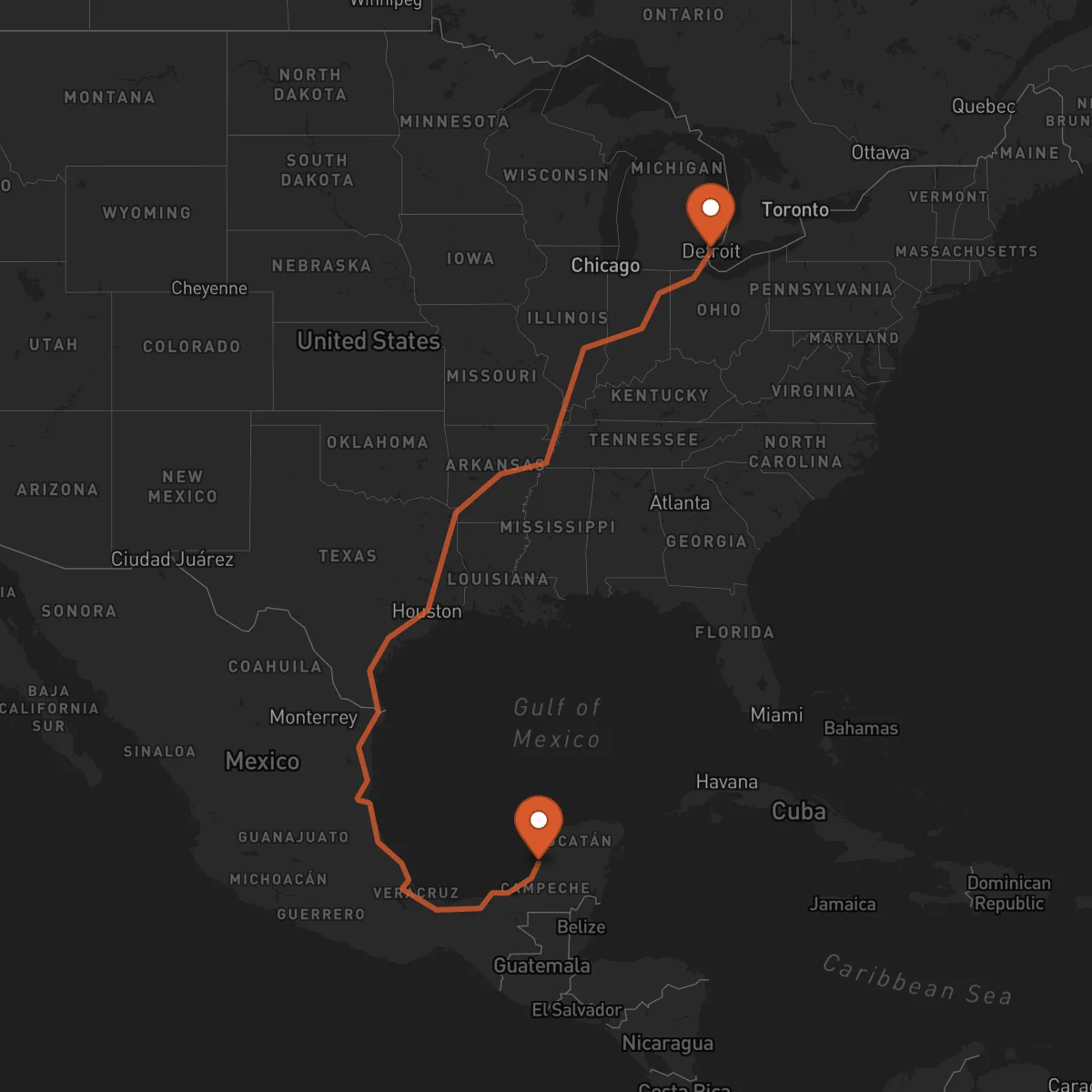
Campeche to Detroit
Detroit → CampecheFTL freight transportation service between Campeche and Detroit. Reliable logistics solutions for your business.
Route Description
Everything you need to know about the corridor Campeche - Detroit
The logistics corridor between Campeche and Detroit represents a vital trade route connecting the Gulf of Mexico with the heart of the American automotive industry. This 2,599 km cross-border route facilitates the movement of critical cargo between Mexico's southeastern industrial hub and Michigan's manufacturing powerhouse. The corridor traverses diverse terrain and crosses multiple states, requiring expert navigation of both geographic and regulatory challenges.
The economic significance of this route is substantial, linking Campeche's petrochemical and energy sector with Detroit's automotive manufacturing ecosystem. This connection enables the seamless flow of raw materials, components, and finished products between these industrial centers. The corridor particularly benefits automotive parts manufacturers, energy companies, and heavy equipment suppliers who require reliable transportation between these strategic locations.
Key infrastructure along this route includes Mexico's Federal Highway 180 and Federal Highway 190, transitioning to major U.S. interstates such as I-69 and I-94. The corridor typically crosses at Laredo or Brownsville, depending on the specific origin and destination points. Control Terrestre's expertise in cross-border operations ensures smooth customs clearance and compliance with both Mexican and U.S. transportation regulations, providing our clients with peace of mind throughout the journey.
Services for this Route
Available services for the corridor Campeche - Detroit
 Origin
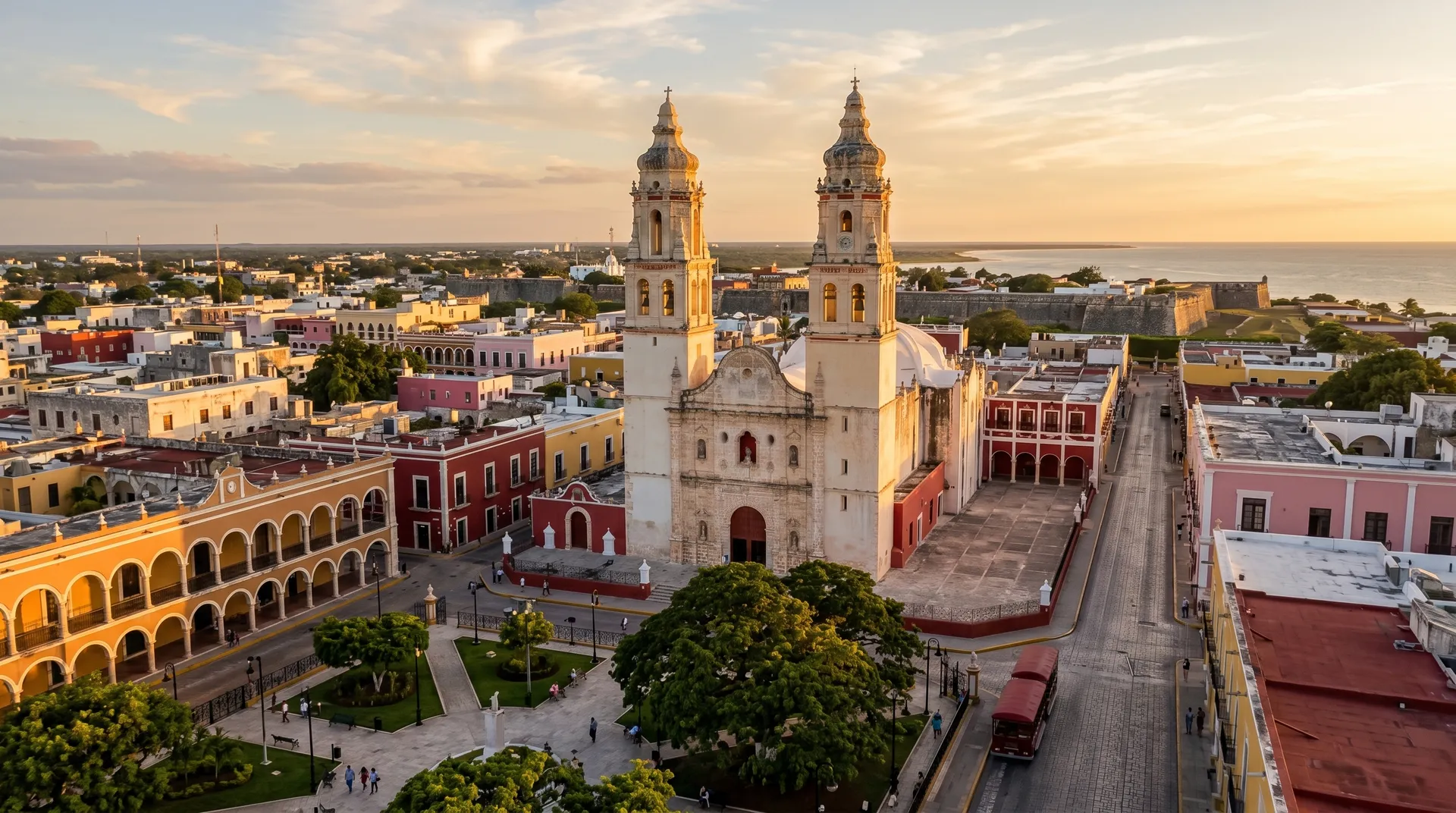
Campeche serves as a strategic logistics hub in southeastern Mexico, with its coastal location providing access to maritime shipping routes through the Gulf of Mexico. The state's economy is anchored by the petroleum industry, with significant operations by PEMEX in the offshore oil fields. This industrial base creates substantial demand for specialized freight transportation services, particularly for heavy equipment, hazardous materials, and oversized cargo.
The region benefits from a developing transportation infrastructure, including access to the Port of Campeche for maritime freight and a network of federal highways connecting to the rest of Mexico. The presence of industrial parks and manufacturing facilities in and around the city of Campeche has established it as a key origin point for export cargo destined for the United States and Canada.
 Destination
Detroit
Detroit stands as a global automotive manufacturing center, earning its reputation as the historic heart of America's automobile industry. The city and surrounding metropolitan area host major automotive manufacturers, parts suppliers, and logistics providers, creating a dense industrial ecosystem that demands efficient freight transportation solutions. Detroit's strategic location in the Great Lakes region provides excellent connectivity to both Canadian and U.S. markets.
The area benefits from a comprehensive transportation infrastructure, including the Ambassador Bridge and Detroit-Windsor Tunnel for cross-border traffic with Canada, extensive interstate highway connections, and the Port of Detroit for Great Lakes shipping. The presence of multiple intermodal facilities and a robust network of warehousing and distribution centers makes Detroit an ideal destination for freight arriving from Mexico, supporting just-in-time manufacturing and inventory management practices.










