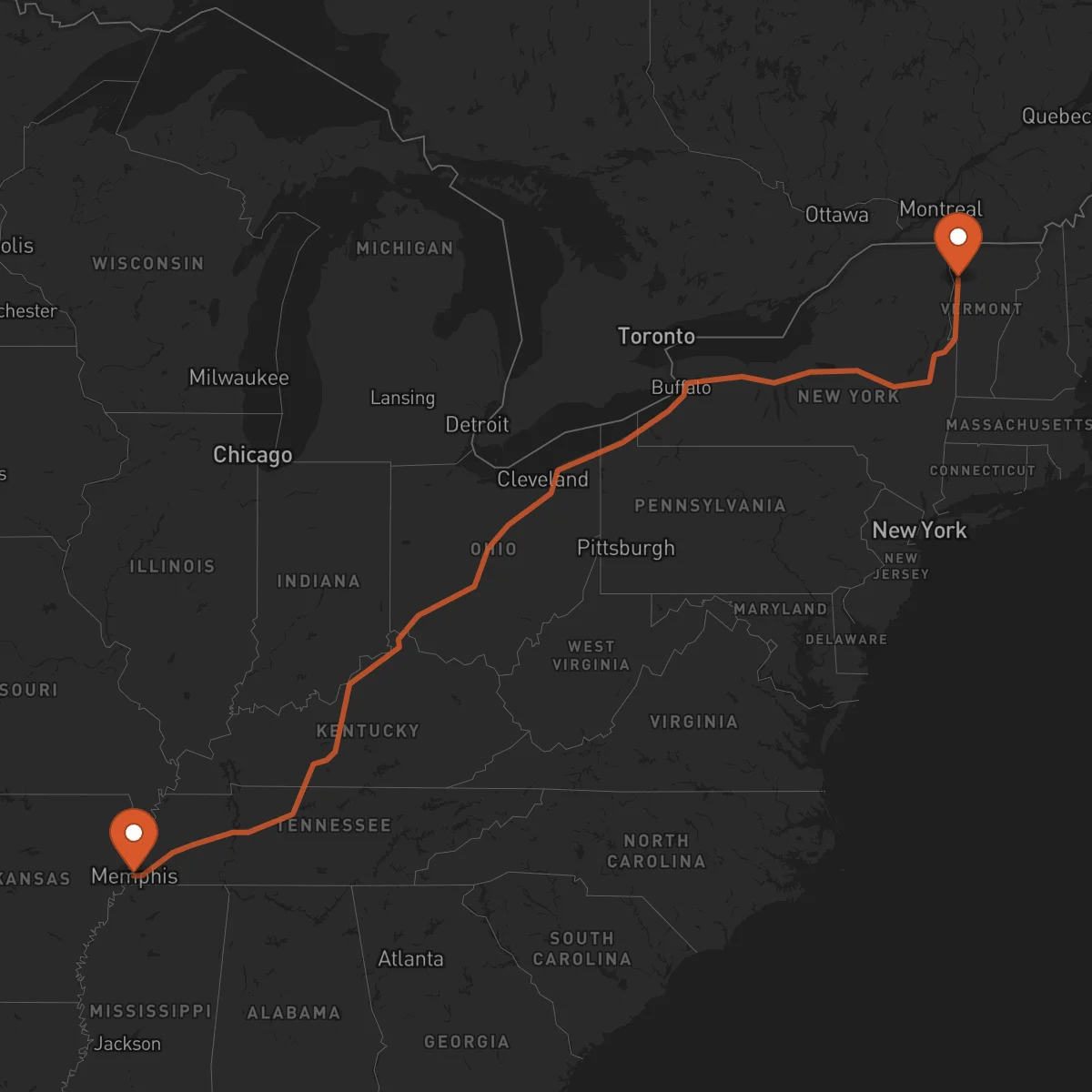
Burlington to Memphis
Memphis → BurlingtonFTL freight transportation service between Burlington and Memphis. Reliable logistics solutions for your business.
Route Description
Everything you need to know about the corridor Burlington - Memphis
The logistics corridor connecting Burlington, Vermont to Memphis, Tennessee represents a vital transportation link spanning approximately 1,768 kilometers across the northeastern United States. This domestic route traverses diverse terrain and crosses multiple state lines, making it a critical pathway for businesses requiring reliable full truckload (FTL) freight transportation between these two strategic locations.
The Burlington-Memphis corridor serves as a crucial connection between the industrial and commercial hubs of the Northeast and the logistics powerhouse of the Southeast. This route facilitates the movement of goods between Vermont's manufacturing and agricultural sectors and Tennessee's distribution centers, manufacturing facilities, and transportation infrastructure. The corridor's significance has grown with the expansion of e-commerce and just-in-time inventory management systems that demand efficient, dedicated freight solutions.
Control Terrestre specializes in providing seamless FTL transportation along this corridor, offering dedicated truckload services that ensure your cargo moves directly from origin to destination without consolidation or delays. Our experienced carrier network understands the nuances of this route, including optimal scheduling to avoid congestion in major metropolitan areas and navigating seasonal weather patterns that can affect transit times. We provide real-time tracking and communication throughout the journey, giving you complete visibility of your shipment as it travels from the Green Mountains of Vermont to the banks of the Mississippi River in Tennessee.
Services for this Route
Available services for the corridor Burlington - Memphis
 Origin
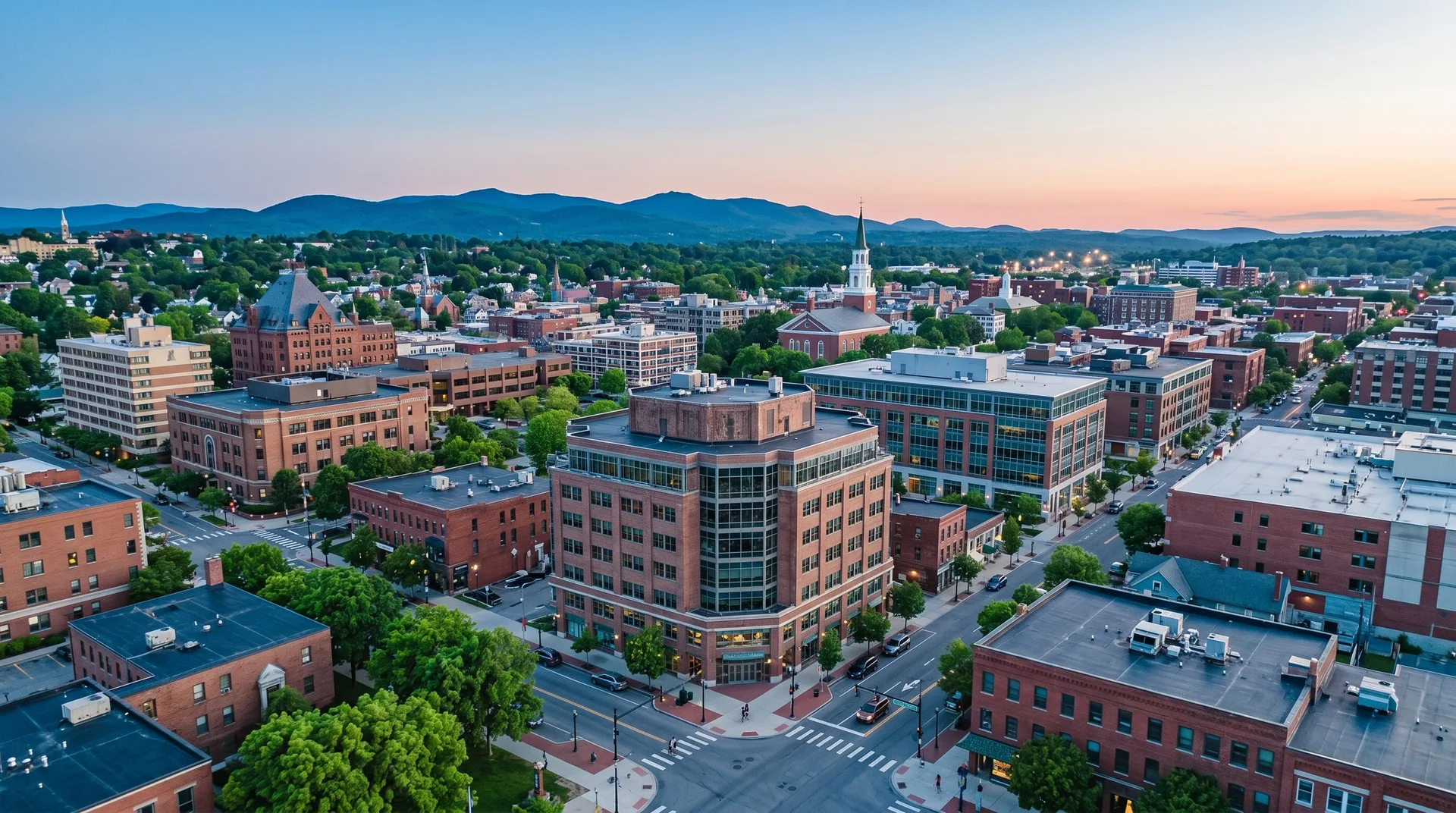
Burlington
Burlington, Vermont serves as a strategic logistics hub in the northeastern United States, situated on the eastern shore of Lake Champlain with proximity to both Canadian and New York state borders. The city's location provides access to multiple transportation modes, including Burlington International Airport and the Port of Burlington, which connects to the St. Lawrence Seaway via the Champlain Canal system. The region's robust transportation infrastructure includes Interstate 89 and Interstate 91, providing efficient highway access to major markets throughout the Northeast.
The Burlington area is home to diverse industries including advanced manufacturing, healthcare technology, craft brewing, and specialty food production. The University of Vermont and its affiliated medical center drive significant research and development activity, while the region's agricultural heritage continues through dairy farming, maple syrup production, and organic farming operations. These industries generate consistent demand for full truckload freight services, particularly for time-sensitive and temperature-controlled shipments that require dedicated transportation solutions.
 Destination
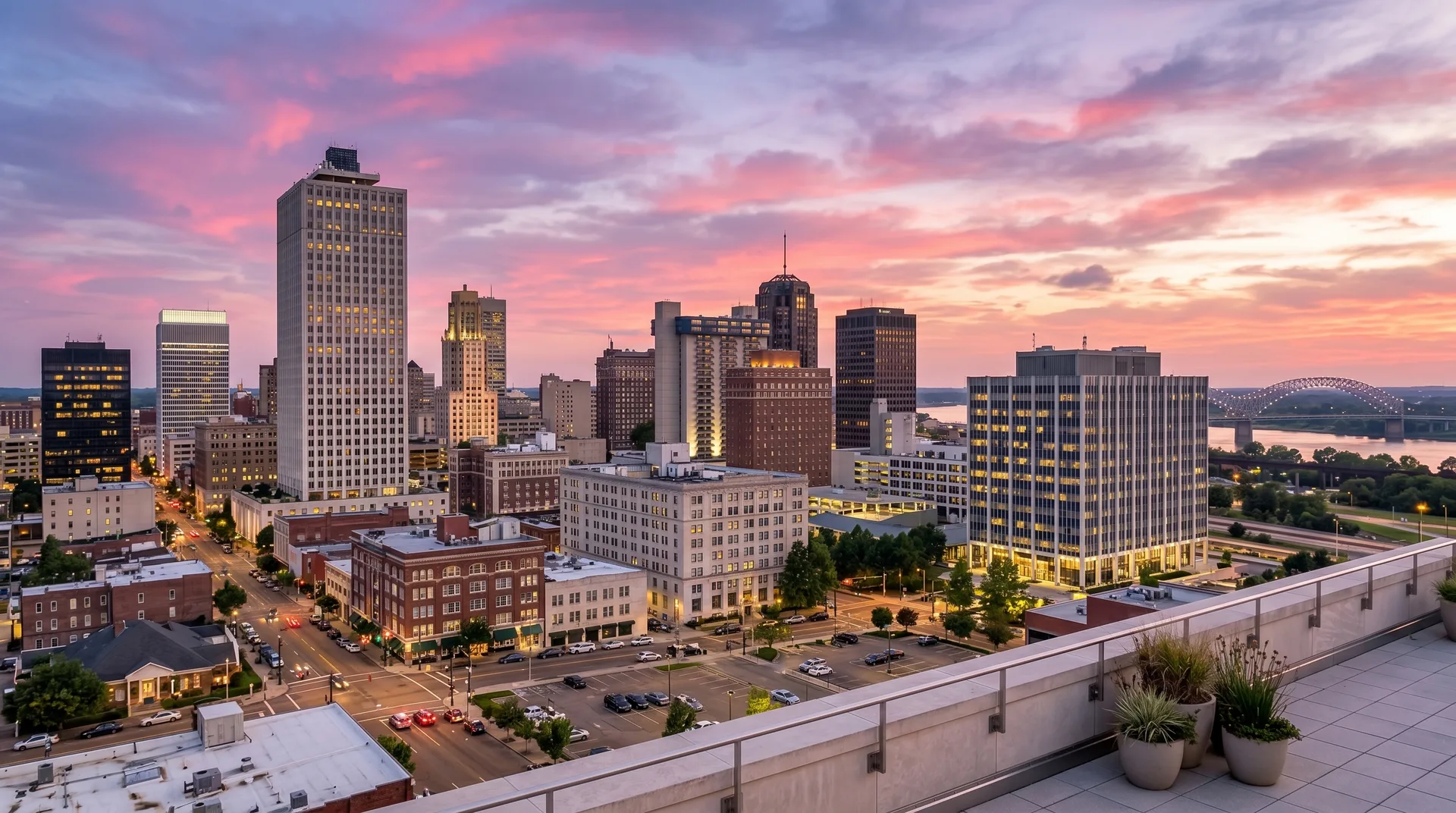
Memphis
Memphis, Tennessee stands as one of America's most strategic logistics hubs, located at the crossroads of major interstate highways including I-40, I-55, and I-69. The city's position on the Mississippi River and home to Memphis International Airport, the world's second-busiest cargo airport, creates unparalleled connectivity for freight movement. The region's extensive rail infrastructure, anchored by major intermodal facilities, further enhances its status as a distribution powerhouse.
The Memphis economy thrives on logistics, transportation, and distribution, with major corporations including FedEx maintaining significant operations in the area. The city's central location provides access to a majority of the U.S. population within a two-day drive, making it an ideal distribution point for companies serving national markets. Manufacturing sectors including automotive, aerospace, and food processing generate substantial freight volume, while the healthcare and education sectors contribute to consistent demand for reliable freight transportation services throughout the region.










