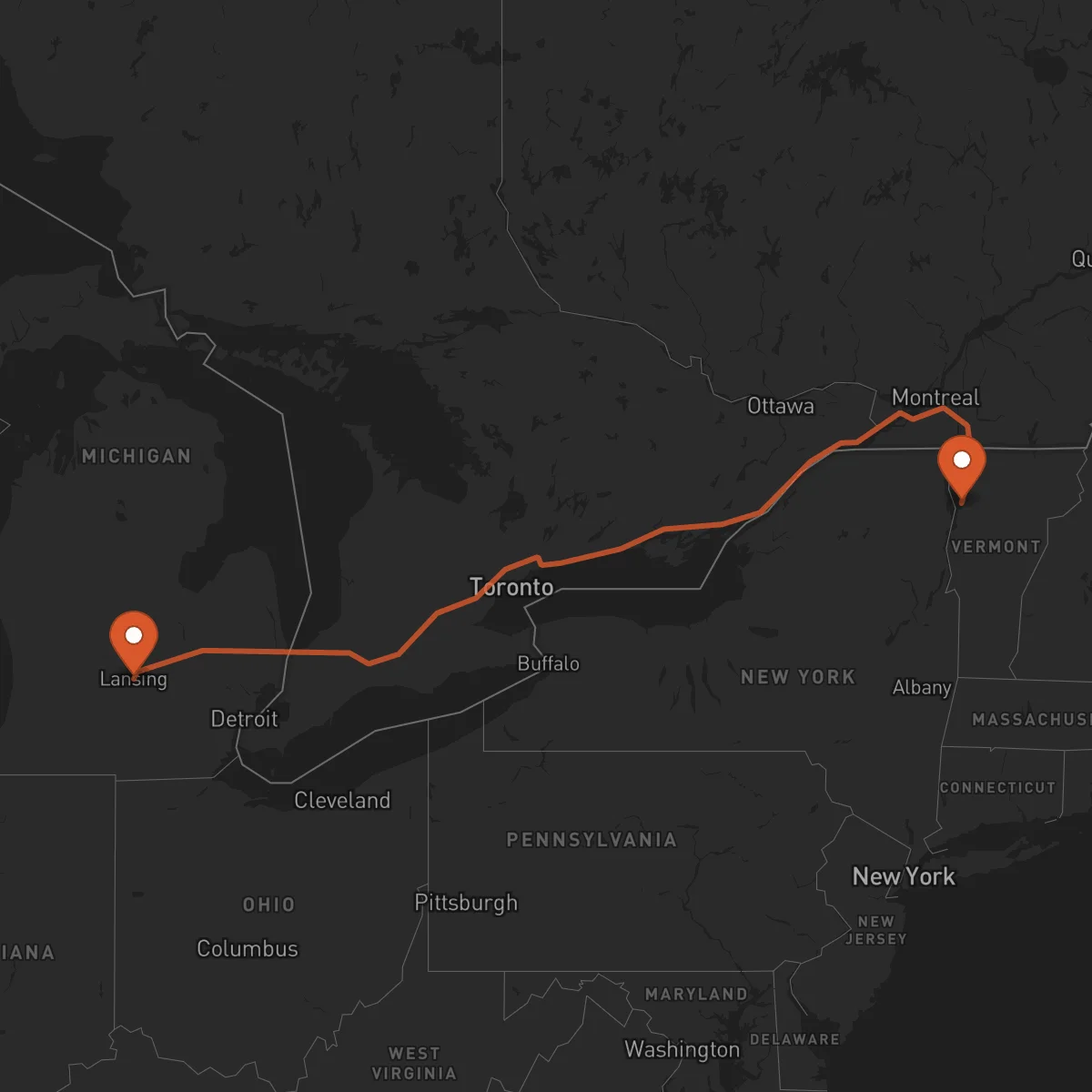
Burlington to Lansing
Lansing → BurlingtonFTL freight transportation service between Burlington and Lansing. Reliable logistics solutions for your business.
Route Description
Everything you need to know about the corridor Burlington - Lansing
The Burlington to Lansing corridor represents a vital domestic freight transportation route connecting the Northeast to the Midwest across 933 kilometers. This strategic connection links Vermont's Green Mountains to Michigan's automotive heartland, traversing diverse terrain and crossing multiple state lines through New York and into Michigan. The route serves as a critical supply chain artery for businesses requiring reliable full truckload transportation between these key economic regions.
The economic significance of this corridor extends beyond simple point-to-point transport. Burlington, situated on the eastern shore of Lake Champlain, serves as a gateway to New England markets, while Lansing anchors Michigan's manufacturing and technology sectors. This route facilitates the movement of diverse cargo types, from agricultural products and manufactured goods to industrial equipment and consumer merchandise. The corridor's importance has grown with increasing demand for cross-regional distribution and just-in-time inventory management.
Control Terrestre provides comprehensive FTL transportation services along this corridor, leveraging our network of certified carriers and specialized equipment. Our experienced team ensures seamless coordination from pickup in Burlington through the journey across New York State and into Michigan, delivering cargo safely to Lansing. We understand the unique requirements of this route, including weather considerations across different seasons and the need for precise scheduling to maintain supply chain efficiency.
Services for this Route
Available services for the corridor Burlington - Lansing
 Origin
Burlington
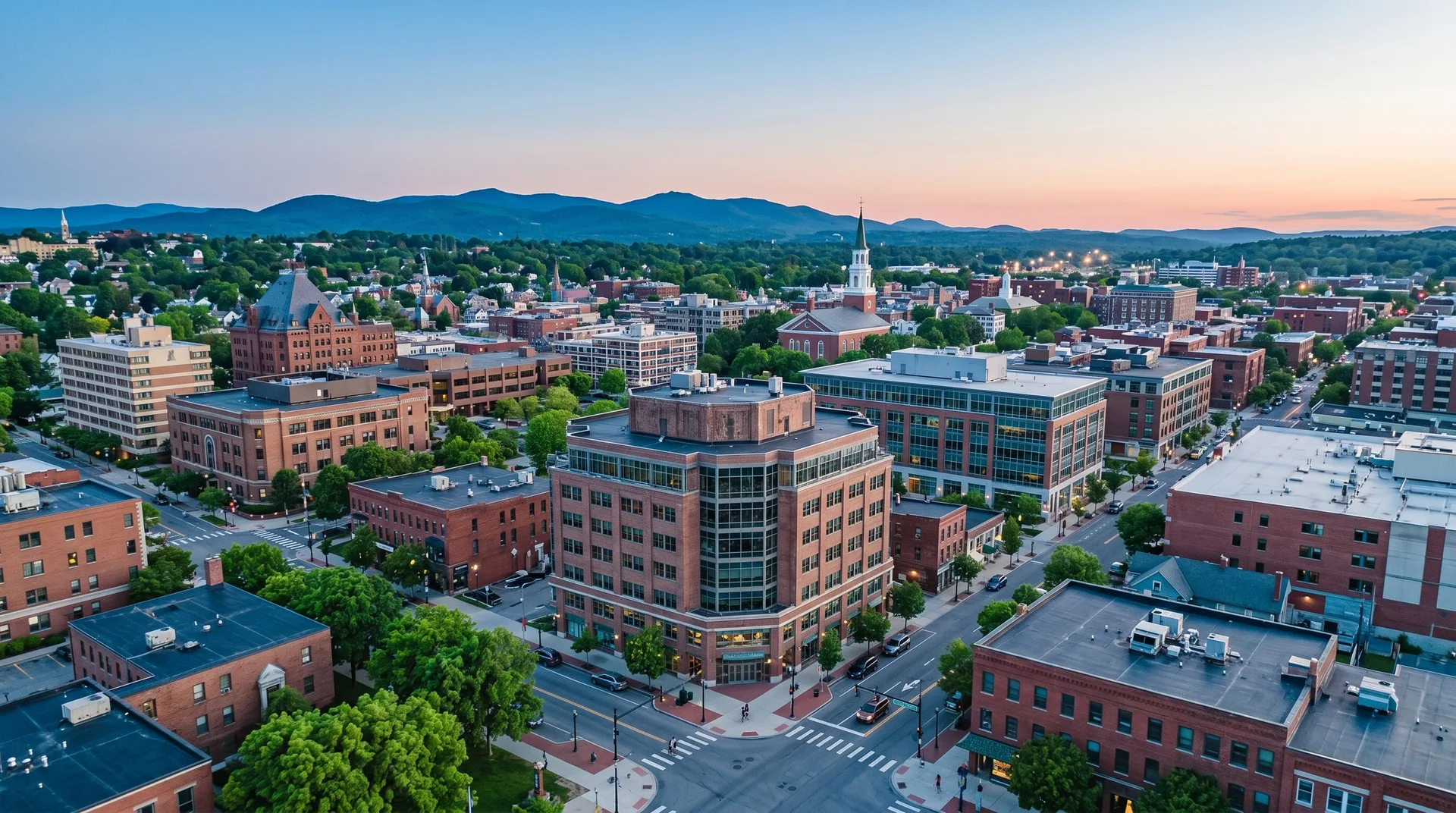
Burlington, Vermont serves as a strategic logistics hub for the Northeast region, positioned on the eastern shore of Lake Champlain with direct access to Interstate 89. This location provides excellent connectivity to major markets in New England while maintaining proximity to Canadian trade routes. Burlington's transportation infrastructure includes Burlington International Airport for air freight, the Port of Burlington for maritime shipping, and extensive highway networks connecting to the broader interstate system. The city's location makes it ideal for distribution operations serving Vermont, New Hampshire, and northeastern New York.
The economic landscape of Burlington centers on healthcare, education, retail, and tourism, with growing sectors in technology and renewable energy. The University of Vermont and Champlain College contribute to a skilled workforce and research capabilities. Burlington's commitment to sustainability and green initiatives aligns with modern supply chain requirements for environmentally conscious transportation solutions. The city's port facilities and airport cargo operations provide multiple options for freight consolidation and distribution, making it an efficient origin point for full truckload shipments to destinations like Lansing.
 Destination
Lansing
Lansing, Michigan stands as a strategic logistics center in the Midwest, serving as the state capital and a key distribution point for Michigan's manufacturing and automotive industries. The city's location at the intersection of major highways, including I-96, I-496, and US-127, provides excellent connectivity to Detroit, Chicago, and other major Midwest markets. Capital Region International Airport supports air cargo operations, while the extensive highway network facilitates efficient ground transportation throughout the region.
The economic foundation of Lansing includes automotive manufacturing, healthcare, education, and government services. Michigan State University and Lansing Community College provide a skilled workforce for logistics and manufacturing operations. The city's proximity to Detroit's automotive supply chain and Grand Rapids' manufacturing sector makes it a critical distribution point for industrial goods and automotive components. Lansing's logistics infrastructure supports both inbound raw materials and outbound finished products, with numerous warehousing and distribution facilities serving the broader Michigan market.










