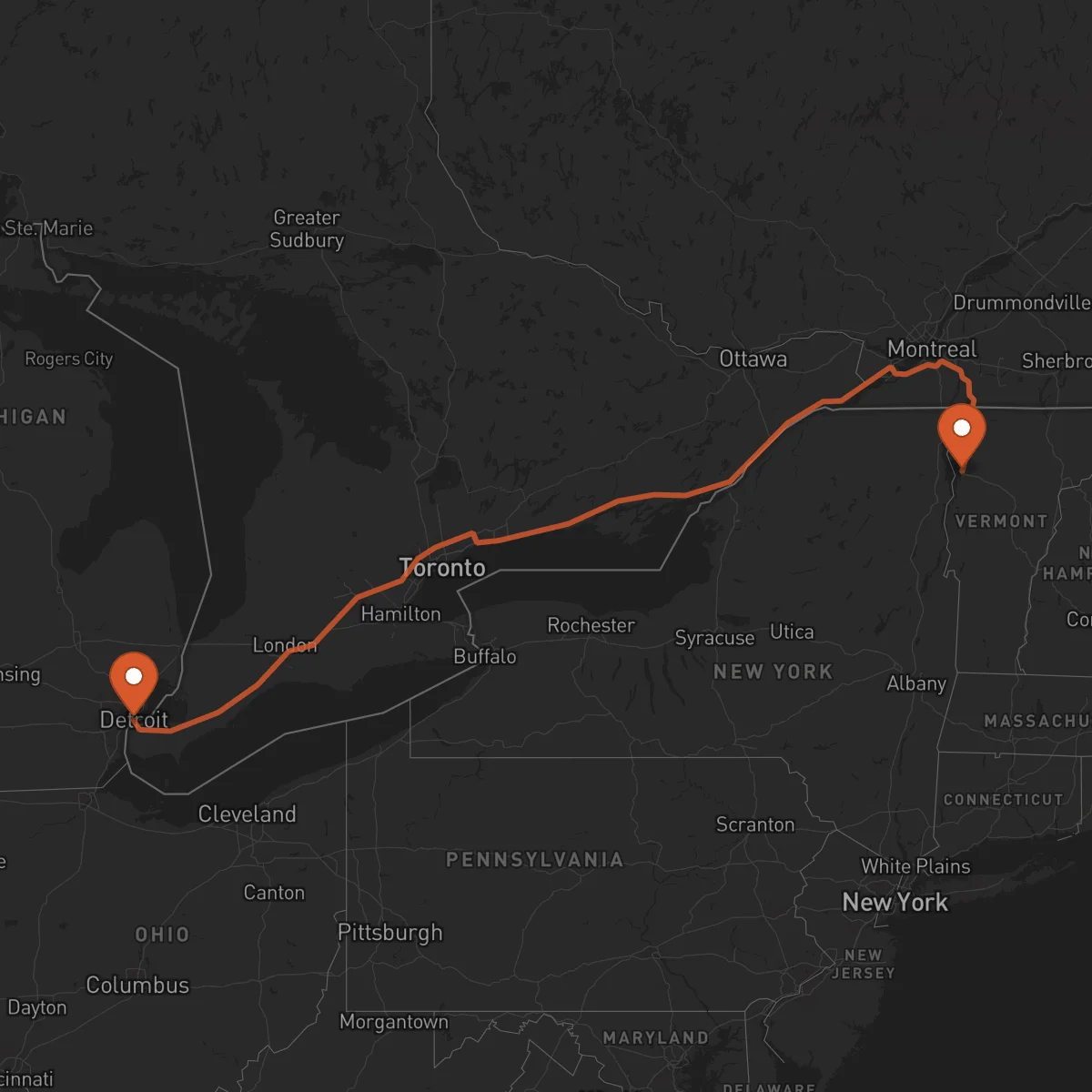
Burlington to Detroit
Detroit → BurlingtonFTL freight transportation service between Burlington and Detroit. Reliable logistics solutions for your business.
Route Description
Everything you need to know about the corridor Burlington - Detroit
The Burlington-Detroit corridor represents a vital freight transportation link connecting the northeastern United States with the industrial heartland of the Midwest. This 829-kilometer route traverses diverse landscapes and connects key economic regions, facilitating the movement of goods between Vermont's Green Mountains and Michigan's automotive manufacturing centers. The corridor serves as a crucial artery for businesses requiring reliable transportation between these strategic locations, supporting both regional commerce and national supply chains.
The economic significance of this route extends beyond simple point-to-point transportation. Burlington, situated on the eastern shore of Lake Champlain, serves as a gateway for goods entering and exiting the northeastern United States, while Detroit stands as a major manufacturing and distribution hub for the automotive, aerospace, and advanced manufacturing industries. This corridor enables efficient movement of raw materials, components, and finished products between these complementary economic zones, supporting industries ranging from automotive manufacturing to precision engineering and technology.
Control Terrestre facilitates seamless operations along this corridor through our network of certified transportation providers and specialized equipment options. Our full truckload (FTL) services ensure dedicated capacity for your shipments, eliminating the delays and handling risks associated with consolidated freight. We provide access to 48' and 53' dry vans and refrigerated units, as well as specialized equipment for oversized or temperature-sensitive cargo. Our providers' certifications including C-TPAT and FAST ensure expedited border processing and secure transportation throughout the journey.
Services for this Route
Available services for the corridor Burlington - Detroit
 Origin
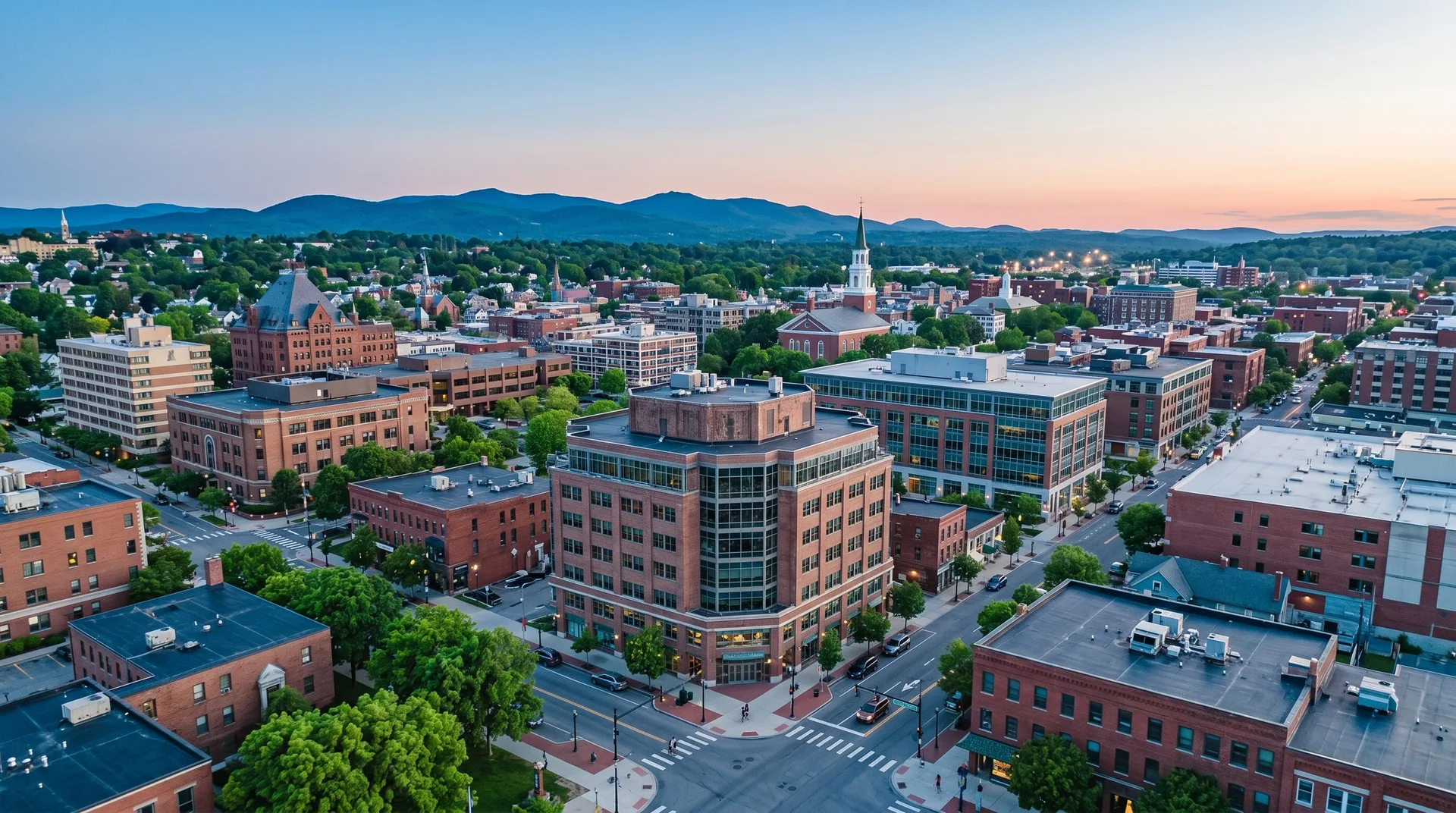
Burlington
Burlington, Vermont serves as a strategic logistics hub positioned on the eastern shore of Lake Champlain, providing critical access to both Canadian markets and the northeastern United States. The city's location offers unique advantages for freight transportation, with proximity to major highways including I-89 and I-91 connecting Vermont to the broader interstate network. Burlington International Airport and the Port of Burlington further enhance the region's multimodal transportation capabilities, supporting efficient cargo movement by air, road, and water.
The Burlington area's economy is characterized by diverse industries including healthcare, education, technology, and manufacturing. The region hosts numerous precision manufacturing facilities, food processing plants, and distribution centers that require reliable transportation services. Burlington's growing tech sector and research institutions also generate specialized freight needs, particularly for high-value or sensitive cargo requiring dedicated transportation solutions.
 Destination
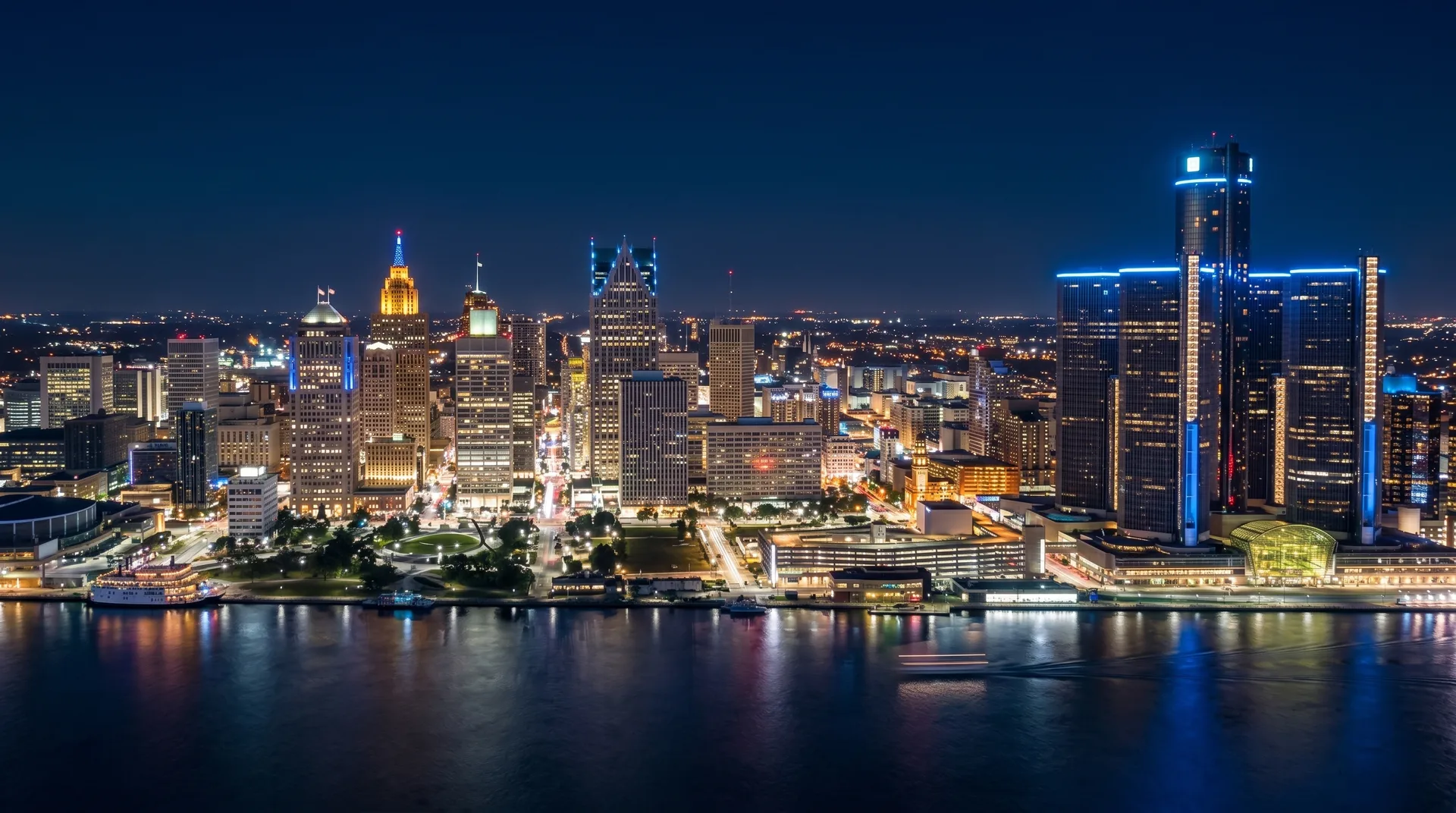
Detroit
Detroit, Michigan stands as one of North America's premier logistics and manufacturing centers, strategically positioned in the heart of the Great Lakes region. The city's extensive transportation infrastructure includes multiple interstate highways (I-75, I-94, I-96) providing direct access to major markets across the Midwest and beyond. Detroit Metropolitan Airport and the Port of Detroit on the Detroit River facilitate multimodal freight operations, while the city's central location enables efficient distribution throughout the eastern United States and Canada.
Detroit's economy remains heavily focused on automotive manufacturing, advanced manufacturing, and technology sectors. The region hosts numerous automotive assembly plants, parts manufacturers, and research facilities that generate substantial freight transportation demand. Additionally, Detroit's growing healthcare, aerospace, and technology industries create diverse logistics requirements, from specialized manufacturing components to temperature-sensitive medical supplies, all benefiting from the city's robust transportation infrastructure.










