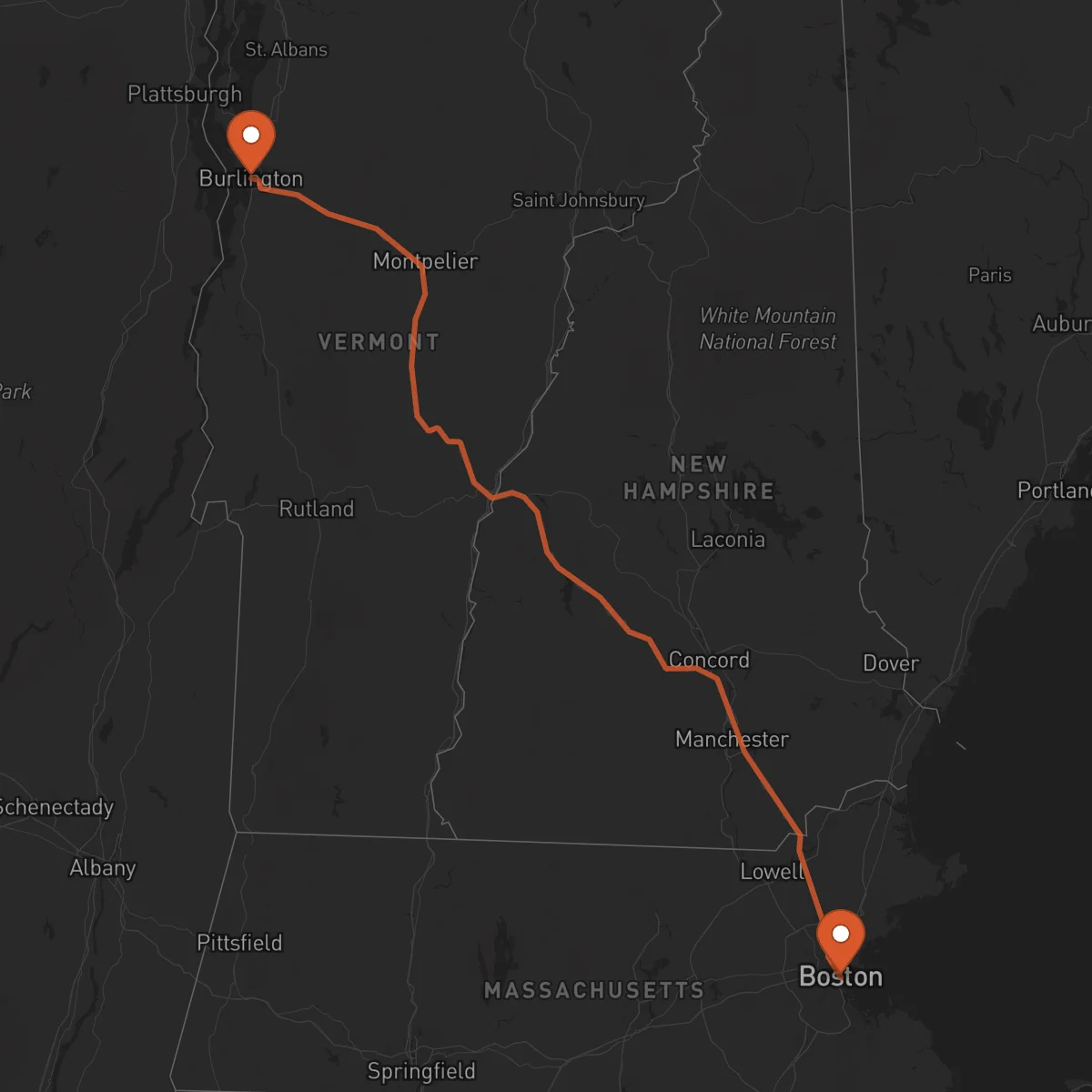
Burlington to Boston
Boston → BurlingtonFTL freight transportation service between Burlington and Boston. Reliable logistics solutions for your business.
Route Description
Everything you need to know about the corridor Burlington - Boston
The Burlington to Boston corridor represents a vital logistics connection in the northeastern United States, spanning approximately 293 kilometers through some of the most economically dynamic regions of New England. This route connects Vermont's largest city with Massachusetts' capital, facilitating the movement of goods between two distinct yet complementary economic ecosystems. The corridor traverses through key states including Vermont, New Hampshire, and Massachusetts, crossing diverse terrain that includes the scenic Green Mountains and the Merrimack Valley. This strategic connection serves as a critical link between the manufacturing and agricultural outputs of northern New England and the sophisticated distribution networks and consumer markets of the Greater Boston area.
The economic significance of this corridor extends beyond simple point-to-point transportation. Burlington serves as a gateway to northern New England's robust manufacturing sector, agricultural production, and emerging technology industries, while Boston represents one of the nation's most important financial, educational, and healthcare hubs. The route facilitates the movement of specialized equipment, medical supplies, high-tech components, and agricultural products that are essential to both regional and national supply chains. Major highways including I-89 and I-93 form the backbone of this transportation artery, providing reliable and efficient transit for freight operations.
Control Terrestre enhances the efficiency of this corridor through our specialized full truckload services, ensuring that businesses can move their cargo with maximum reliability and security. Our extensive network of certified transportation providers along this route offers dedicated equipment options including dry vans, refrigerated units, and specialized trailers to meet diverse cargo requirements. By leveraging our expertise in FTL operations and our commitment to green transportation practices, we help companies optimize their supply chain performance while maintaining the highest standards of safety and compliance throughout the journey from Burlington to Boston.
Services for this Route
Available services for the corridor Burlington - Boston
 Origin
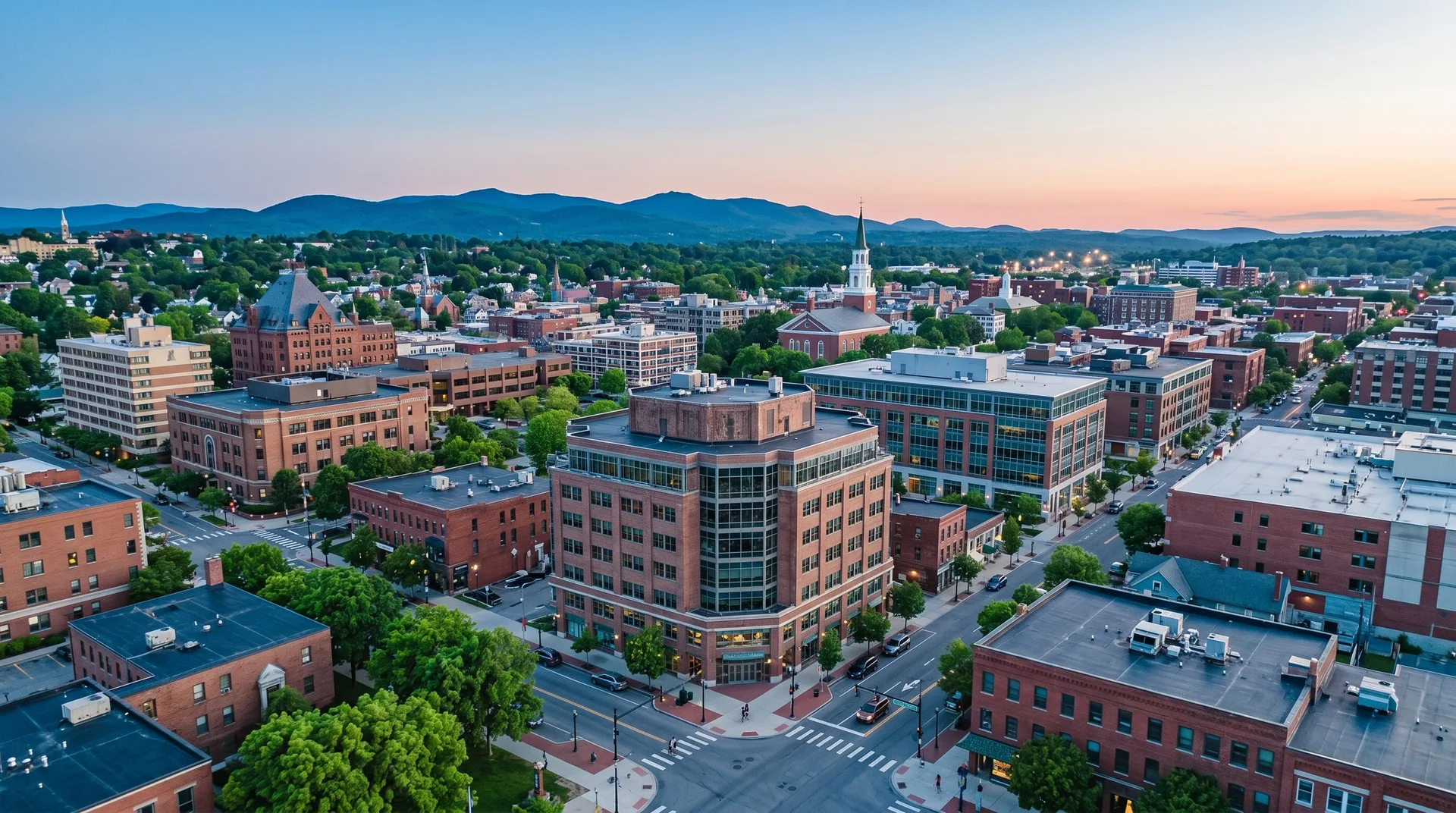
Burlington
Burlington, Vermont serves as a strategic logistics hub for northern New England, leveraging its location on the eastern shore of Lake Champlain and proximity to major transportation routes. The city's economy is anchored by a diverse mix of industries including healthcare, education, technology, and manufacturing, with the University of Vermont and Champlain College providing a strong talent pipeline for logistics and supply chain operations. Burlington's transportation infrastructure includes the Burlington International Airport, which handles significant cargo volumes, and the Port of Burlington on Lake Champlain, offering unique multimodal shipping capabilities. The city's commitment to sustainability and green initiatives aligns perfectly with modern logistics requirements, making it an ideal origin point for environmentally conscious freight operations.
 Destination
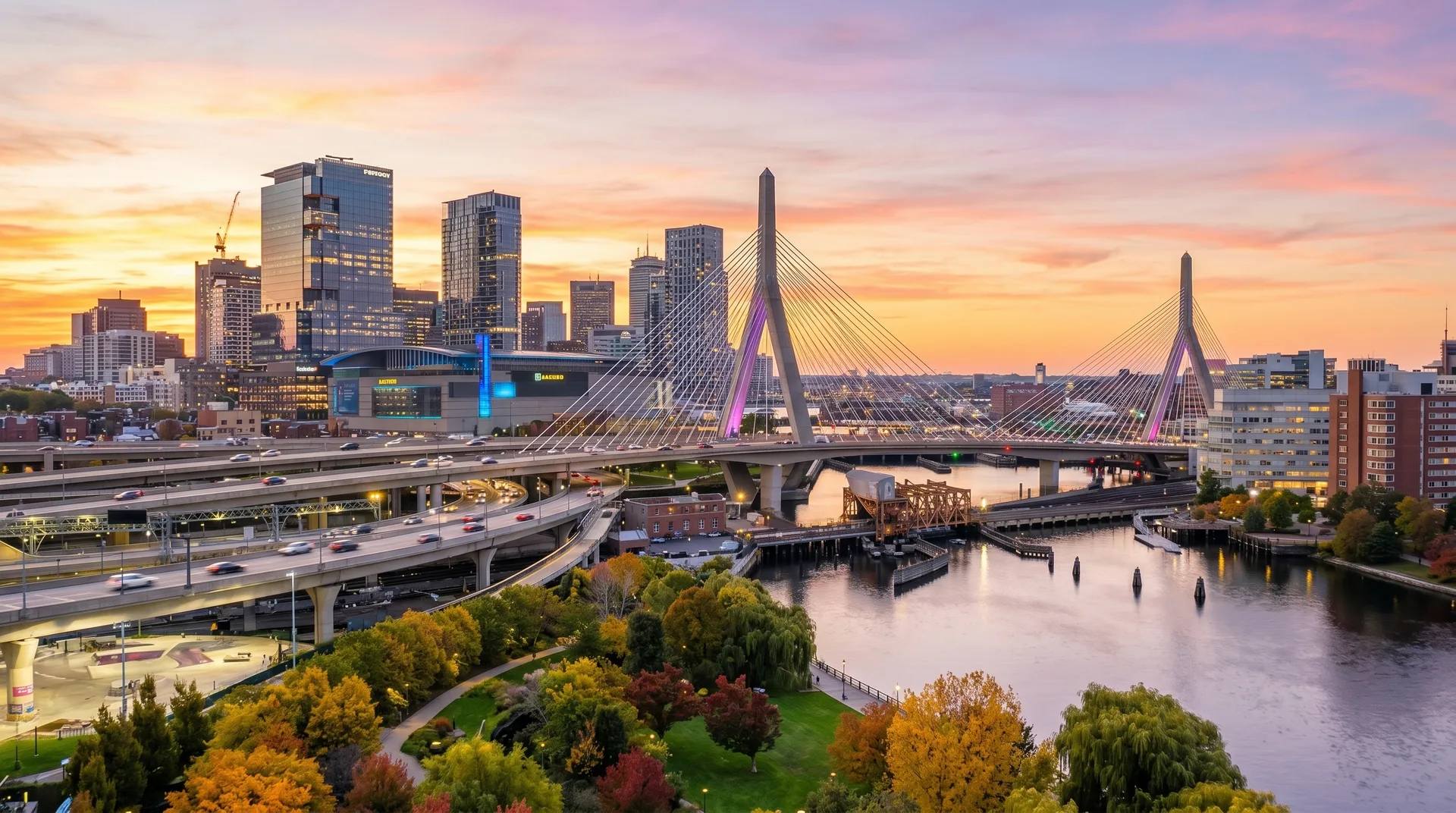
Boston
Boston, Massachusetts stands as one of the most important logistics destinations on the East Coast, combining historical significance with modern economic power. As the capital of Massachusetts and a major metropolitan area, Boston hosts a sophisticated logistics ecosystem supported by Logan International Airport, the Port of Boston, and an extensive highway network including I-90 and I-93. The city's economy is driven by sectors such as biotechnology, finance, higher education, and healthcare, creating substantial demand for specialized freight services. Boston's strategic location provides access to over 8 million consumers within a 100-mile radius, making it a crucial distribution center for both regional and national supply chains. The city's advanced infrastructure and concentration of major corporations ensure efficient cargo handling and distribution capabilities.










