Bridgeport to Houston
Houston → BridgeportFTL freight transportation service between Bridgeport and Houston. Reliable logistics solutions for your business.
Route Description
Everything you need to know about the corridor Bridgeport - Houston
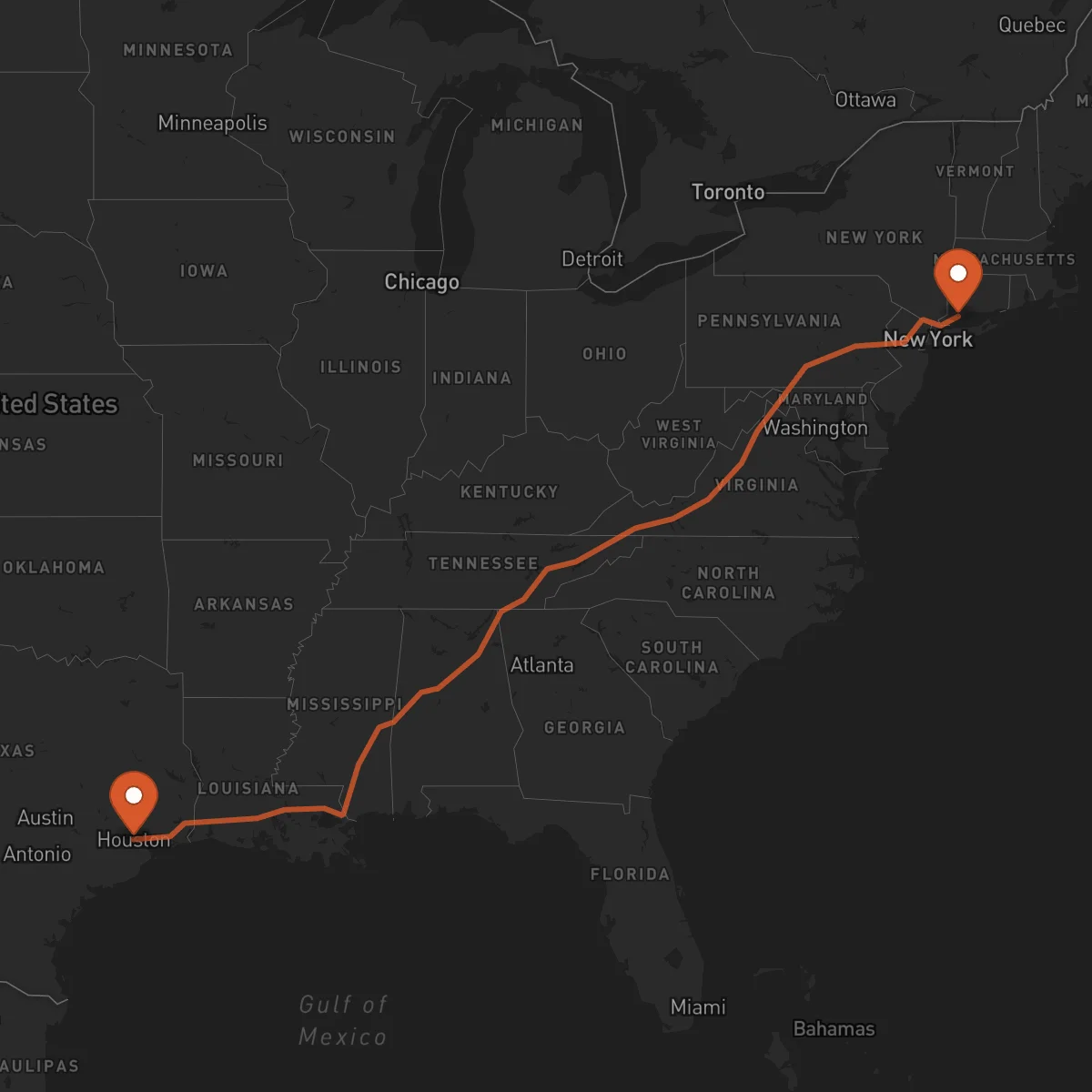
The logistics corridor between Bridgeport, Connecticut, and Houston, Texas, represents one of the most critical freight transportation routes in the eastern United States. Spanning approximately 2,365 kilometers, this corridor connects the industrial Northeast with the energy and petrochemical hub of the Gulf Coast, facilitating the movement of goods between two economically vital regions. This route traverses multiple states and crosses diverse geographic and economic zones, making it essential for supply chain operations across multiple industries.
The economic significance of this corridor cannot be overstated. Bridgeport serves as a gateway to the New York metropolitan area's manufacturing and distribution networks, while Houston stands as a global center for energy, aerospace, and medical industries. The corridor supports the movement of manufactured goods, industrial equipment, raw materials, and specialized cargo between these economic powerhouses. Key industries utilizing this route include automotive, aerospace, energy equipment, pharmaceuticals, and consumer goods manufacturing.
Major transportation infrastructure along this corridor includes Interstate 95, I-81, I-40, and I-45, providing multiple routing options for freight movement. This network allows for efficient transportation of full truckload (FTL) shipments, with options to optimize for time, cost, or specific cargo requirements. The route passes through major logistics hubs including Philadelphia, Nashville, and Dallas, offering strategic opportunities for cross-docking and distribution.
Control Terrestre facilitates seamless operations on this corridor through our extensive network of certified transportation providers. Our expertise in managing long-haul FTL shipments ensures reliable door-to-door service, with real-time tracking and dedicated support throughout the journey. We understand the unique requirements of each cargo type and provide specialized equipment options to meet specific transportation needs, whether for standard freight, temperature-sensitive goods, or oversized equipment.
Services for this Route
Available services for the corridor Bridgeport - Houston
 Origin
Bridgeport
Bridgeport, Connecticut, serves as a strategic logistics hub on the northeastern coast of the United States. Located in the New York metropolitan area, Bridgeport provides immediate access to one of the nation's largest consumer markets and manufacturing centers. The city's proximity to major ports, including the Port of New York and New Jersey, makes it an ideal origin point for both domestic and international freight movements. Bridgeport's industrial heritage continues today with strong manufacturing, healthcare, and financial services sectors driving local economic activity.
The transportation infrastructure in Bridgeport is robust and well-developed. The city is served by Interstate 95, providing direct access to Boston, New York City, and the entire eastern seaboard. Additionally, the Metro-North Railroad connects Bridgeport to New York City, facilitating intermodal transportation options. The nearby Tweed New Haven Airport and proximity to major international airports further enhance the region's connectivity. Local warehousing and distribution centers provide excellent support for freight consolidation and preparation for long-haul transportation.
 Destination
Houston
Houston, Texas, stands as one of America's most dynamic logistics and industrial centers, strategically positioned in the Gulf Coast region. As the energy capital of the world, Houston hosts the headquarters of numerous oil and gas companies, along with a thriving petrochemical industry. The city's Port of Houston is one of the busiest ports in the United States, handling millions of tons of cargo annually. Beyond energy, Houston has developed strong aerospace, healthcare, and manufacturing sectors, creating diverse freight transportation needs.
The transportation infrastructure in Houston is exceptionally well-developed to support its industrial activities. The city is served by three major interstate highways (I-10, I-45, and I-69), creating a comprehensive highway network for efficient freight movement. Houston's George Bush Intercontinental Airport and William P. Hobby Airport provide air cargo capabilities, while the extensive network of rail lines supports intermodal transportation. The region's numerous industrial parks and warehousing facilities offer excellent options for final distribution and storage, making Houston an ideal destination for full truckload shipments arriving from across the country.










