Bridgeport to Halifax
Halifax → BridgeportFTL freight transportation service between Bridgeport and Halifax. Reliable logistics solutions for your business.
Route Description
Everything you need to know about the corridor Bridgeport - Halifax
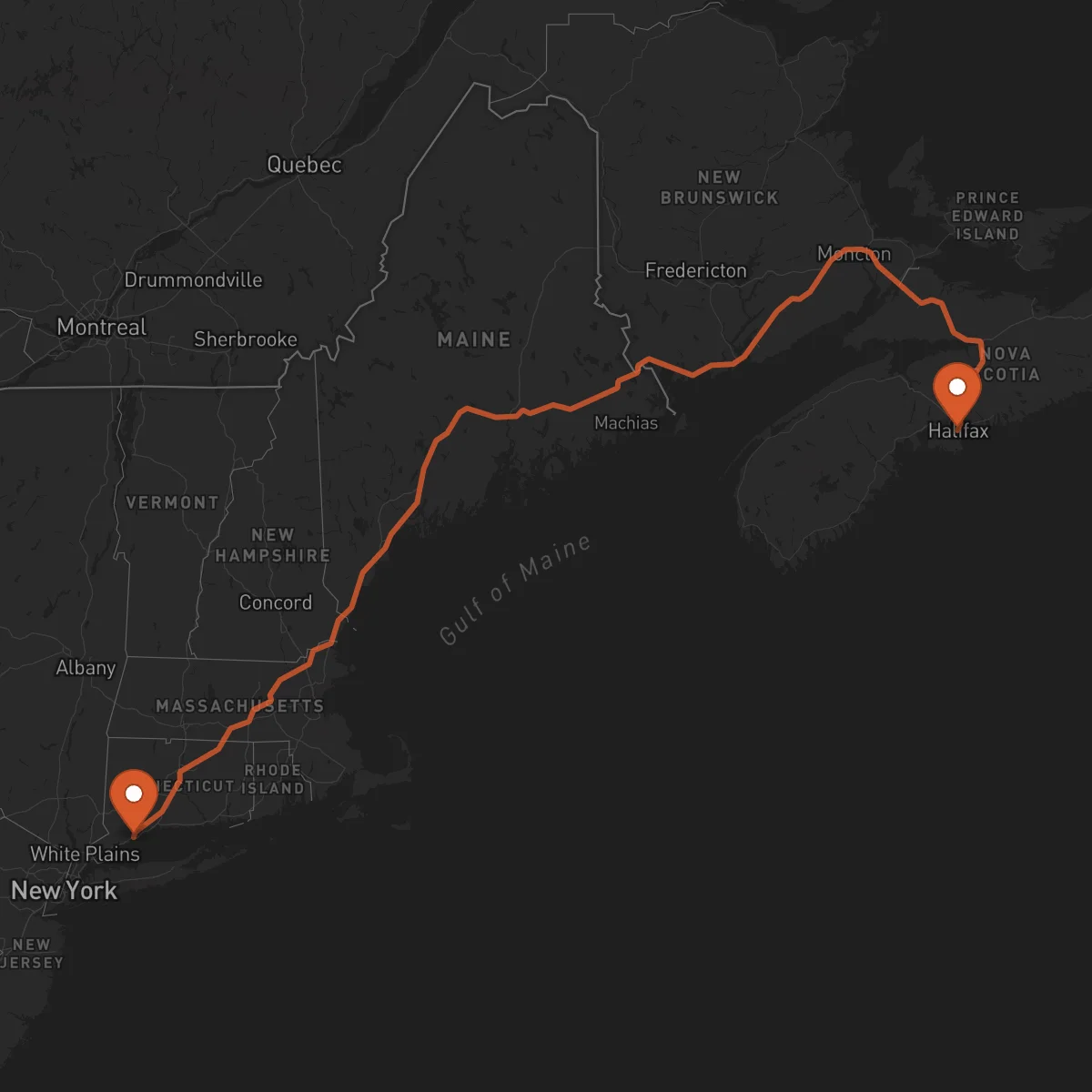
The logistics corridor connecting Bridgeport, Connecticut, to Halifax, Nova Scotia, represents a vital cross-border freight transportation route between the United States and Canada. Spanning approximately 871 kilometers, this corridor facilitates the movement of goods between the northeastern U.S. and Atlantic Canada, serving as a critical link in the North American supply chain. The route traverses diverse landscapes and crosses international borders, requiring expertise in customs procedures and cross-border logistics.
The economic significance of this corridor is substantial, connecting major industrial and commercial centers in both countries. Bridgeport serves as a gateway to the U.S. Northeast market, while Halifax functions as a major Atlantic port and economic hub for eastern Canada. This route supports the flow of manufactured goods, raw materials, and consumer products between these regions, contributing to the economic integration of the U.S.-Canada trade relationship.
Key industries utilizing this corridor include automotive parts manufacturing, aerospace components, electronics, pharmaceuticals, and general consumer goods. The corridor also supports the seafood industry, with fresh products moving between Atlantic ports and inland markets. Manufacturing centers in Connecticut and industrial zones in Nova Scotia rely on this reliable freight connection to maintain their supply chains and distribution networks.
The primary transportation infrastructure along this corridor includes Interstate 95 (I-95) through Connecticut and Maine, transitioning to the Trans-Canada Highway (Route 104) in New Brunswick before reaching Nova Scotia. The international border crossing at Calais-St. Stephen is a critical point requiring specialized knowledge of customs regulations and documentation. Control Terrestre facilitates seamless operations on this corridor through our experienced team, C-TPAT-certified carriers, and comprehensive understanding of cross-border requirements, ensuring efficient and compliant freight movement between Bridgeport and Halifax.
Services for this Route
Available services for the corridor Bridgeport - Halifax
 Origin
Bridgeport
Bridgeport, Connecticut, serves as a strategic logistics hub in the northeastern United States, positioned within the New York metropolitan area's extensive transportation network. The city's location provides excellent access to major highways including I-95, which runs along the East Coast, and proximity to several international airports and seaports. Bridgeport's industrial heritage has evolved into a diverse manufacturing and commercial base, with strong presence in healthcare, education, and advanced manufacturing sectors. The city's infrastructure includes multiple freight terminals, warehousing facilities, and distribution centers that support regional logistics operations. Its strategic position makes it an ideal origin point for freight moving throughout the Northeast and beyond, with excellent connectivity to major U.S. markets and international destinations via air, sea, and ground transportation networks.
 Destination
Halifax
Halifax, Nova Scotia, stands as a premier logistics gateway for Atlantic Canada, combining a deep-water port with comprehensive transportation infrastructure. As the capital of Nova Scotia and home to the Port of Halifax, the city serves as a critical entry point for goods entering eastern Canada. The port's ice-free status year-round and modern container facilities make it a vital link in global supply chains. Halifax's strategic location provides access to the North Atlantic shipping routes and serves as a distribution center for the Maritime provinces. The city's economy encompasses aerospace, defense, information technology, and ocean technology sectors, supported by institutions like Dalhousie University and the Bedford Institute of Oceanography. Transportation infrastructure includes Halifax Stanfield International Airport, extensive highway networks, and rail connections through CN Rail, making it a comprehensive logistics hub capable of handling diverse freight requirements efficiently.










