Brampton to Tijuana
Tijuana → BramptonFTL freight transportation service between Brampton and Tijuana. Reliable logistics solutions for your business.
Route Description
Everything you need to know about the corridor Brampton - Tijuana
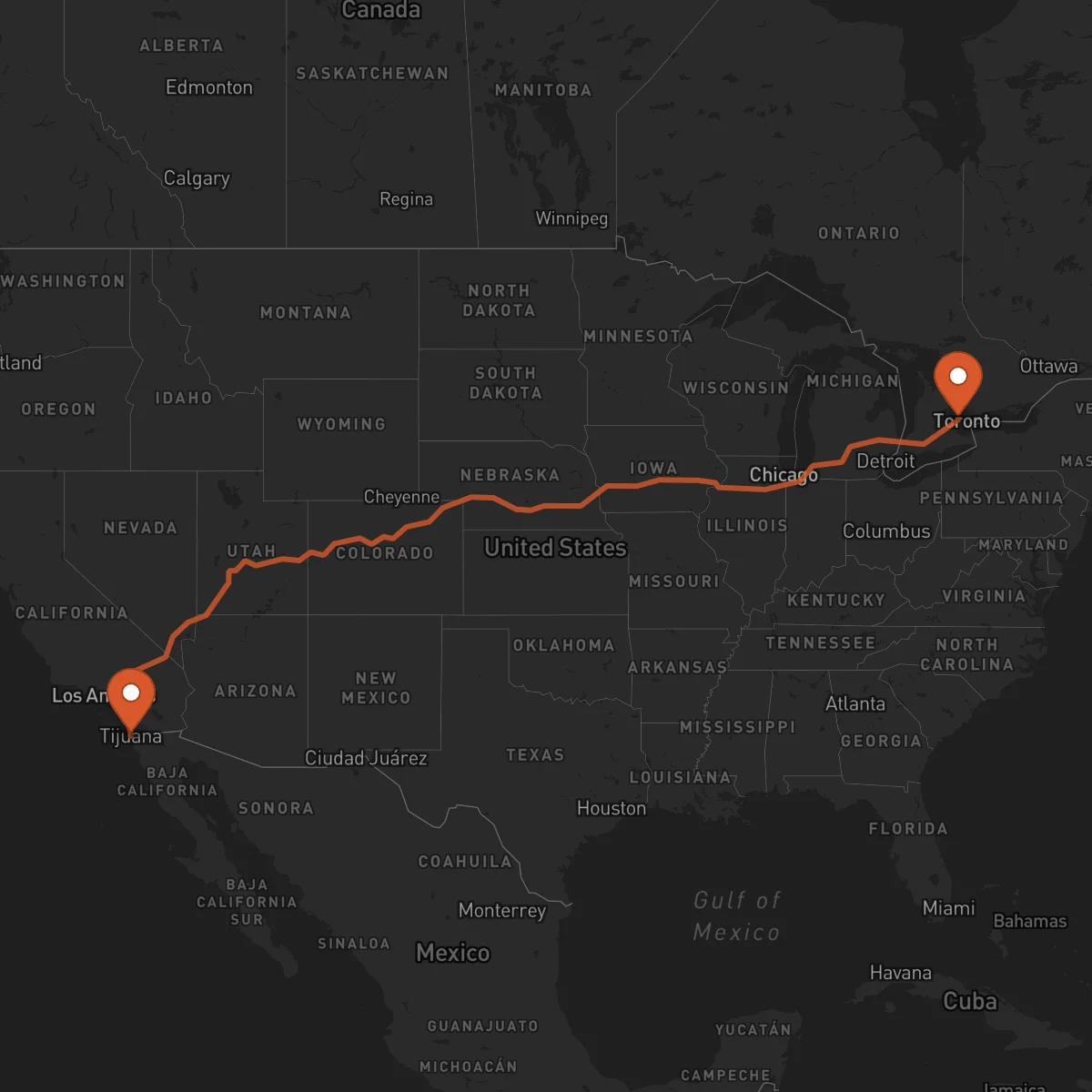
The logistics corridor between Brampton, Ontario, and Tijuana, Baja California, represents a vital cross-border connection between Canada and Mexico. This 3,453 km route traverses the North American continent, linking two dynamic industrial hubs through the United States. The corridor facilitates the movement of goods between Canada's manufacturing heartland and Mexico's thriving border region, serving as a critical artery for North American trade.
The economic significance of this corridor is substantial, connecting Brampton's advanced manufacturing sector with Tijuana's maquiladora industry and export-oriented economy. Brampton serves as a logistics hub for the Greater Toronto Area, while Tijuana has established itself as a key manufacturing center for automotive, aerospace, and electronics industries. The route passes through major U.S. distribution centers, creating opportunities for transloading and strategic distribution.
Transportation infrastructure along this corridor includes major highways such as Ontario's 401, Michigan's I-75, and California's I-5, providing reliable connectivity. The primary border crossing at San Ysidro/Tijuana processes significant commercial traffic daily. Control Terrestre facilitates seamless operations on this corridor through our expertise in cross-border logistics, handling customs documentation, and providing dedicated FTL services that ensure timely delivery of full truckloads between these strategic locations.
Services for this Route
Available services for the corridor Brampton - Tijuana
 Origin
Brampton, located in the Greater Toronto Area, serves as a strategic logistics hub for Canada's manufacturing and distribution sectors. The city's proximity to major transportation networks, including Pearson International Airport and the 400-series highways, makes it an ideal origin point for cross-border freight. Brampton's industrial base includes advanced manufacturing, automotive parts production, food processing, and technology sectors, creating consistent demand for reliable transportation services.
The city boasts excellent transportation infrastructure, with direct access to Highway 401 - North America's busiest highway - and multiple intermodal facilities. Brampton's location within Canada's most populous region ensures a steady flow of goods requiring transportation to U.S. and Mexican markets. The area's concentration of warehouses, distribution centers, and manufacturing facilities makes it a natural starting point for freight moving along the Canada-Mexico corridor.
 Destination
Tijuana
Tijuana stands as a strategic logistics gateway to Mexico and Latin America, positioned directly across the border from San Diego, California. The city has evolved into a major manufacturing powerhouse, particularly in automotive, aerospace, medical devices, and electronics sectors. Tijuana's maquiladora industry and proximity to the U.S. market make it a critical destination for cross-border freight, with numerous multinational companies maintaining operations in the region.
The city benefits from comprehensive transportation infrastructure, including the Tijuana International Airport, multiple highway connections to the U.S., and the Port of Ensenada for maritime freight. Tijuana's location along the busiest border crossing in the Western Hemisphere facilitates efficient movement of goods between Mexico and the United States. The region's growing industrial parks and manufacturing clusters create consistent demand for full truckload services connecting to Canadian suppliers and markets.










