Brampton to Halifax
Halifax → BramptonFTL freight transportation service between Brampton and Halifax. Reliable logistics solutions for your business.
Route Description
Everything you need to know about the corridor Brampton - Halifax
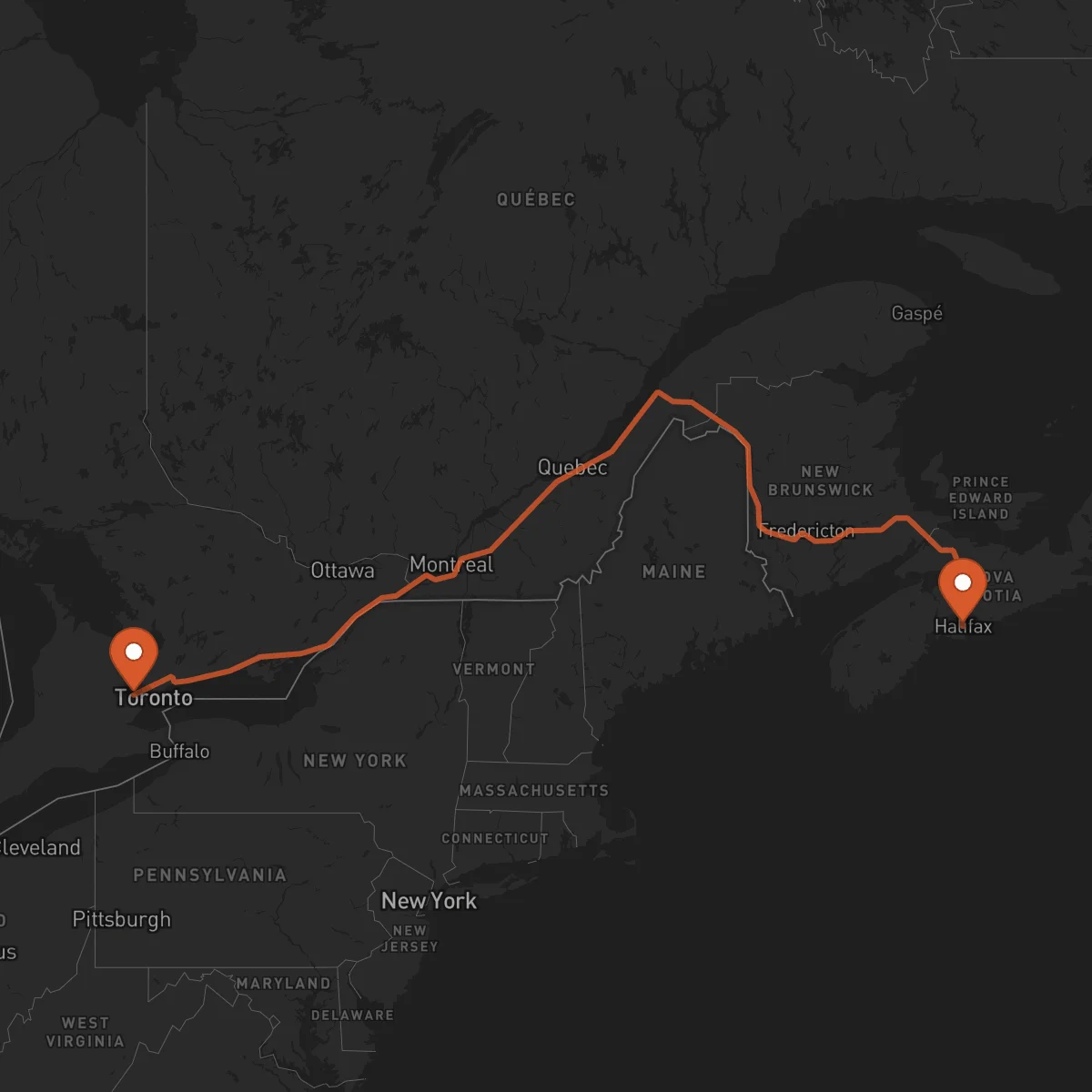
The logistics corridor between Brampton and Halifax represents one of Canada's most vital east-west freight transportation routes. This 1292 km corridor connects Ontario's manufacturing heartland with Nova Scotia's Atlantic port facilities, facilitating the movement of goods between central Canada and international markets. The route traverses diverse Canadian landscapes and economic regions, making it essential for national supply chain operations.
The corridor serves as a critical link in Canada's industrial supply chain, connecting major economic centers. Brampton's robust manufacturing sector produces automotive parts, electronics, and consumer goods that require efficient transportation to Atlantic ports for export. Meanwhile, Halifax's status as a major Atlantic seaport makes it a gateway for imports entering eastern Canada, with goods often requiring inland transportation to central markets.
Key industries utilizing this corridor include automotive manufacturing, aerospace components, agricultural products, retail distribution, and industrial equipment. The route primarily follows Highway 401 through Ontario, connecting with Highway 20 and Autoroute 85 through Quebec, before transitioning to the Trans-Canada Highway through New Brunswick and into Nova Scotia. This infrastructure supports both regular scheduled freight movements and specialized transportation needs.
Control Terrestre provides comprehensive full truckload (FTL) services along this corridor, offering dedicated transportation solutions for businesses requiring reliable east-west freight movement. Our network of certified carriers ensures consistent capacity and professional handling of diverse cargo types, from standard palletized freight to specialized equipment requiring careful transport across Canada's varied terrain.
Services for this Route
Available services for the corridor Brampton - Halifax
 Origin
Brampton, located in the Greater Toronto Area, serves as a strategic logistics hub for Canada's manufacturing and distribution industries. The city's proximity to Toronto Pearson International Airport and major highways like the 401 and 407 makes it an ideal origin point for freight transportation. Brampton's industrial sector specializes in advanced manufacturing, automotive parts production, and technology-based industries, generating significant freight volume requiring reliable transportation solutions.
The city boasts extensive transportation infrastructure including multiple industrial parks, warehousing facilities, and direct highway access to major transportation corridors. Brampton's location within Canada's most populous economic region ensures consistent freight availability and diverse cargo types. The area's concentration of manufacturing facilities and distribution centers creates a steady demand for full truckload services connecting to Atlantic Canada and beyond.
 Destination
Halifax
Halifax functions as Atlantic Canada's primary logistics gateway, with its deep-water port serving as a crucial entry point for international trade. The city's strategic Atlantic location makes it essential for import/export operations, with significant freight volumes moving between the port and central Canadian markets. Halifax's economy encompasses port operations, defense industries, seafood processing, and growing technology sectors, all requiring efficient transportation connections to mainland Canada.
The region offers comprehensive transportation infrastructure including the Port of Halifax, Stanfield International Airport, and extensive highway networks connecting to the Trans-Canada Highway system. Halifax's role as a major container port creates consistent demand for inland transportation services, particularly for full truckload shipments moving to Ontario and western markets. The city's logistics ecosystem supports both import consolidation and export freight movements, making it a vital node in Canada's national supply chain.










