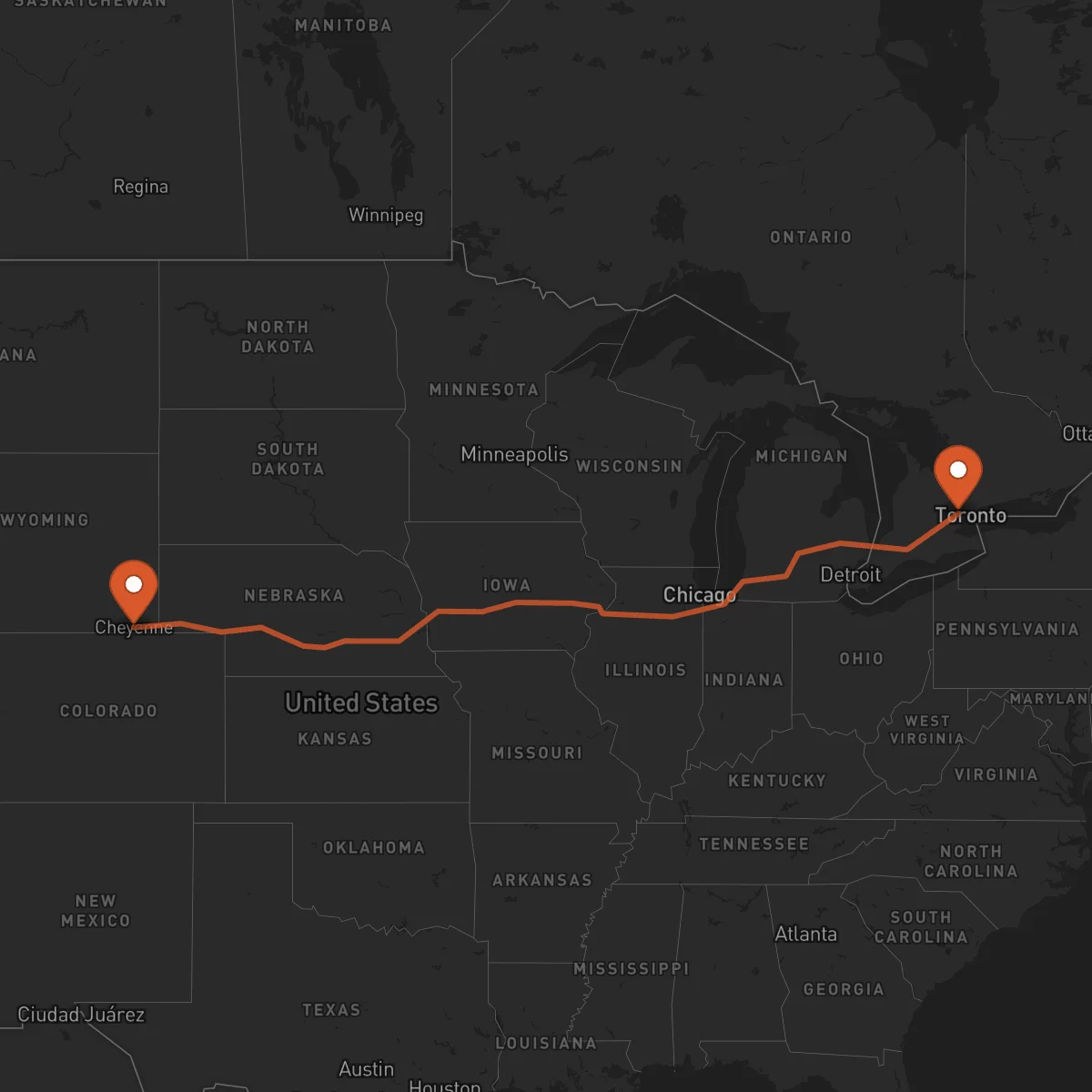
Brampton to Cheyenne
Cheyenne → BramptonFTL freight transportation service between Brampton and Cheyenne. Reliable logistics solutions for your business.
Route Description
Everything you need to know about the corridor Brampton - Cheyenne
The Brampton-Cheyenne corridor represents a vital cross-border freight transportation link between Canada and the United States, spanning approximately 2,069 kilometers. This route connects the industrial heartland of Ontario with the strategic location of Wyoming, facilitating the movement of goods between two major North American markets. The corridor traverses key transportation hubs and industrial centers, making it essential for companies engaged in cross-border trade and supply chain operations.
The economic significance of this corridor is underscored by the industrial strengths of both regions. Brampton serves as a major logistics and manufacturing center in the Greater Toronto Area, while Cheyenne acts as a gateway to the western United States with its strategic position near major transportation routes. The corridor supports diverse industries including automotive, manufacturing, energy, and agricultural sectors, with freight volumes steadily increasing as trade between Canada and the US continues to grow.
Key transportation infrastructure along this route includes major highways such as Ontario Highway 401, Interstate 80, and Interstate 25, providing reliable and efficient freight movement. The corridor typically utilizes border crossings like the Blue Water Bridge or Detroit-Windsor Tunnel, with customs clearance processes streamlined for pre-approved carriers. Control Terrestre's expertise in cross-border operations ensures seamless documentation, compliance with customs regulations, and efficient transit times, making us the ideal partner for companies requiring reliable FTL transportation along this important North American trade route.
Services for this Route
Available services for the corridor Brampton - Cheyenne
 Origin
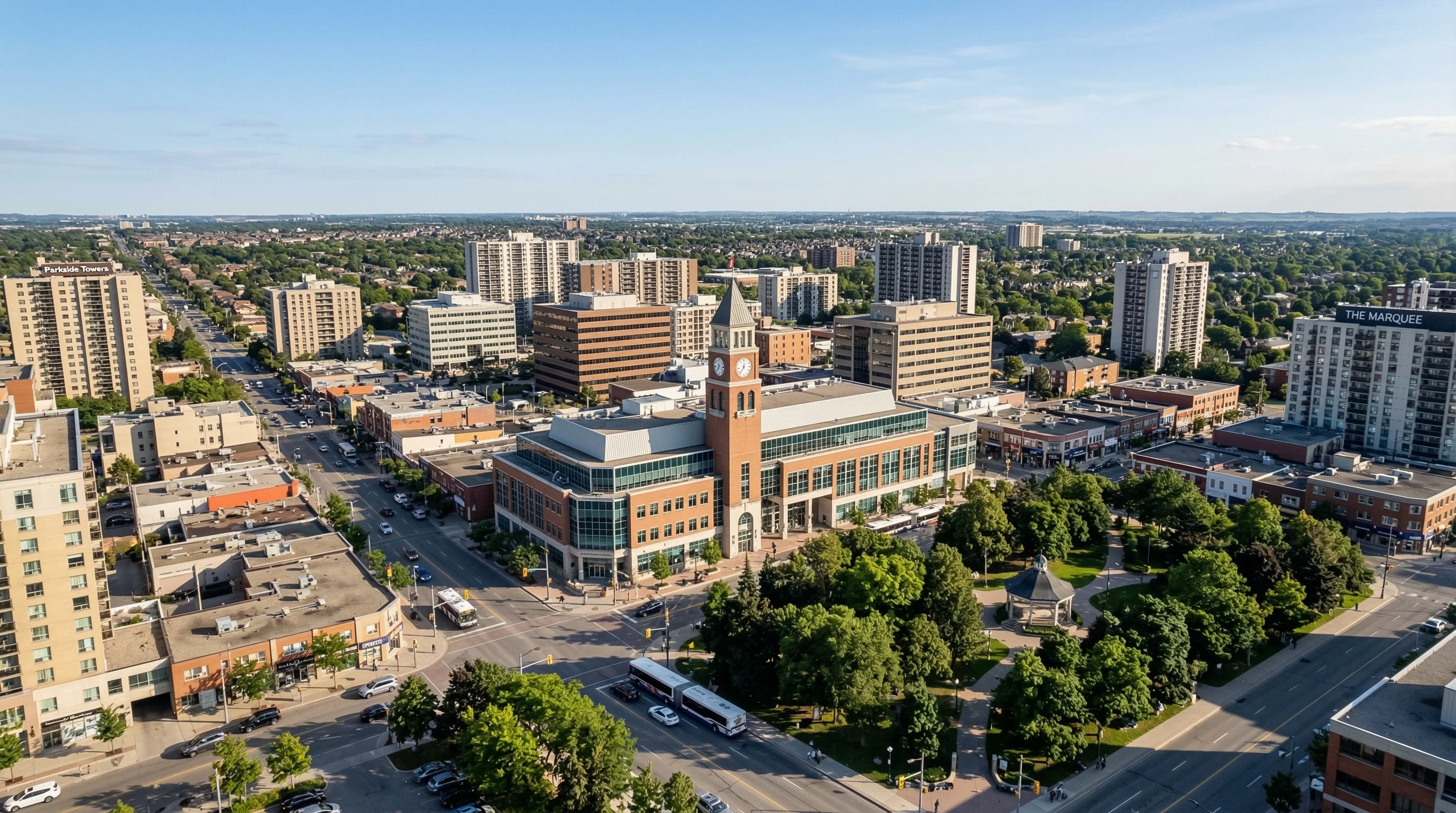
Brampton, located in the Greater Toronto Area of Ontario, Canada, stands as a strategic logistics hub with exceptional connectivity to major markets. The city's proximity to Toronto Pearson International Airport and its extensive highway network, including direct access to Highway 401, positions it as a critical node in Canada's freight transportation system. Brampton's industrial base is diverse and robust, with strong presence in advanced manufacturing, automotive parts production, pharmaceuticals, and technology sectors. The city's logistics infrastructure includes numerous warehousing and distribution centers, making it an ideal origin point for freight shipments requiring efficient access to both Canadian and US markets.
 Destination
Cheyenne
Cheyenne, Wyoming serves as a strategic logistics gateway to the western United States, offering unique advantages for freight transportation. Located at the intersection of major interstate highways (I-25 and I-80), Cheyenne provides direct access to Denver, Salt Lake City, and other western markets. The city's economic foundation includes energy production, agriculture, and government services, with growing logistics and distribution sectors. Cheyenne's transportation infrastructure features the Union Pacific rail yard, modern warehousing facilities, and its proximity to Denver International Airport. The city's location makes it an ideal distribution point for companies serving the Rocky Mountain region and beyond, with excellent connectivity to both northern and southern US markets.










