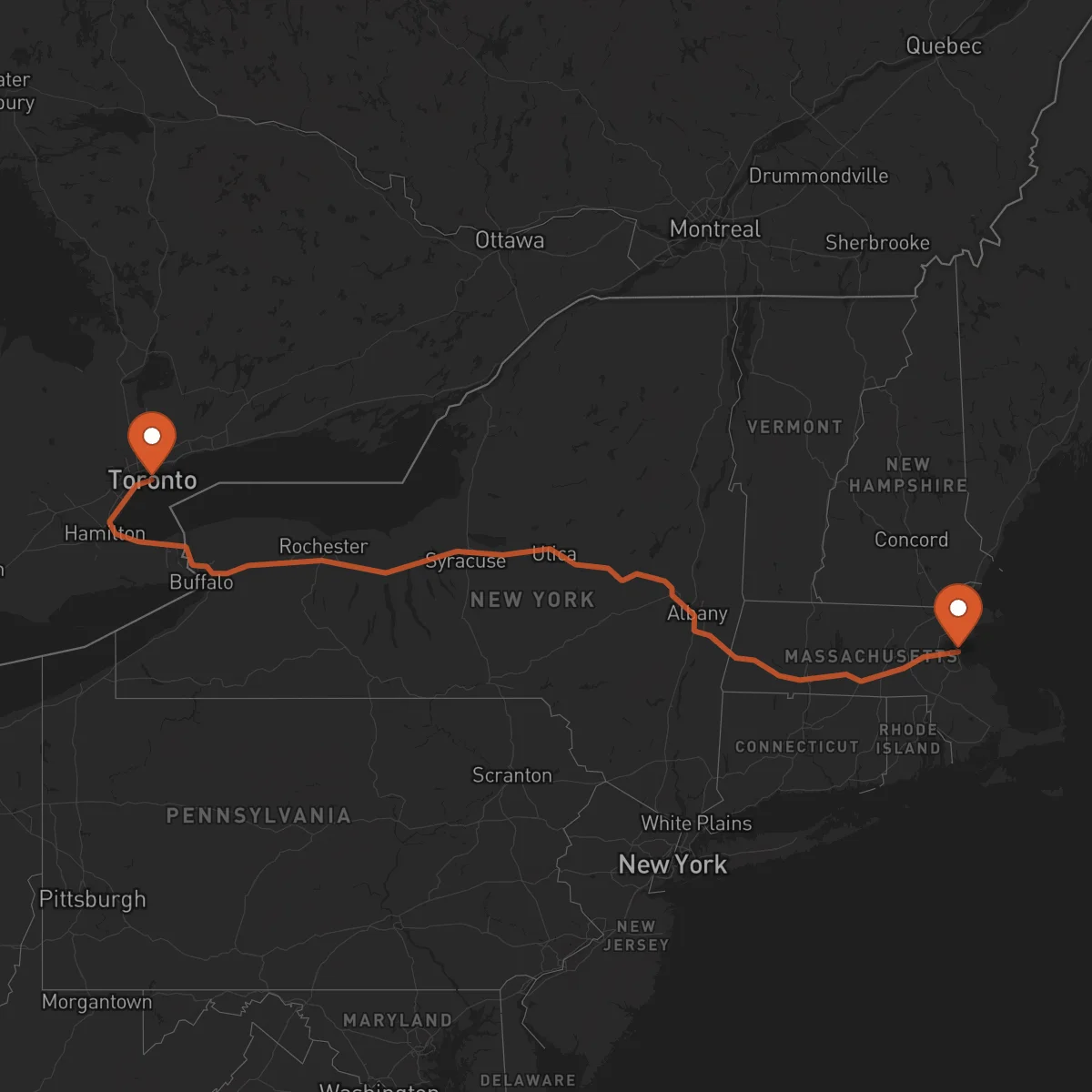
Boston to Toronto
Toronto → BostonFTL freight transportation service between Boston and Toronto. Reliable logistics solutions for your business.
Route Description
Everything you need to know about the corridor Boston - Toronto
The Boston-Toronto corridor represents a vital cross-border freight transportation route connecting two of North America's most dynamic economic centers. This 692-kilometer corridor links Massachusetts' largest city with Canada's financial capital, facilitating the movement of goods between the United States and Canada. The route traverses through key regions including New York State, crossing at strategic border points such as the Thousand Islands Bridge or the Peace Bridge, depending on the specific logistics requirements.
The economic significance of this corridor is substantial, supporting trade between two major economies. Boston serves as a hub for education, healthcare, and technology, while Toronto functions as a center for finance, manufacturing, and international commerce. This complementary economic relationship drives consistent freight demand along the route. The corridor benefits from well-developed transportation infrastructure, including Interstate 90 (Massachusetts Turnpike) and Interstate 81, connecting to Ontario's Highway 401 - North America's busiest highway.
Key industries utilizing this freight corridor include automotive parts, pharmaceuticals, electronics, and advanced manufacturing components. The route also supports cross-border e-commerce and just-in-time manufacturing supply chains. At the border, Control Terrestre's C-TPAT-certified carriers ensure smooth customs clearance and compliance with both US and Canadian regulations. Our team manages all documentation requirements, including commercial invoices, certificates of origin, and NAFTA/USMCA compliance, facilitating seamless cross-border operations.
Services for this Route
Available services for the corridor Boston - Toronto
 Origin
Boston
Boston, Massachusetts serves as a strategic logistics hub on the East Coast of the United States. Located in the northeastern region, Boston provides excellent access to major markets throughout the Northeast and Mid-Atlantic states. The city's Logan International Airport and Port of Boston support multimodal freight operations, while its extensive highway network connects to I-90, I-93, and I-95. Boston's economy is driven by education, healthcare, biotechnology, and financial services, with a growing technology sector centered in the Route 128 corridor. The city's concentration of research institutions and hospitals creates consistent demand for specialized freight transportation, including temperature-controlled shipments and high-value cargo.
 Destination
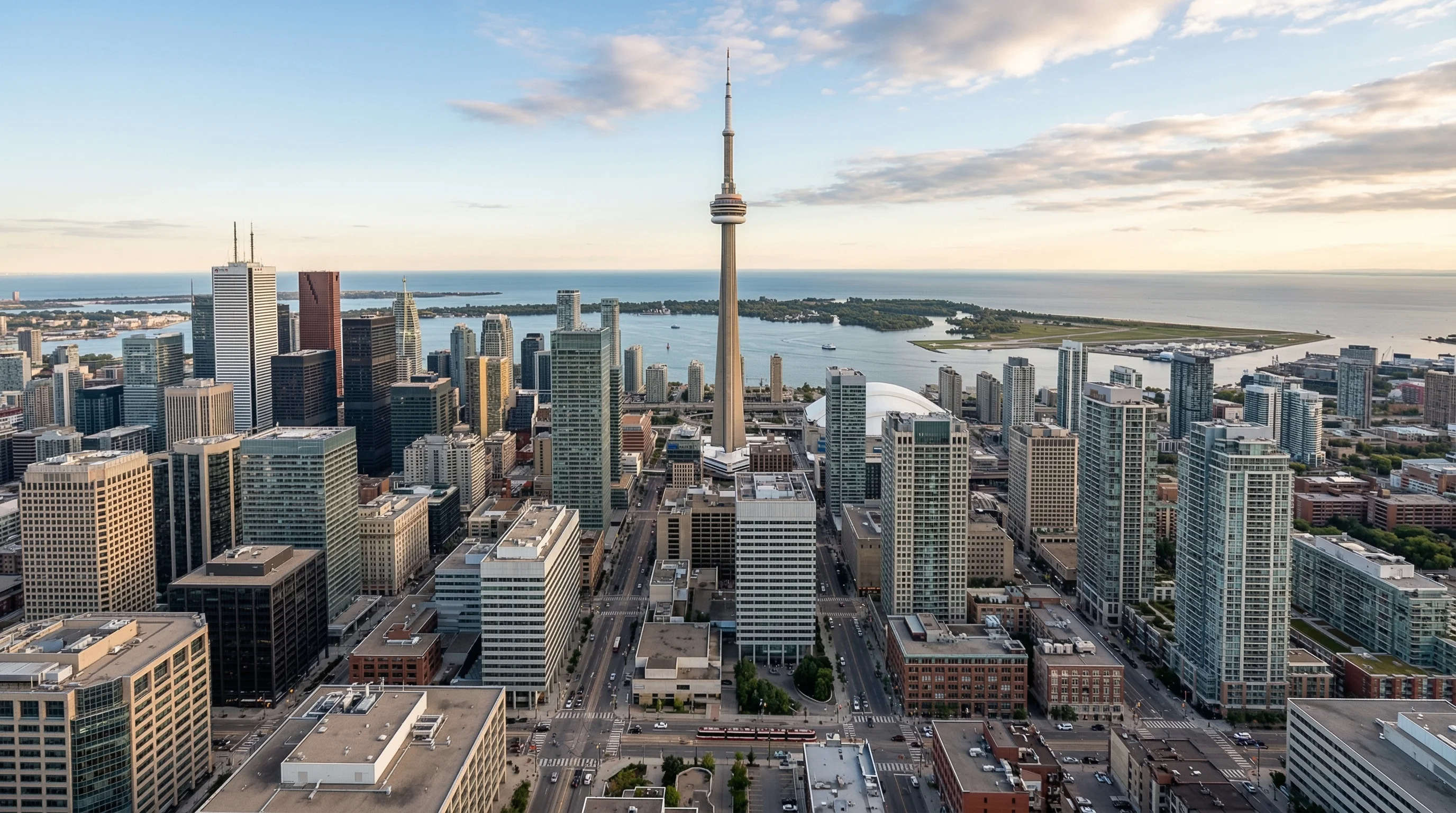
Toronto, Ontario stands as Canada's largest city and a premier logistics center in North America. Strategically located on Lake Ontario's northwestern shore, Toronto offers exceptional access to both domestic Canadian markets and international trade routes. The city is served by Toronto Pearson International Airport, one of North America's busiest airports, and the Port of Toronto for maritime freight. Toronto's extensive highway system includes Highway 401, Highway 400, and connections to the Queen Elizabeth Way. As Canada's financial capital, Toronto's economy encompasses banking, insurance, and investment services, complemented by manufacturing, information technology, and film production. The city's diverse industrial base creates robust freight demand for both import and export activities.










