Boston to Edmonton
Edmonton → BostonFTL freight transportation service between Boston and Edmonton. Reliable logistics solutions for your business.
Route Description
Everything you need to know about the corridor Boston - Edmonton
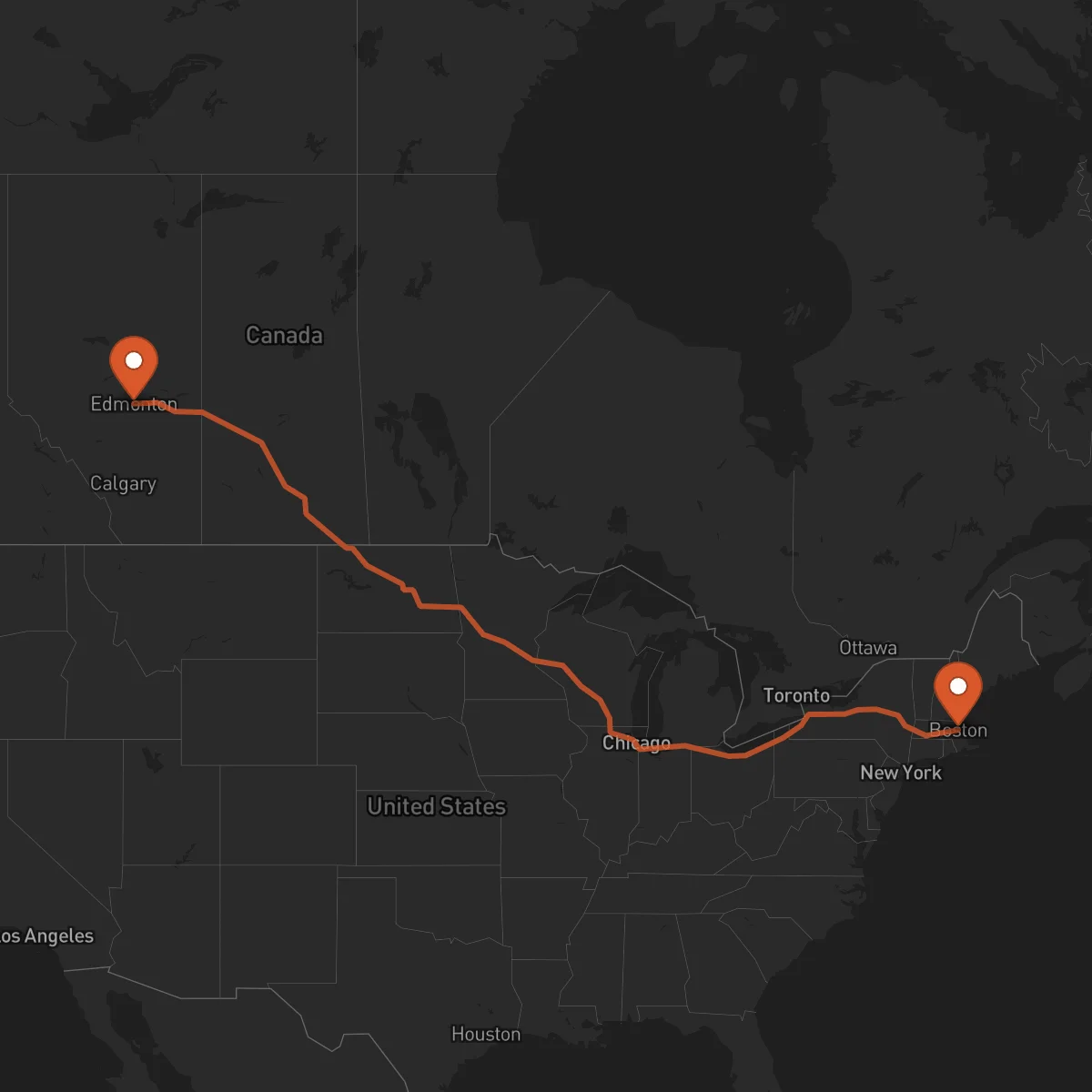
The Boston-Edmonton corridor connects two major economic centers across the United States-Canada border, spanning approximately 3,337 kilometers. This cross-border route traverses diverse terrain from the industrial Northeast through the Great Lakes region and across the Canadian Prairies, making it a vital link for businesses operating between these markets.
This corridor serves critical industries including advanced manufacturing, aerospace, technology, and energy sectors. Boston's concentration of research institutions and high-tech companies complements Edmonton's position as Alberta's capital and a hub for energy and natural resources. The route facilitates the movement of specialized equipment, industrial components, and technology products that drive innovation in both regions.
Key transportation infrastructure includes I-90 (Massachusetts Turnpike) connecting to I-94 through the Midwest, which becomes Canada's Highway 402/401 leading to Toronto, then transitions to Highway 402 and Highway 17 through Ontario and Manitoba, connecting to Highway 16 across Saskatchewan and Alberta. The corridor typically crosses at major ports of entry such as Detroit-Windsor or Sarnia-Port Huron, both equipped with modern customs facilities and FAST program lanes for expedited processing.
Control Terrestre provides comprehensive FTL services along this corridor, managing cross-border documentation, customs clearance, and compliance requirements. Our C-TPAT-certified network ensures secure and efficient transportation, while our experienced team handles the complexities of international freight movement, providing door-to-door service and real-time tracking throughout the journey.
Services for this Route
Available services for the corridor Boston - Edmonton
 Origin
Boston
Boston serves as a strategic gateway for logistics in the Northeastern United States, offering access to major ports, international airports, and an extensive highway network. The city's Logan International Airport and Port of Boston facilitate seamless integration of air and ocean freight with ground transportation. Boston's location provides efficient connections to the entire Eastern Seaboard and Midwest manufacturing centers.
The region's economy is driven by technology, biotechnology, higher education, and advanced manufacturing sectors. Major employers include pharmaceutical companies, research institutions, and defense contractors, all requiring reliable transportation of specialized equipment and sensitive materials. The area's concentration of universities and research facilities creates consistent demand for the movement of scientific equipment and prototypes.
Boston's transportation infrastructure includes I-90 (Massachusetts Turnpike), I-93, and I-95, providing direct access to major freight corridors. The city's proximity to other Northeast logistics hubs like New York and Philadelphia enhances its strategic importance for companies requiring comprehensive coverage of the Eastern United States market.
 Destination
Edmonton's strategic location in central Alberta positions it as a critical logistics hub for Western Canada and the northern territories. The city serves as the northern terminus of the CANAMEX Corridor and provides access to the Asia-Pacific Gateway through the Port of Prince Rupert. Edmonton International Airport offers significant cargo capacity, complementing the extensive highway network that radiates from the city.
The Edmonton region's economy is anchored by the energy sector, with oil sands operations in northern Alberta requiring specialized transportation solutions. The city also hosts significant manufacturing, technology, and agricultural industries. Edmonton's role as Alberta's capital creates additional demand for secure transportation of government and institutional cargo. The surrounding region's agricultural production requires reliable refrigerated transportation during harvest seasons.
Edmonton's transportation infrastructure includes major highways such as the Yellowhead Highway (Highway 16) connecting to Winnipeg and Vancouver, and Highway 2 providing direct routes to Calgary and southern Alberta. The city's location away from major international borders reduces congestion while maintaining excellent connectivity to both US and Pacific markets.










