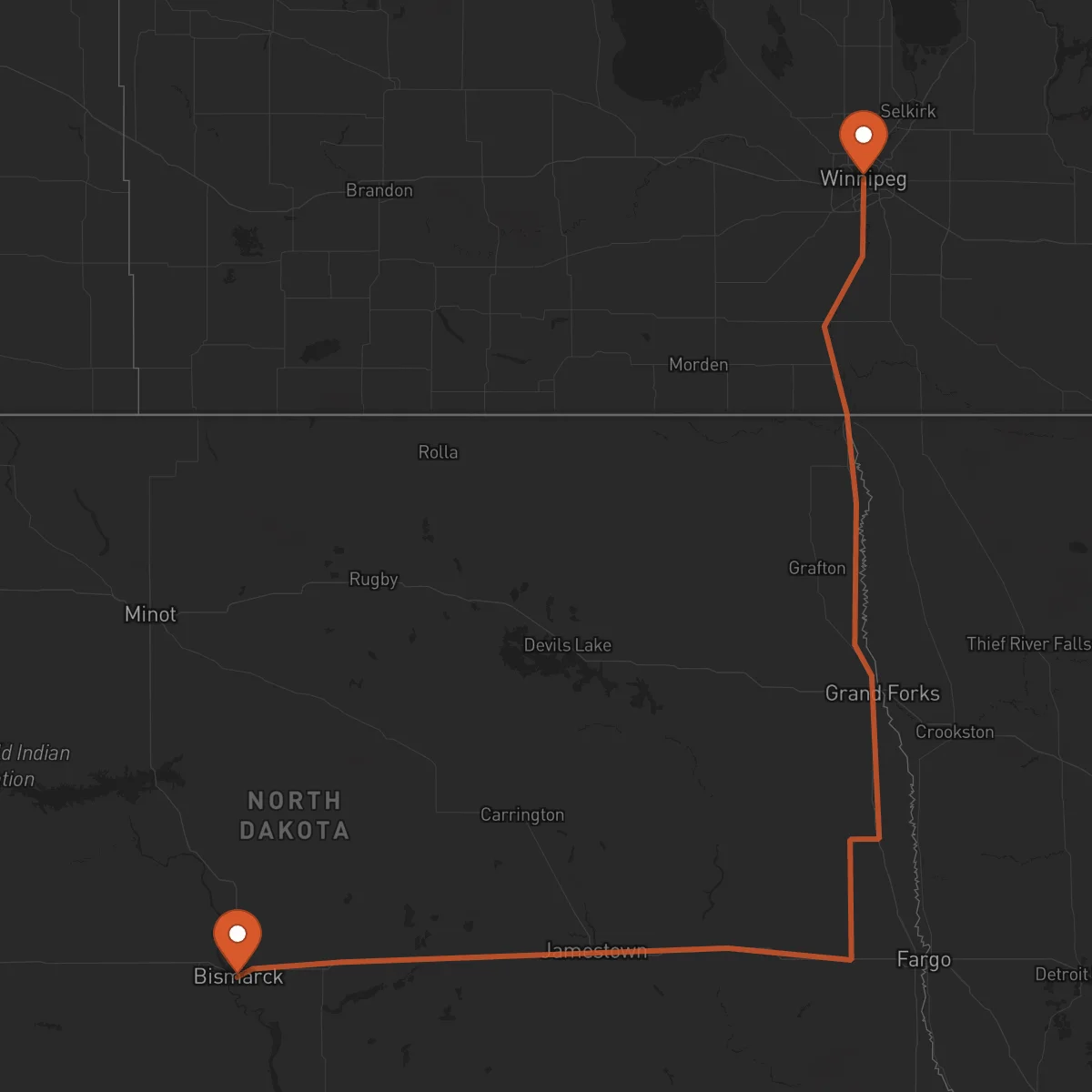
Bismarck to Winnipeg
Winnipeg → BismarckFTL freight transportation service between Bismarck and Winnipeg. Reliable logistics solutions for your business.
Route Description
Everything you need to know about the corridor Bismarck - Winnipeg
The Bismarck to Winnipeg corridor represents a vital cross-border connection between North Dakota and Manitoba, spanning approximately 437 kilometers through the heart of the North American Great Plains. This route serves as a crucial link between the United States and Canada, facilitating the movement of goods between two major economic regions. The corridor primarily follows Highway 83 and Highway 1, providing a direct and efficient pathway for freight transportation. Control Terrestre specializes in managing cross-border operations along this route, ensuring seamless customs clearance and compliance with both US and Canadian regulations. Our expertise in handling the specific requirements of this corridor allows us to optimize transit times and provide reliable service for our clients' full truckload shipments.
Services for this Route
Available services for the corridor Bismarck - Winnipeg
 Origin
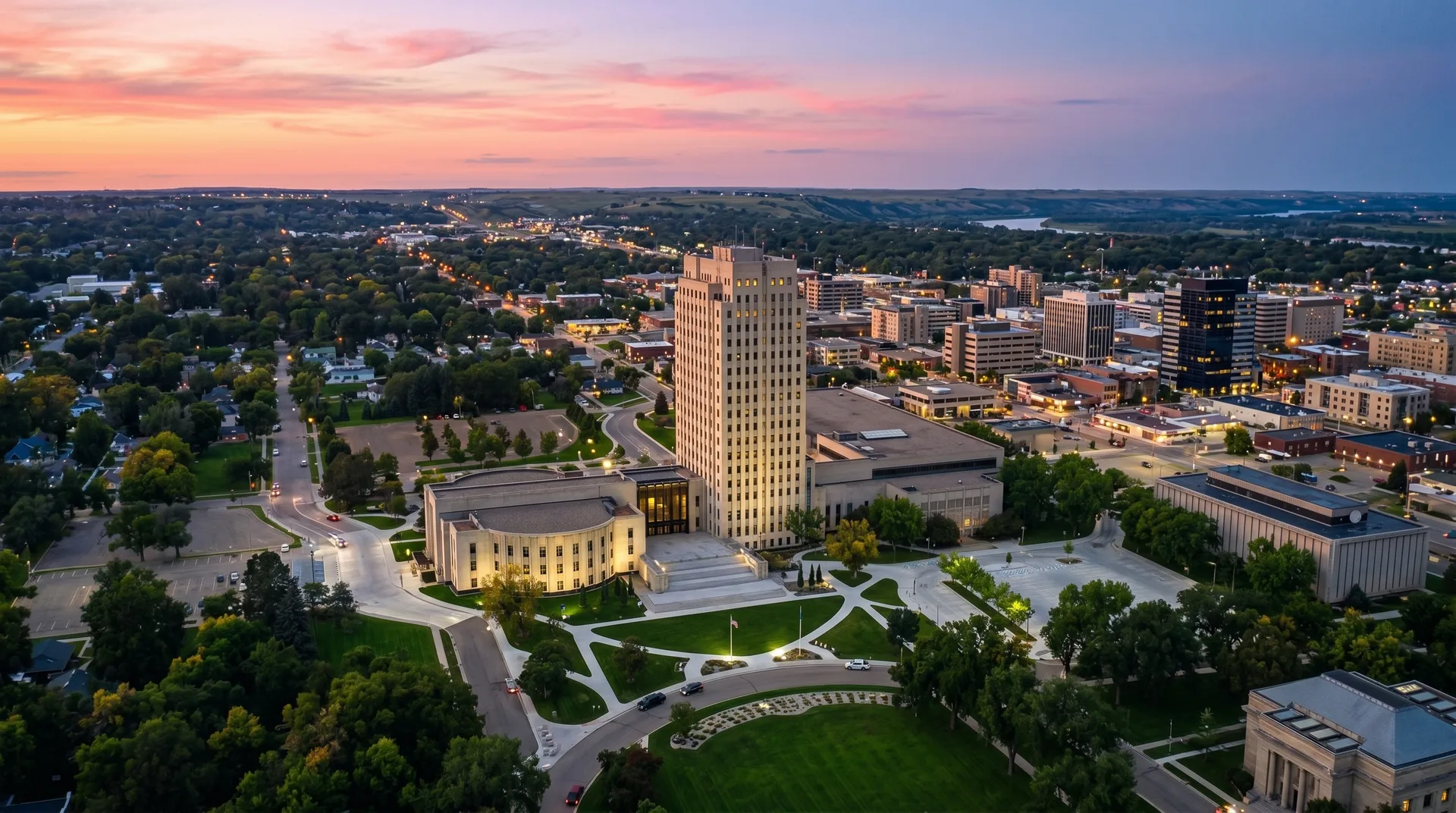
Bismarck
Bismarck, the capital city of North Dakota, serves as a strategic logistics hub in the Upper Midwest region. Located along the Missouri River, Bismarck benefits from its position at the crossroads of major transportation routes, including Interstate 94 and Highway 83. The city's economy is diverse, with strong sectors in energy (particularly oil and natural gas from the nearby Bakken formation), agriculture, healthcare, and government services. Bismarck's industrial base includes manufacturing facilities, food processing plants, and energy-related industries that generate significant freight volume. The city's transportation infrastructure includes the Bismarck Municipal Airport, BNSF Railway connections, and easy access to major highways, making it an ideal origin point for cross-border freight movements.
 Destination
Winnipeg, the capital and largest city of Manitoba, stands as a major transportation and distribution center in Western Canada. Known as the "Gateway to the West," Winnipeg's strategic location at the confluence of the Red and Assiniboine Rivers has historically made it a key logistics hub. The city serves as a critical junction for both east-west and north-south trade routes, with strong connections to major markets across Canada and the United States. Winnipeg's economy is diverse, with significant activity in manufacturing, aerospace, transportation, agriculture, and food processing industries. The city boasts extensive transportation infrastructure, including the Winnipeg James Armstrong Richardson International Airport, extensive rail networks operated by CN and CP, and major highways such as the Trans-Canada Highway and Highway 75, facilitating efficient freight movements.










