Bismarck to Tampico
Tampico → BismarckFTL freight transportation service between Bismarck and Tampico. Reliable logistics solutions for your business.
Route Description
Everything you need to know about the corridor Bismarck - Tampico
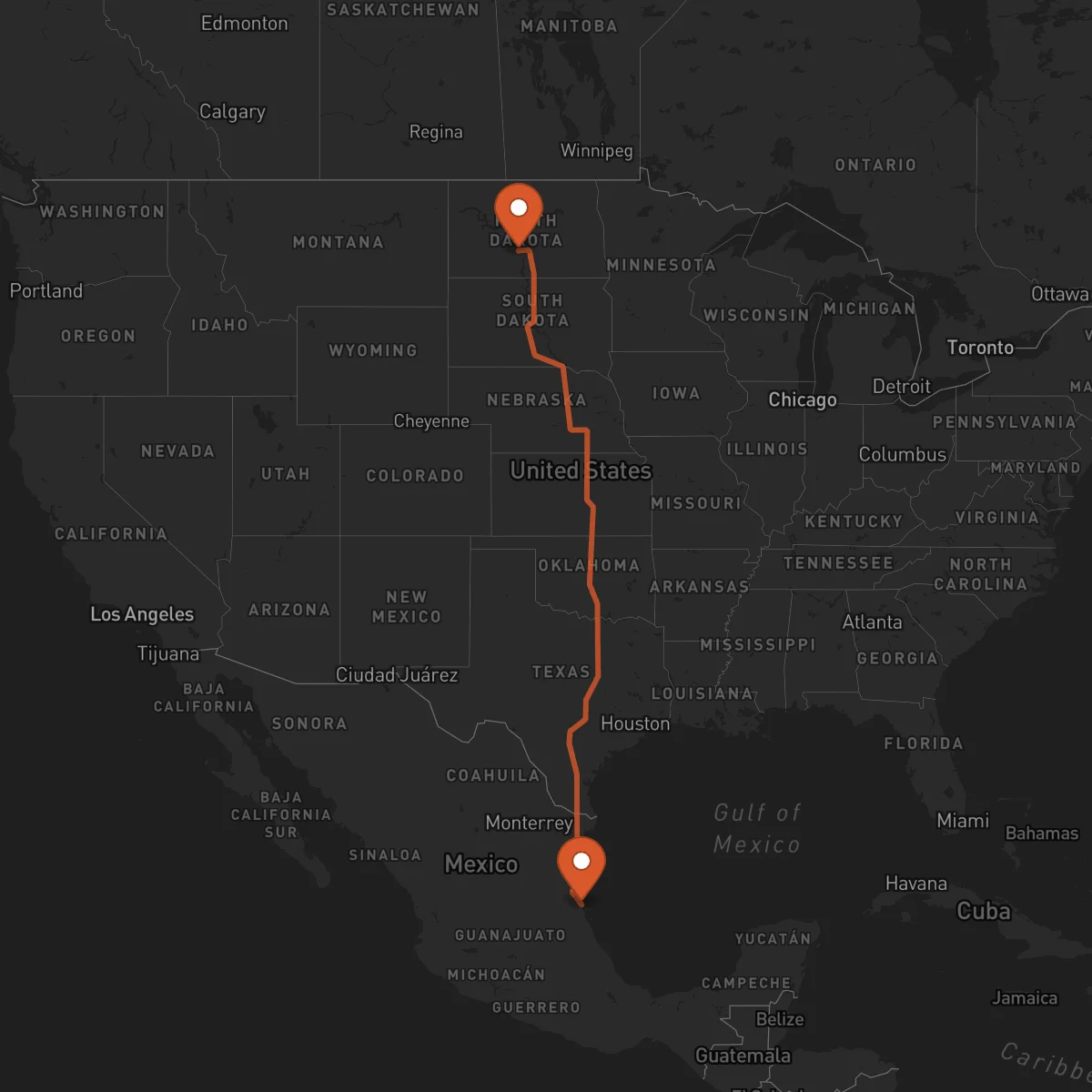
The logistics corridor between Bismarck, North Dakota and Tampico, Tamaulipas represents a vital cross-border freight route connecting the industrial heartland of the United States with Mexico's strategic Gulf Coast. This 2,747 km corridor traverses diverse terrain and crosses international borders, making it essential for companies engaged in North American trade. The route primarily follows major interstate highways through the central United States before connecting with Mexico's federal highways, creating a seamless transportation link between these two important economic centers.
The economic significance of this corridor is substantial, facilitating trade between North Dakota's agricultural and energy sectors with Tamaulipas' manufacturing and petrochemical industries. This route serves as a critical supply chain artery for industries including agriculture, energy equipment, automotive parts, and industrial machinery. The corridor's strategic importance continues to grow as trade relations between the United States and Mexico strengthen under USMCA agreements.
Control Terrestre specializes in managing the complexities of this cross-border corridor, offering full truckload (FTL) services that ensure efficient and reliable transportation. Our expertise includes navigating customs procedures at key border crossings, coordinating with certified transportation partners, and providing real-time tracking throughout the journey. We understand the unique challenges of this route, from varying state regulations to international customs requirements, and have developed streamlined processes to minimize delays and ensure timely delivery of your freight from Bismarck to Tampico.
Services for this Route
Available services for the corridor Bismarck - Tampico
 Origin
Bismarck
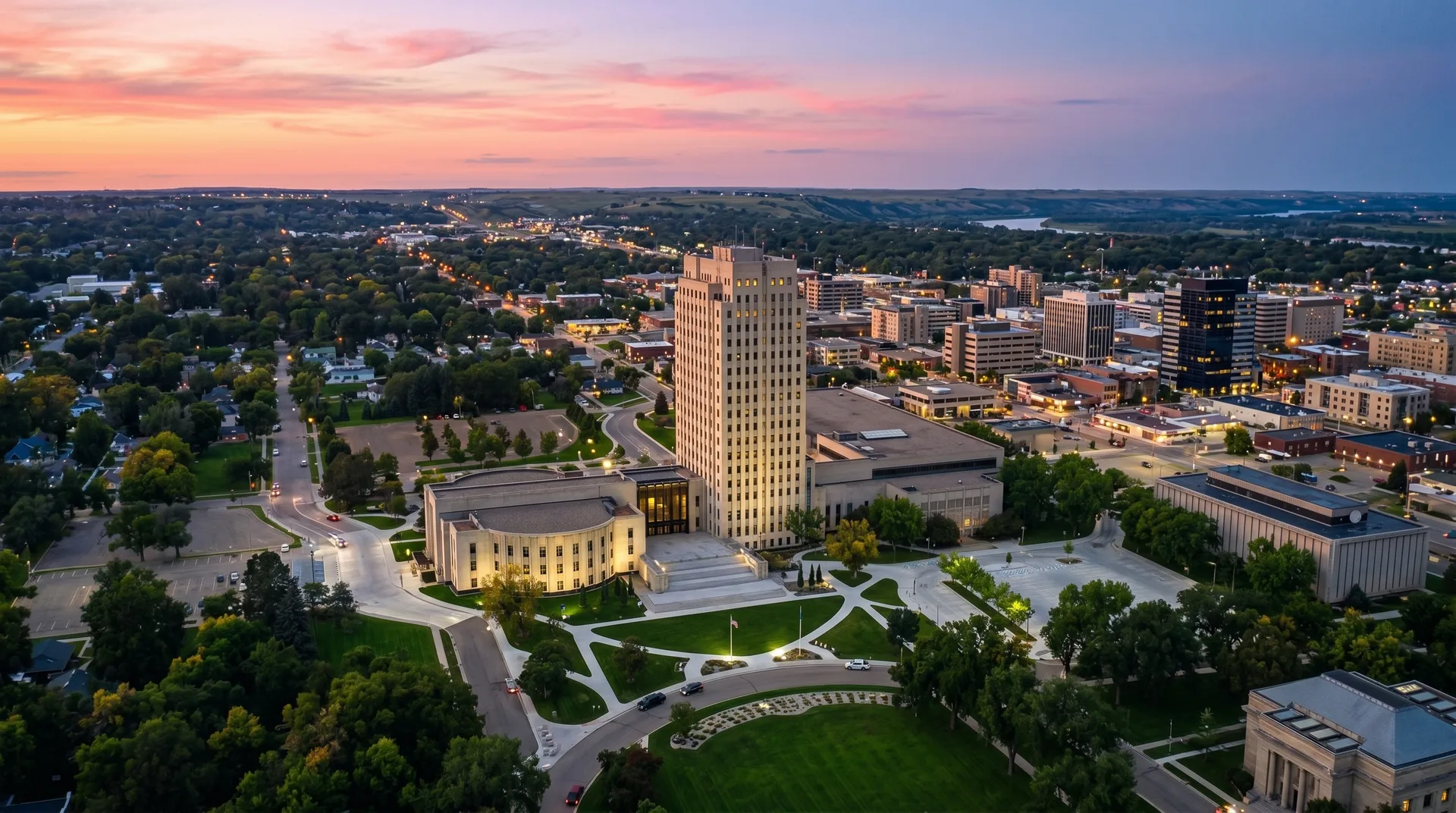
Bismarck, the capital city of North Dakota, serves as a strategic logistics hub in the Upper Midwest region of the United States. Located along the Missouri River, Bismarck benefits from its position at the crossroads of major transportation routes, including Interstate 94, which provides direct access to both coasts. The city's logistics infrastructure includes the Bismarck Municipal Airport, extensive rail connections through BNSF Railway, and modern warehousing facilities that support the region's agricultural and energy industries.
The economic landscape of Bismarck is diverse, with strong sectors in agriculture, energy (particularly oil and natural gas from the Bakken formation), government services, and healthcare. The region is a major producer of agricultural commodities, energy equipment, and manufactured goods, creating consistent demand for freight transportation services. Bismarck's central location makes it an ideal origin point for shipments destined for various regions across North America, particularly Mexico and the southern United States.
 Destination
Tampico
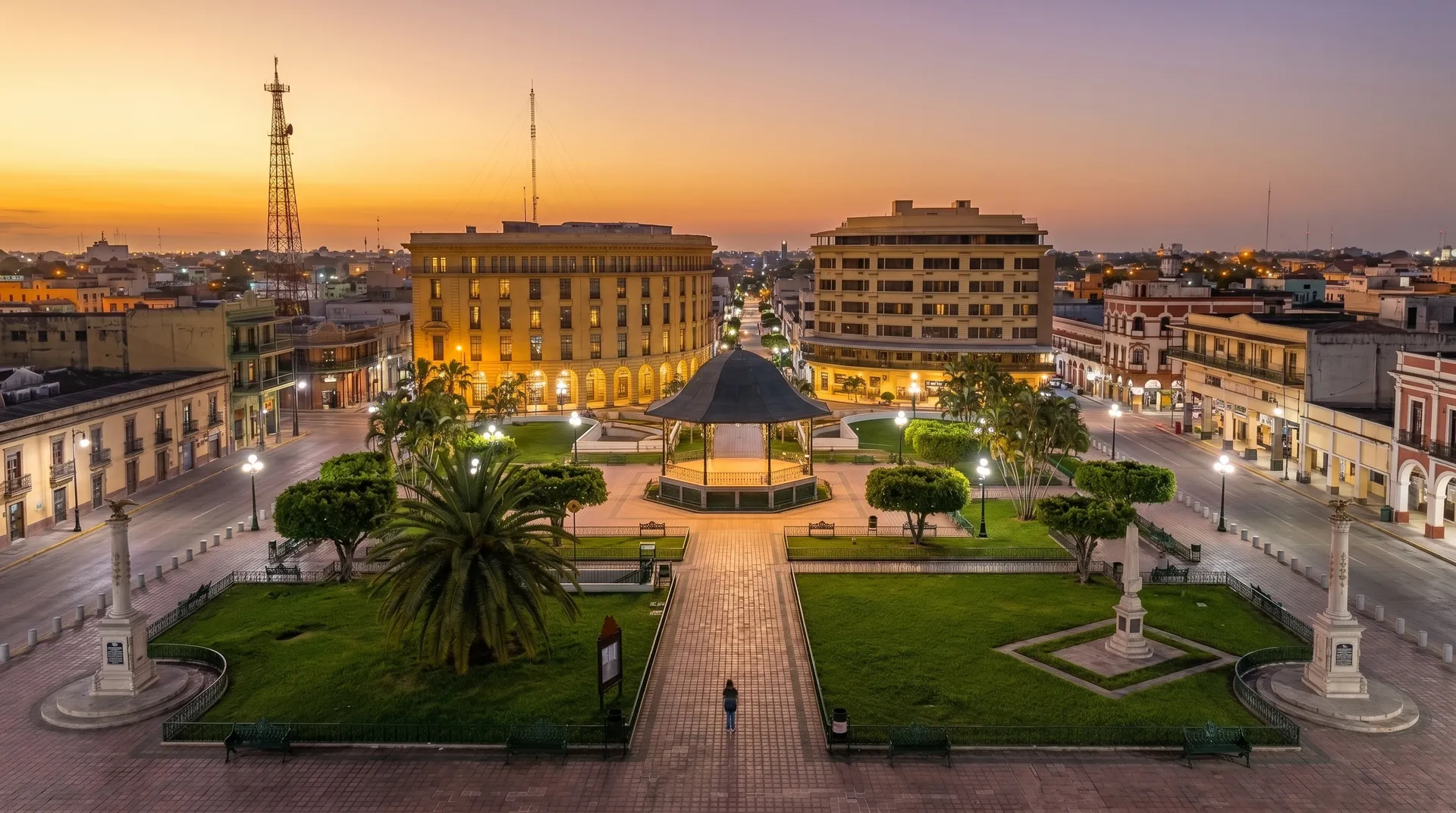
Tampico, located on Mexico's Gulf Coast in the state of Tamaulipas, is a crucial maritime and industrial center that serves as a gateway to Mexico's central and northern regions. The city's strategic location provides access to the Gulf of Mexico through the Pánuco River, making it one of Mexico's most important port cities. Tampico's port facilities are complemented by excellent ground transportation infrastructure, including connections to Mexico's federal highway system and rail networks that link to major industrial centers.
The economy of Tampico is heavily focused on the petrochemical industry, fishing, agriculture, and manufacturing. The surrounding region of Tamaulipas is home to numerous maquiladoras (manufacturing plants) and industrial parks that serve both domestic and international markets. Tampico's port is particularly important for the import and export of petroleum products, agricultural goods, and manufactured items. The city's proximity to the United States border and its developed logistics infrastructure make it an ideal destination for cross-border freight operations, especially for companies looking to serve central and southern Mexico from northern origins.










