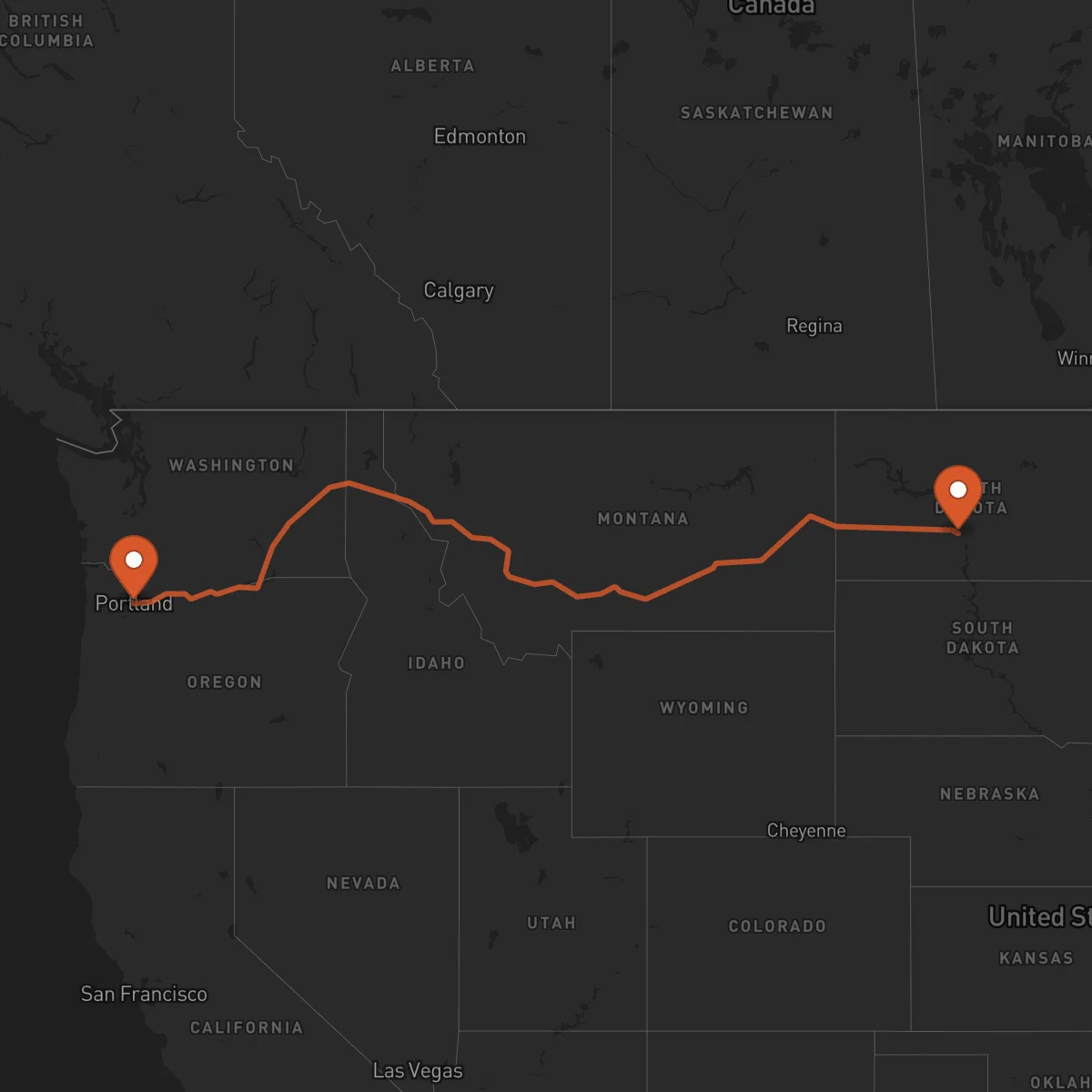
Bismarck to Portland
Portland → BismarckFTL freight transportation service between Bismarck and Portland. Reliable logistics solutions for your business.
Route Description
Everything you need to know about the corridor Bismarck - Portland
The Bismarck to Portland corridor represents a vital logistics route connecting the industrial heartland of North Dakota with the major Pacific Northwest port and distribution hub. This 1,687 km domestic route traverses diverse terrain across the northern United States, linking key economic regions through a network of interstate highways. The corridor serves as a critical artery for freight movement between the Midwest's agricultural and energy sectors and the West Coast's manufacturing, technology, and international trade facilities.
The Bismarck-Portland route connects North Dakota's thriving energy, agricultural, and manufacturing sectors with Oregon's diverse industrial base, including technology, forestry, and international trade. This corridor supports the movement of specialized equipment, agricultural products, manufactured goods, and industrial materials between these complementary economic regions. The route facilitates trade relationships between the Great Plains and the Pacific Northwest, enabling businesses to optimize their supply chains across the central-western United States.
Control Terrestre provides comprehensive FTL transportation services along this corridor, leveraging our strategic alliance of experienced carriers. We offer dedicated truckload solutions, specialized equipment options, and reliable door-to-door service to meet the unique requirements of shippers moving freight between Bismarck and Portland. Our providers' certifications, including C-TPAT and FAST, ensure secure and efficient cross-state transportation for all types of commercial cargo.
Services for this Route
Available services for the corridor Bismarck - Portland
 Origin
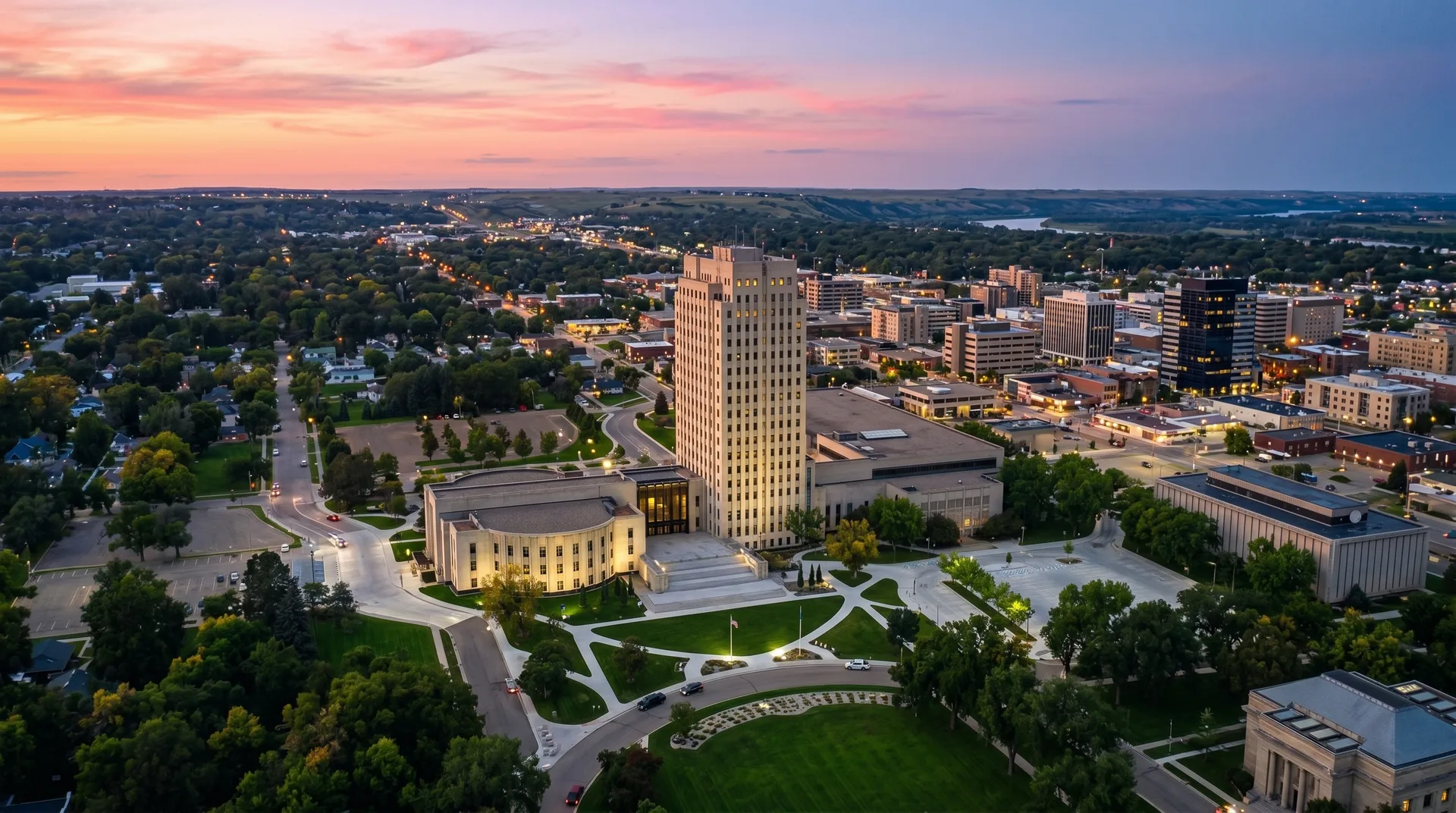
Bismarck
Bismarck, the capital of North Dakota, serves as a strategic logistics hub in the Great Plains region. Located along the Missouri River, the city offers excellent connectivity through Interstate 94 and U.S. Highway 83, providing direct access to major freight corridors. Bismarck's central location in North Dakota makes it an ideal origin point for regional distribution, with proximity to the Bakken oil fields, agricultural regions, and manufacturing centers. The city's transportation infrastructure includes the Bismarck Municipal Airport, BNSF Railway connections, and the Port of Bismarck for barge traffic on the Missouri River.
The Bismarck area is characterized by its strong energy sector, particularly oil and natural gas extraction from the Bakken formation. Agriculture remains a cornerstone of the local economy, with grain production, livestock, and food processing operations. Manufacturing activities include agricultural equipment, energy-related machinery, and industrial components. These diverse industries create consistent demand for reliable freight transportation services to move both raw materials and finished products to markets across the United States.
 Destination
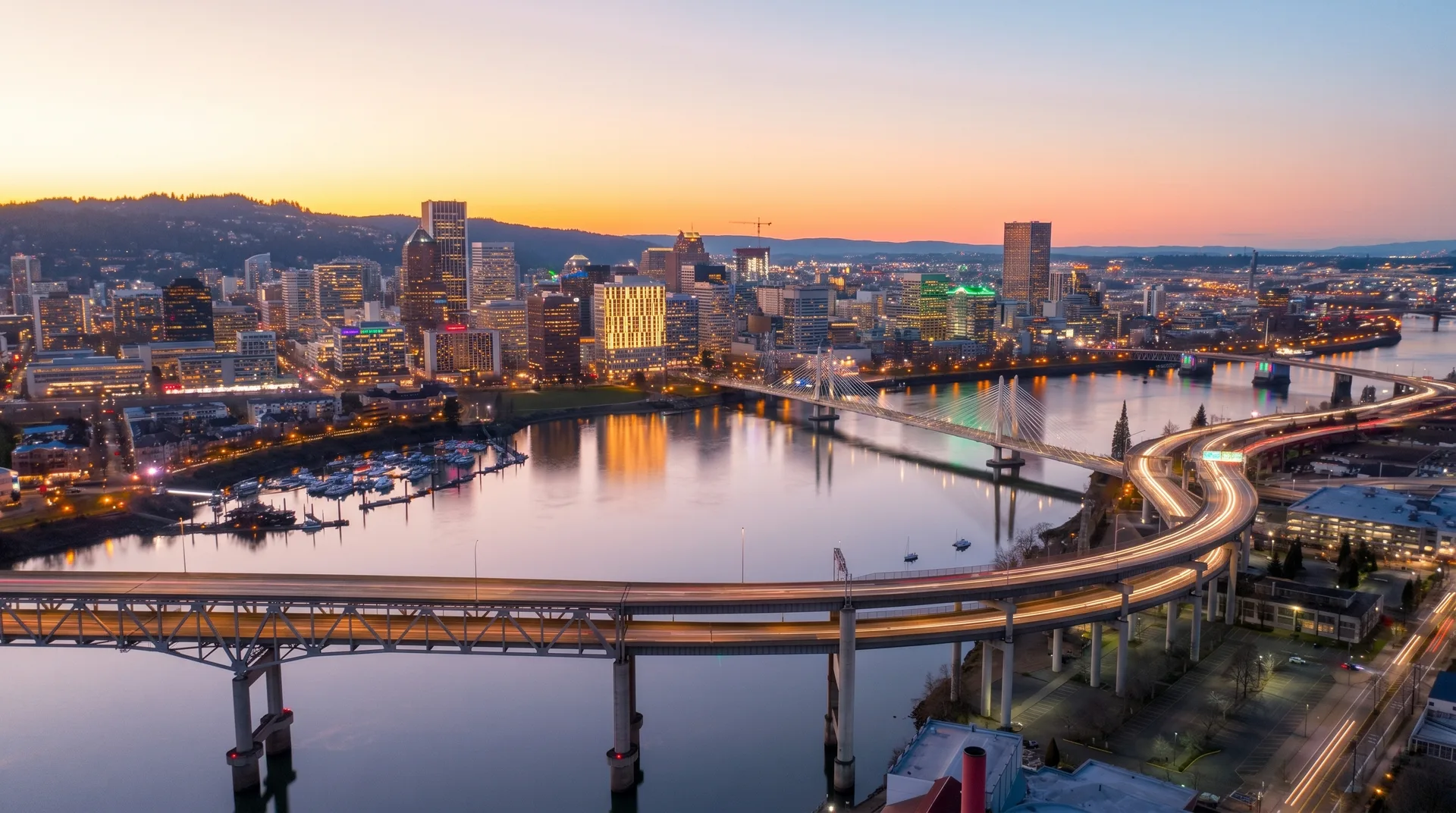
Portland
Portland, Oregon, stands as a premier logistics and distribution center on the West Coast, offering unparalleled access to international markets through the Port of Portland and its extensive transportation network. The city's strategic location at the confluence of the Willamette and Columbia Rivers provides multimodal shipping capabilities, while Interstate 5 and Interstate 84 create direct connections to major western markets. Portland International Airport and the region's robust rail infrastructure further enhance its position as a critical logistics hub.
Portland's economy is diverse and dynamic, with strong technology, manufacturing, and trade sectors. The city is home to numerous tech companies, apparel manufacturers, and food and beverage producers. The Port of Portland handles significant international cargo volumes, particularly with Asia-Pacific markets, while the surrounding region's forestry and agricultural industries create substantial freight movement. Portland's green initiatives and sustainable business practices also drive demand for environmentally conscious transportation solutions, aligning with Control Terrestre's commitment to green logistics operations.










