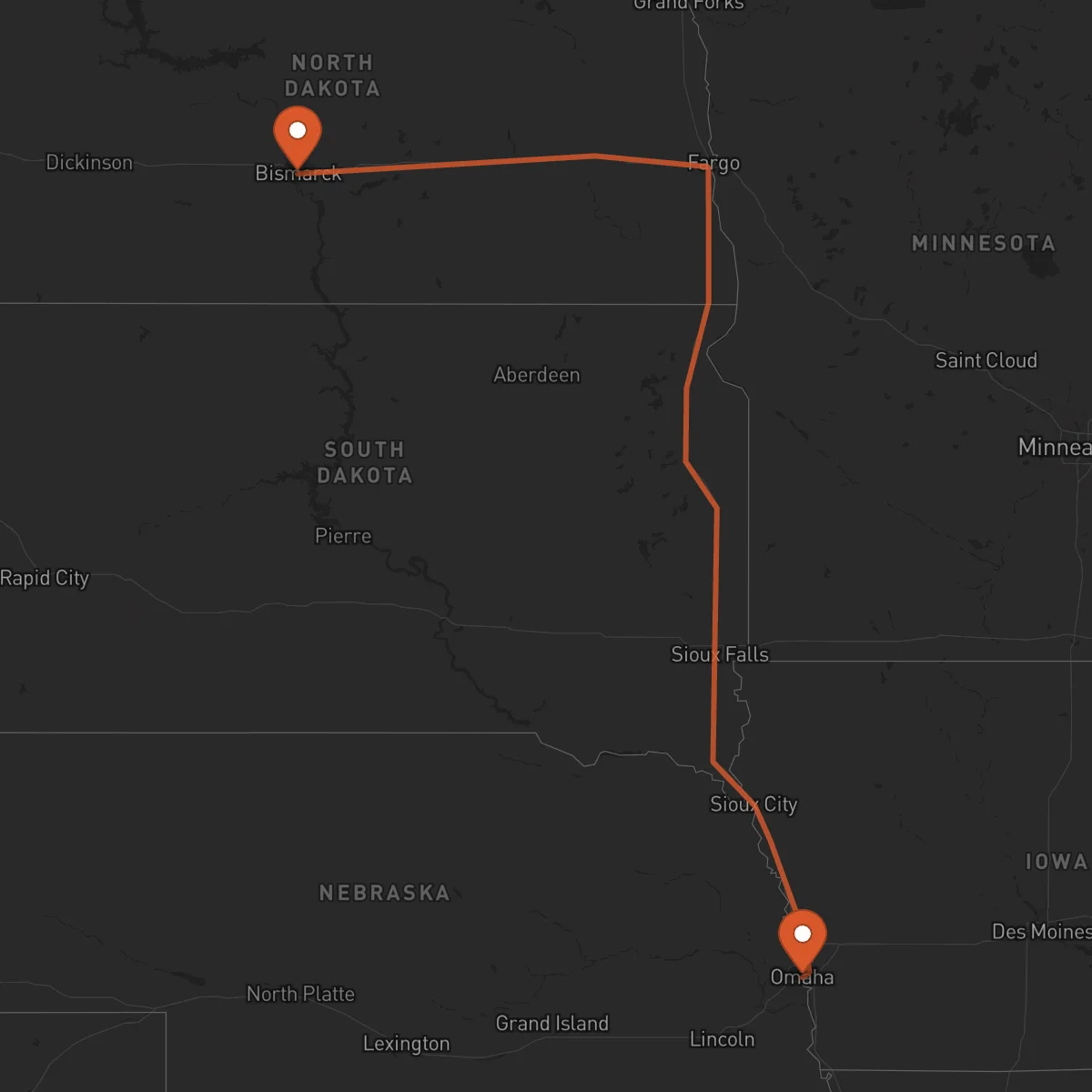
Bismarck to Omaha
Omaha → BismarckFTL freight transportation service between Bismarck and Omaha. Reliable logistics solutions for your business.
Route Description
Everything you need to know about the corridor Bismarck - Omaha
The logistics corridor between Bismarck, North Dakota, and Omaha, Nebraska, represents a vital transportation route connecting the Northern Plains to the Midwest. This 728-kilometer domestic corridor traverses the heart of America's agricultural and industrial regions, linking North Dakota's capital with Nebraska's largest city. The route primarily follows Interstate 29 and Interstate 80, providing efficient north-south connectivity through the Great Plains. This corridor serves as a crucial link between the Bakken oil region and the central distribution networks of the Midwest, facilitating the movement of goods from production centers to major consumption markets. The strategic importance of this route continues to grow as regional trade and economic integration between the Northern Plains and Midwest states strengthen.
Services for this Route
Available services for the corridor Bismarck - Omaha
 Origin
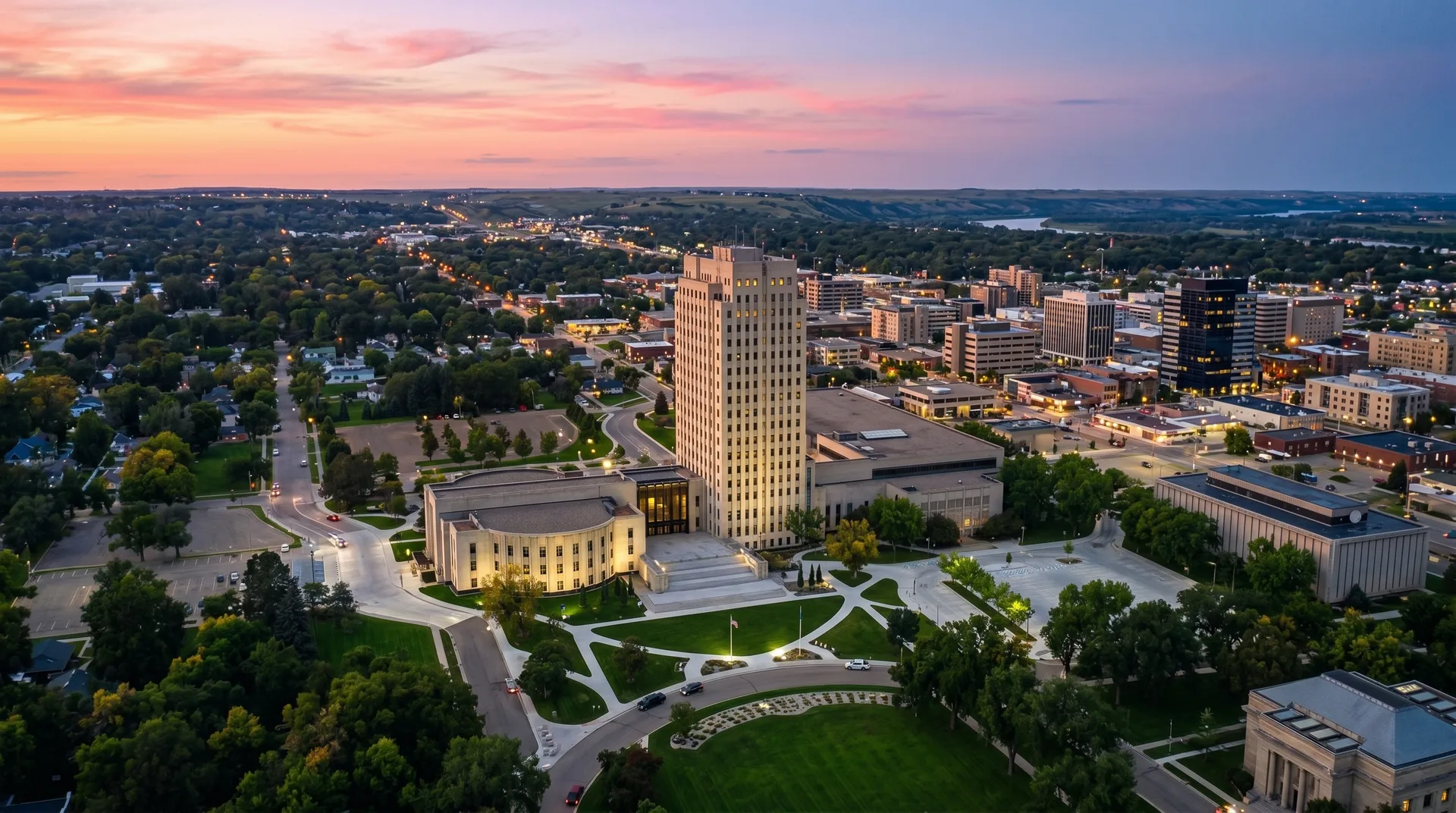
Bismarck
Bismarck, North Dakota, serves as a strategic logistics hub for the Northern Plains region. Located along the Missouri River, Bismarck benefits from its position as the state capital and its proximity to the Bakken oil formation. The city's economy is anchored by government services, healthcare, retail, and energy sectors, with significant agricultural activity in the surrounding areas. Bismarck's transportation infrastructure includes the Bismarck Municipal Airport, BNSF Railway connections, and major highways including I-94 and US-83. The city's location provides access to both east-west and north-south transportation corridors, making it an ideal origin point for freight distribution throughout the Midwest and beyond.
 Destination
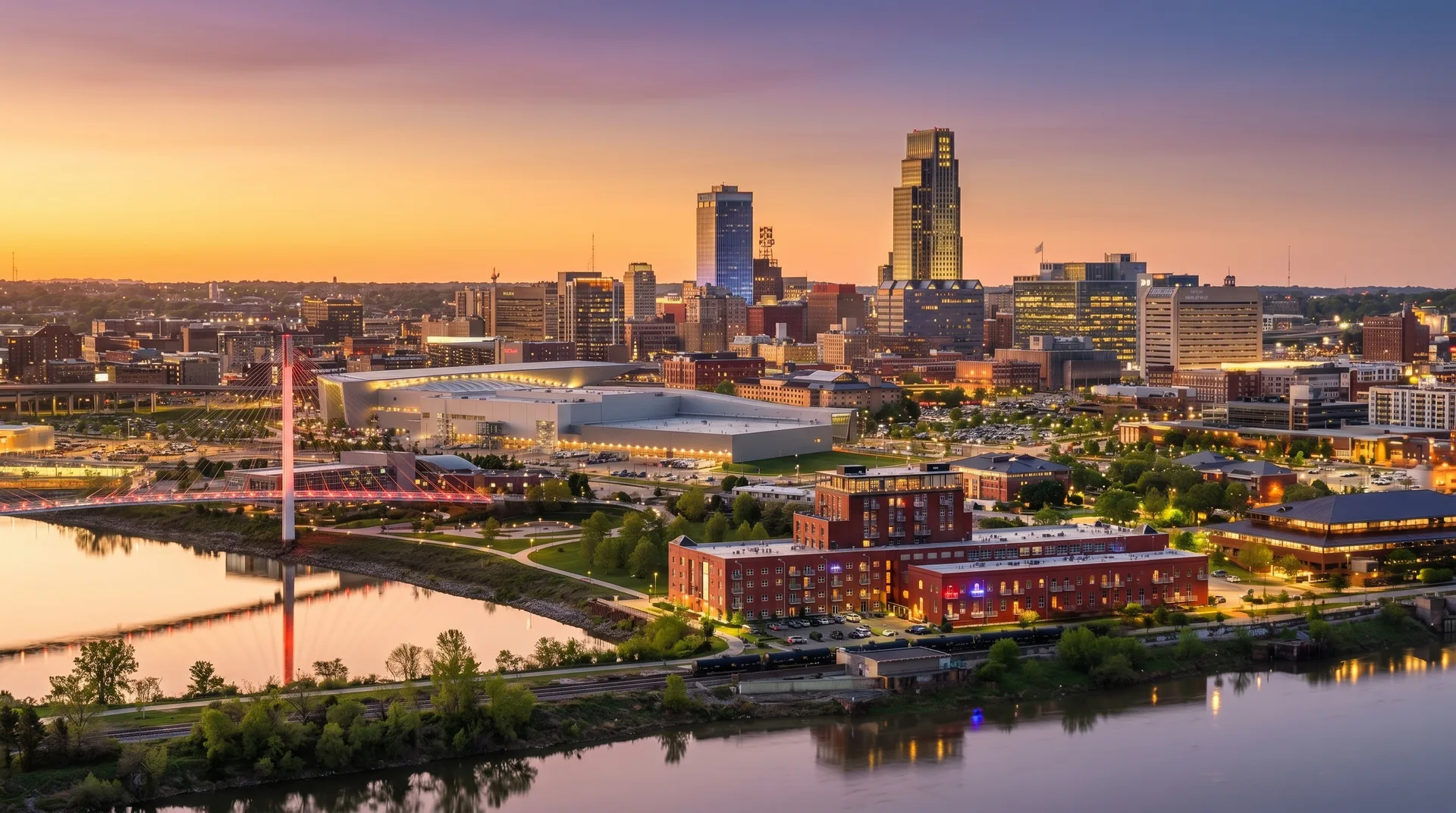
Omaha
Omaha, Nebraska, stands as a premier logistics and distribution center in the Midwest, earning its reputation as the 'Gateway to the West.' The city's strategic location at the crossroads of major transportation routes has fostered the development of one of the nation's largest inland ports. Omaha's economy thrives on finance, insurance, telecommunications, and transportation sectors, with major corporations maintaining significant operations in the area. The city boasts extensive transportation infrastructure, including Eppley Airfield, extensive rail networks operated by Union Pacific, and major highways such as I-80, I-29, and I-480. Omaha's central location provides access to over 60% of the U.S. population within a one-day truck drive, making it an ideal destination for freight consolidation and distribution.










