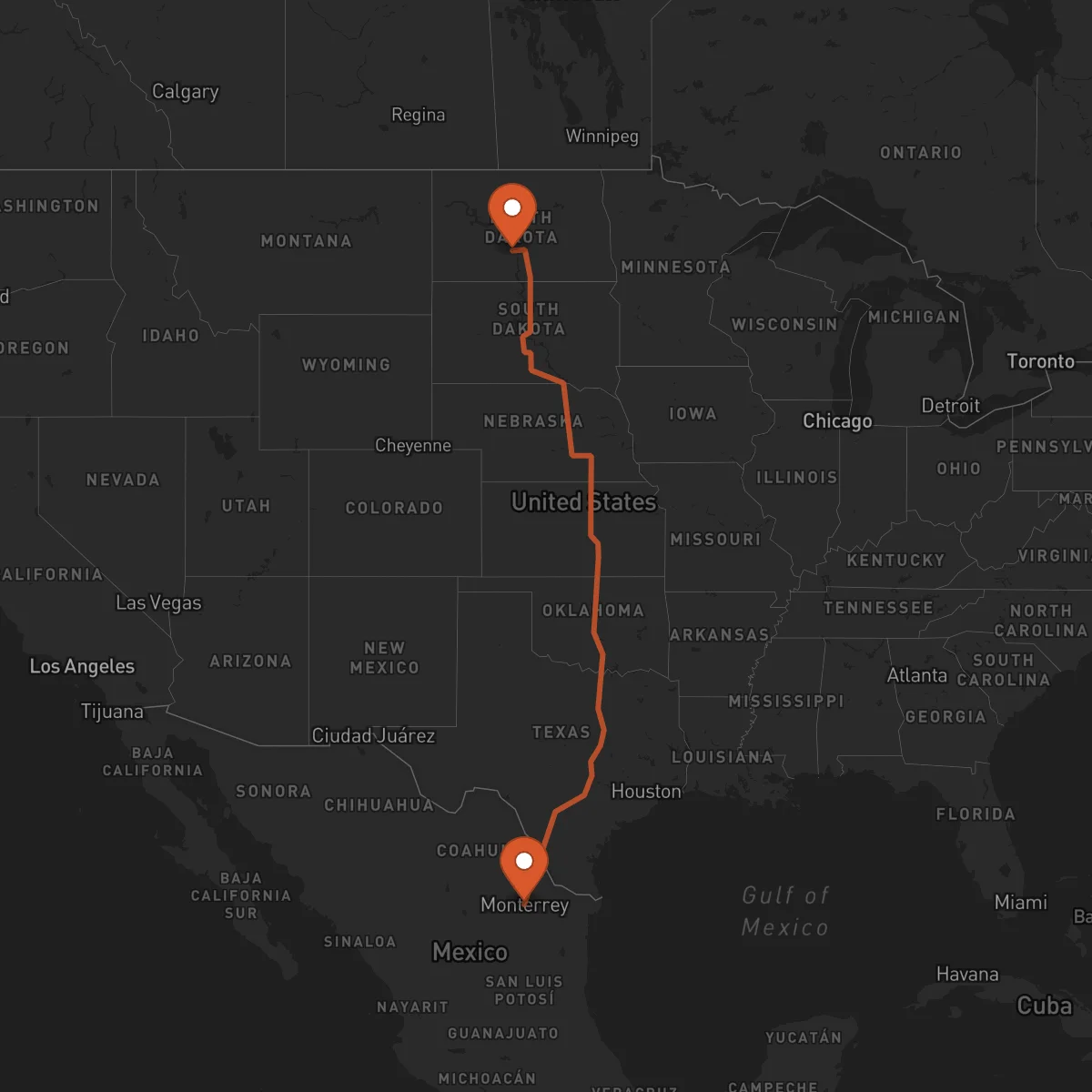
Bismarck to Monterrey
Monterrey → BismarckFTL freight transportation service between Bismarck and Monterrey. Reliable logistics solutions for your business.
Route Description
Everything you need to know about the corridor Bismarck - Monterrey
The logistics corridor between Bismarck, North Dakota, and Monterrey, Nuevo León, represents a vital cross-border connection between the United States and Mexico. This route spans approximately 2,349 kilometers and facilitates the movement of goods between the industrial heartland of the Midwest and the manufacturing powerhouse of northeastern Mexico. The corridor traverses diverse landscapes and crosses multiple state lines, requiring expert coordination and comprehensive knowledge of cross-border regulations.
The economic significance of this corridor is substantial, connecting North Dakota's agricultural and energy sectors with Monterrey's advanced manufacturing and industrial base. North Dakota contributes agricultural products, machinery, and energy-related equipment, while Monterrey serves as a major destination for industrial components, automotive parts, and manufacturing supplies. The route supports industries including agriculture, energy, automotive manufacturing, and electronics, making it a crucial artery for North American trade.
Transportation along this corridor primarily utilizes major highways including I-94, I-29, and I-35, connecting through key border crossings. The route requires careful planning for customs clearance and compliance with both US and Mexican regulations. Control Terrestre provides comprehensive cross-border logistics solutions, managing all aspects of the journey from origin to destination. Our expertise in navigating customs procedures, combined with our strategic partnerships with certified carriers, ensures seamless transportation across this important trade corridor.
Services for this Route
Available services for the corridor Bismarck - Monterrey
 Origin
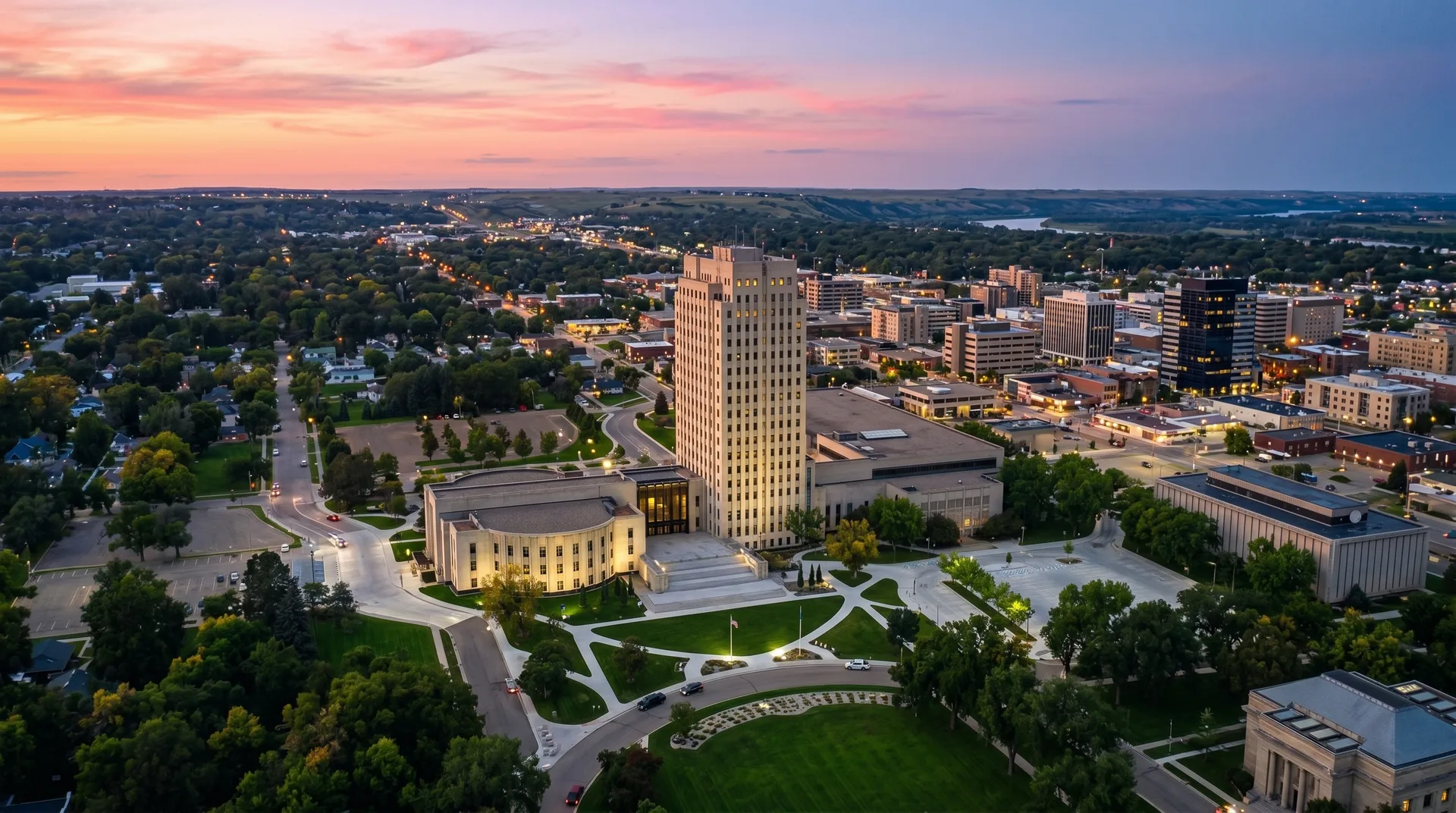
Bismarck
Bismarck, the capital city of North Dakota, serves as a strategic logistics hub in the northern Great Plains region. Located along the Missouri River, Bismarck benefits from its position as a transportation nexus connecting major agricultural and energy-producing areas of the Midwest. The city's economy is anchored by government services, healthcare, retail, and energy sectors, with growing importance in agricultural technology and food processing industries.
The transportation infrastructure in Bismarck includes access to major highways such as I-94, providing east-west connectivity across the northern United States. The city is served by Bismarck Municipal Airport and has rail connections through BNSF Railway, facilitating multimodal transportation options. The region's logistics capabilities are enhanced by its proximity to major agricultural production areas and energy extraction sites, making it an ideal origin point for freight shipments destined for Mexican markets.
 Destination
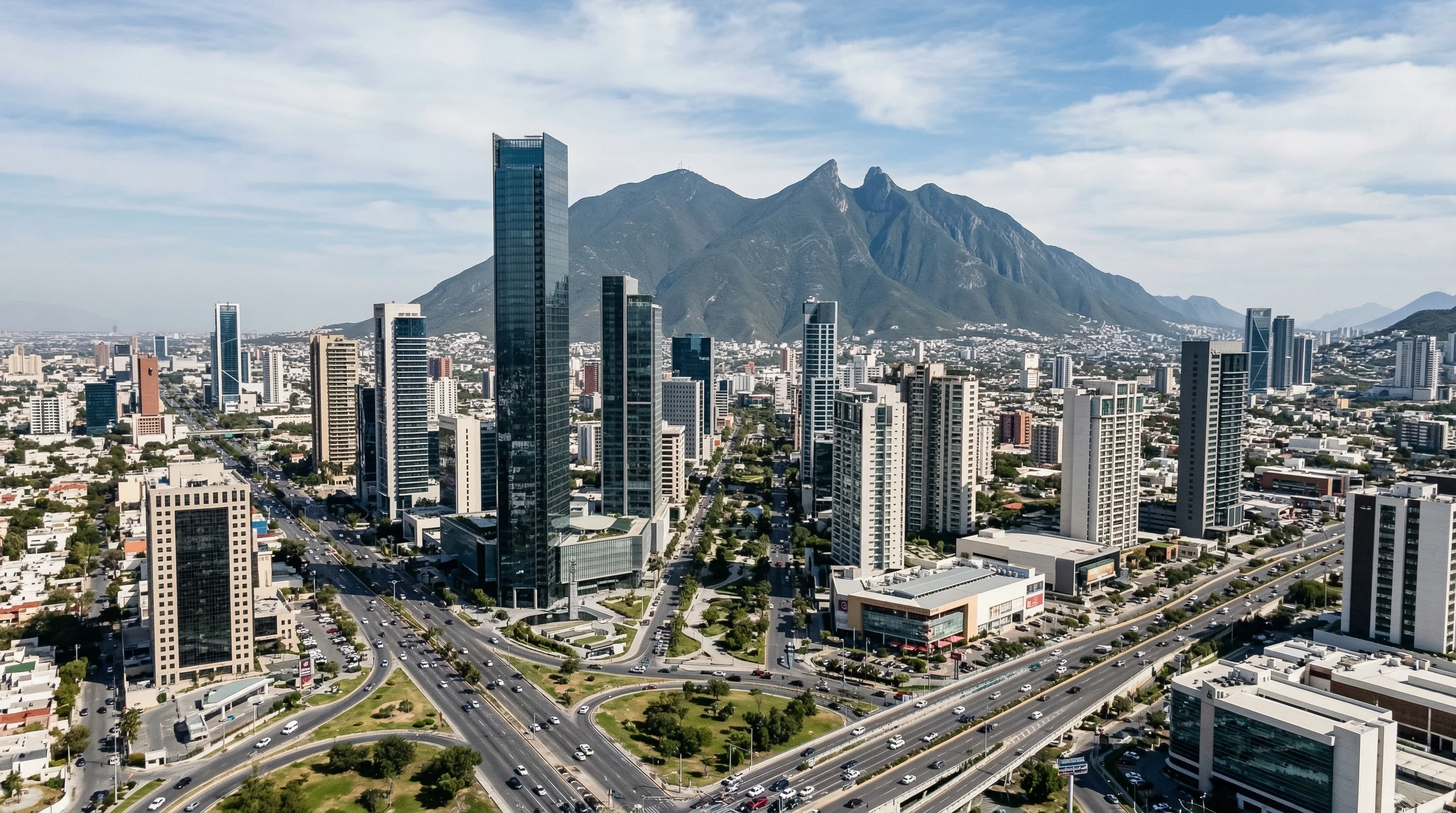
Monterrey
Monterrey stands as one of Mexico's most important industrial and economic centers, serving as the capital of Nuevo León and the heart of the country's northeastern industrial corridor. The city and surrounding metropolitan area form a major manufacturing hub, particularly strong in automotive, aerospace, electronics, and steel production. Monterrey's strategic location near the US-Mexico border and its sophisticated industrial infrastructure make it a critical destination for cross-border freight movements.
The transportation infrastructure in Monterrey is highly developed, featuring modern highways connecting to major US border crossings, an international airport, and extensive rail networks. The city is a key node in Mexico's logistics network, with multiple industrial parks and manufacturing facilities requiring reliable freight transportation services. Monterrey's economic strength and its role as a gateway to central and southern Mexican markets make it an essential destination for freight shipments from the northern United States.










