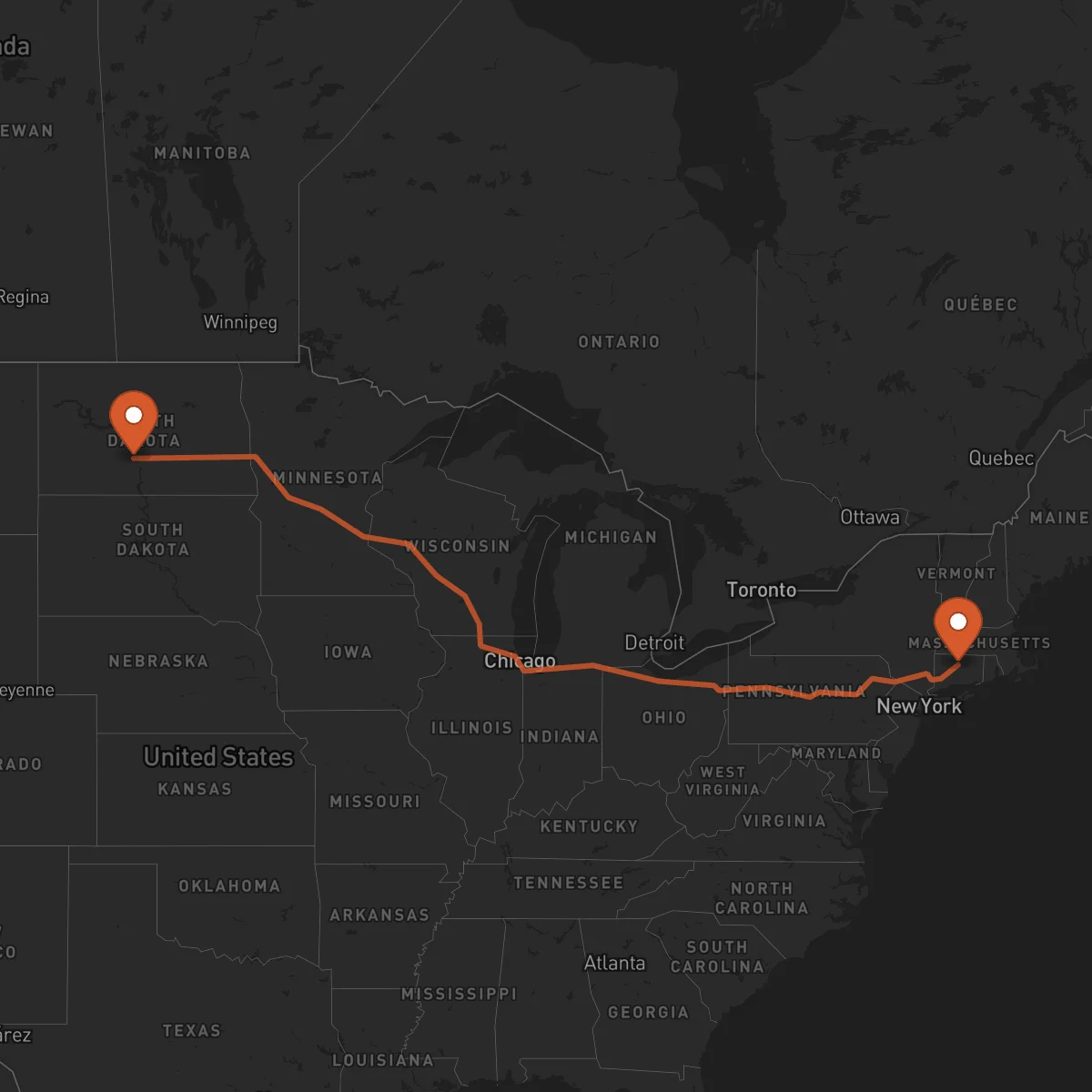
Bismarck to Hartford
Hartford → BismarckFTL freight transportation service between Bismarck and Hartford. Reliable logistics solutions for your business.
Route Description
Everything you need to know about the corridor Bismarck - Hartford
The Bismarck to Hartford corridor connects the industrial heart of North Dakota with the financial and insurance hub of Connecticut, spanning approximately 2,294 kilometers across the American Midwest and Northeast. This vital domestic route traverses key states including Minnesota, Wisconsin, Illinois, Indiana, Ohio, Pennsylvania, and New York, providing essential freight connectivity between the Great Plains and the Atlantic seaboard. The corridor serves as a critical link for goods moving between the energy-rich regions of the Midwest and the densely populated Northeast corridor.
The economic significance of this route cannot be overstated, as it facilitates the movement of diverse cargo types between complementary regional economies. From Bismarck's strong energy and agricultural sectors to Hartford's prominence in insurance, financial services, and advanced manufacturing, this corridor enables the seamless flow of raw materials, finished goods, and specialized equipment. The route passes through major metropolitan areas including Minneapolis, Chicago, Cleveland, and Albany, creating opportunities for efficient distribution and last-mile delivery.
Control Terrestre provides comprehensive full truckload (FTL) services along this corridor, leveraging our network of certified transportation providers to ensure reliable, timely delivery. Our expertise in managing long-haul domestic routes means we can handle everything from standard freight to specialized cargo, including hazardous materials and oversized loads. With strategic partnerships and real-time tracking capabilities, we optimize transit times and maintain the highest standards of safety and compliance throughout the journey.
Services for this Route
Available services for the corridor Bismarck - Hartford
 Origin
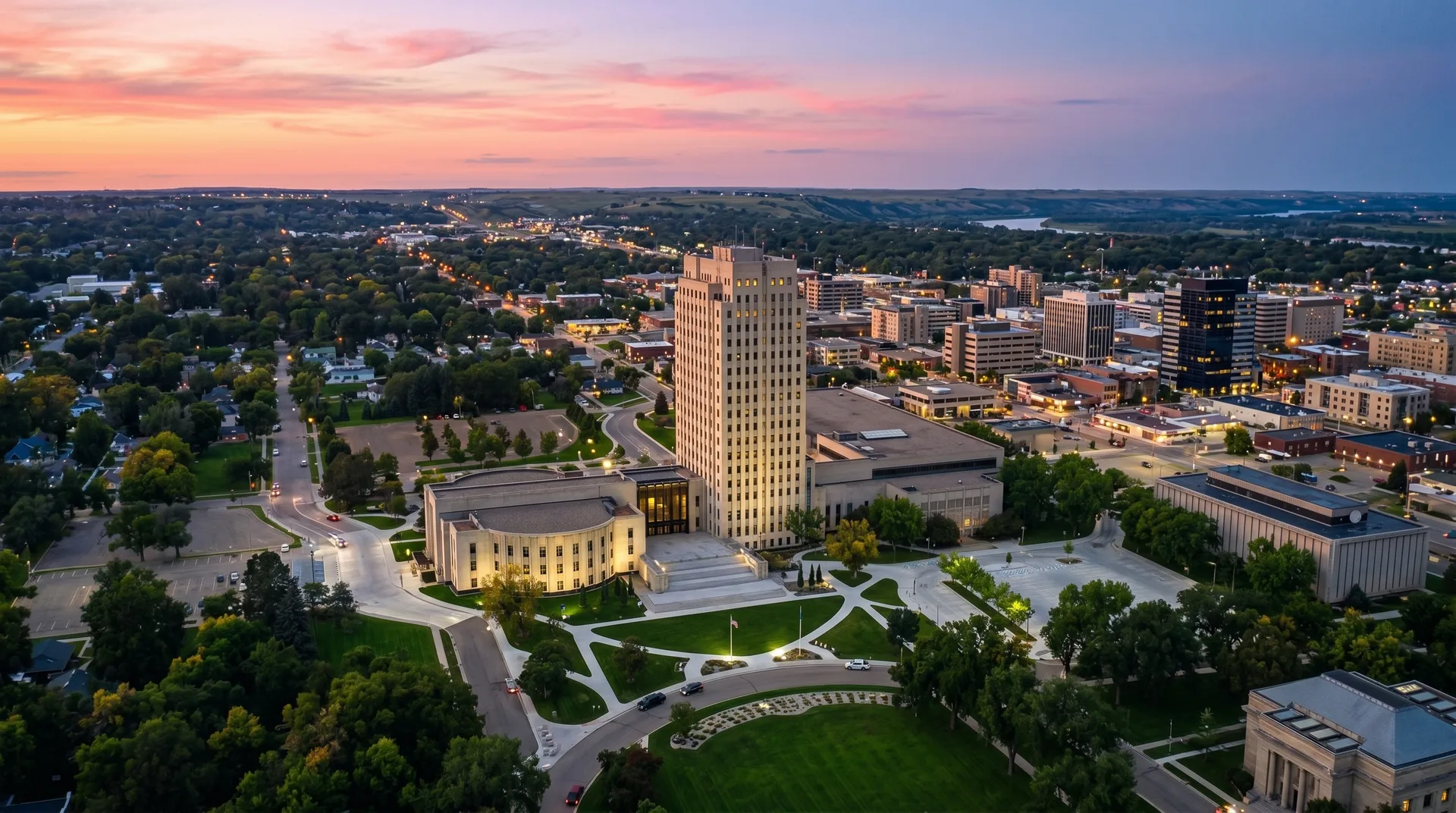
Bismarck
Bismarck, the capital city of North Dakota, serves as a strategic logistics hub in the Upper Midwest, positioned along the Missouri River and at the intersection of major transportation routes. The city's location provides excellent access to both east-west and north-south freight corridors, making it an ideal origin point for shipments heading to the East Coast. Bismarck's economy is anchored by energy production, agriculture, healthcare, and government services, creating a diverse industrial base that generates consistent freight volume.
The city benefits from excellent transportation infrastructure, including Interstate 94 running east-west and U.S. Highway 83 providing north-south connectivity. Bismarck Municipal Airport and the BNSF Railway network complement the road transportation system, offering multimodal shipping options. The region's strong agricultural sector produces grain, soybeans, and other commodities, while the nearby Bakken oil fields generate significant energy-related freight, creating a steady flow of goods requiring reliable transportation services.
 Destination
Hartford
Hartford, Connecticut, stands as a premier logistics destination in the Northeast, strategically positioned within the Boston-New York-Washington megalopolis. Known as the "Insurance Capital of the World," Hartford's economy extends far beyond financial services to include advanced manufacturing, healthcare, education, and technology sectors. The city's proximity to major East Coast markets and its location along the Connecticut River create significant advantages for freight distribution and industrial operations.
The region boasts sophisticated transportation infrastructure, including Interstate 91 running north-south and Interstate 84 east-west, providing direct access to Boston, New York City, and other major metropolitan areas. Bradley International Airport, located nearby in Windsor Locks, offers air freight capabilities, while the Connecticut River historically served as a vital commercial waterway. Hartford's dense population and concentration of corporate headquarters generate substantial demand for both inbound raw materials and outbound finished goods, making it a crucial endpoint for freight originating from across the country.










