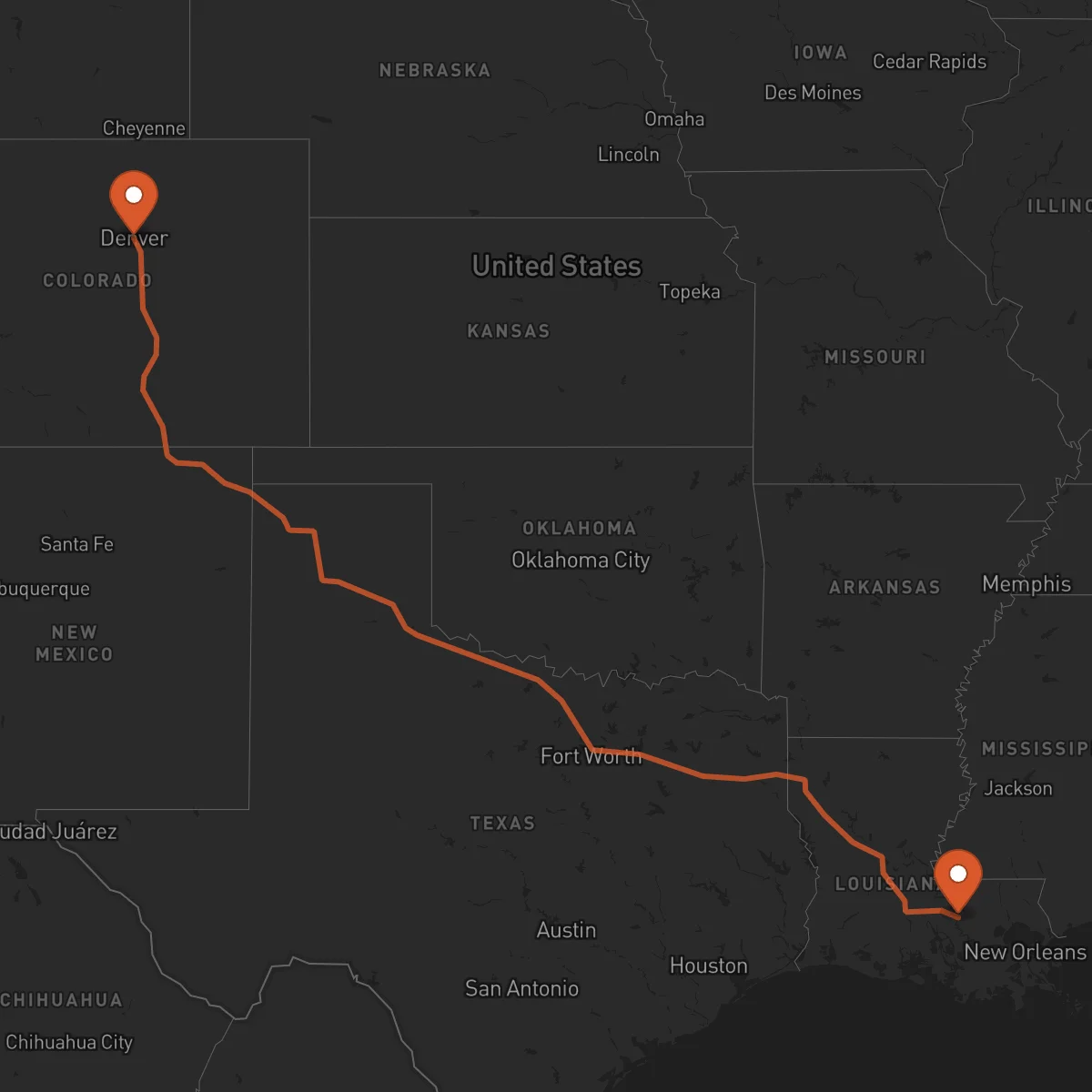
Baton Rouge to Denver
Denver → Baton RougeFTL freight transportation service between Baton Rouge and Denver. Reliable logistics solutions for your business.
Route Description
Everything you need to know about the corridor Baton Rouge - Denver
The corridor connecting Baton Rouge, Louisiana, to Denver, Colorado, represents a vital freight transportation route spanning approximately 1,622 kilometers across the heart of the United States. This domestic corridor links the industrial South with the Rocky Mountain region, facilitating the movement of goods between two economically significant areas. The route traverses multiple states, crossing diverse terrains and connecting major economic hubs along the way.
The Baton Rouge-Denver corridor serves as a critical artery for numerous industries, including petrochemical manufacturing, agriculture, energy production, and manufacturing. Baton Rouge, situated along the Mississippi River, is a major petrochemical and refining center, while Denver serves as a key distribution point for the Mountain West region. This route enables companies to transport raw materials, finished products, and specialized equipment between these industrial powerhouses.
Control Terrestre facilitates seamless operations along this corridor through our network of certified transportation providers. Our strategic alliances ensure reliable full truckload (FTL) service, handling everything from standard freight to specialized cargo such as hazardous materials and oversized loads. With our C-TPAT and other industry certifications, we provide secure, compliant transportation that meets the stringent requirements of cross-state freight movement.
Services for this Route
Available services for the corridor Baton Rouge - Denver
 Origin
Baton Rouge
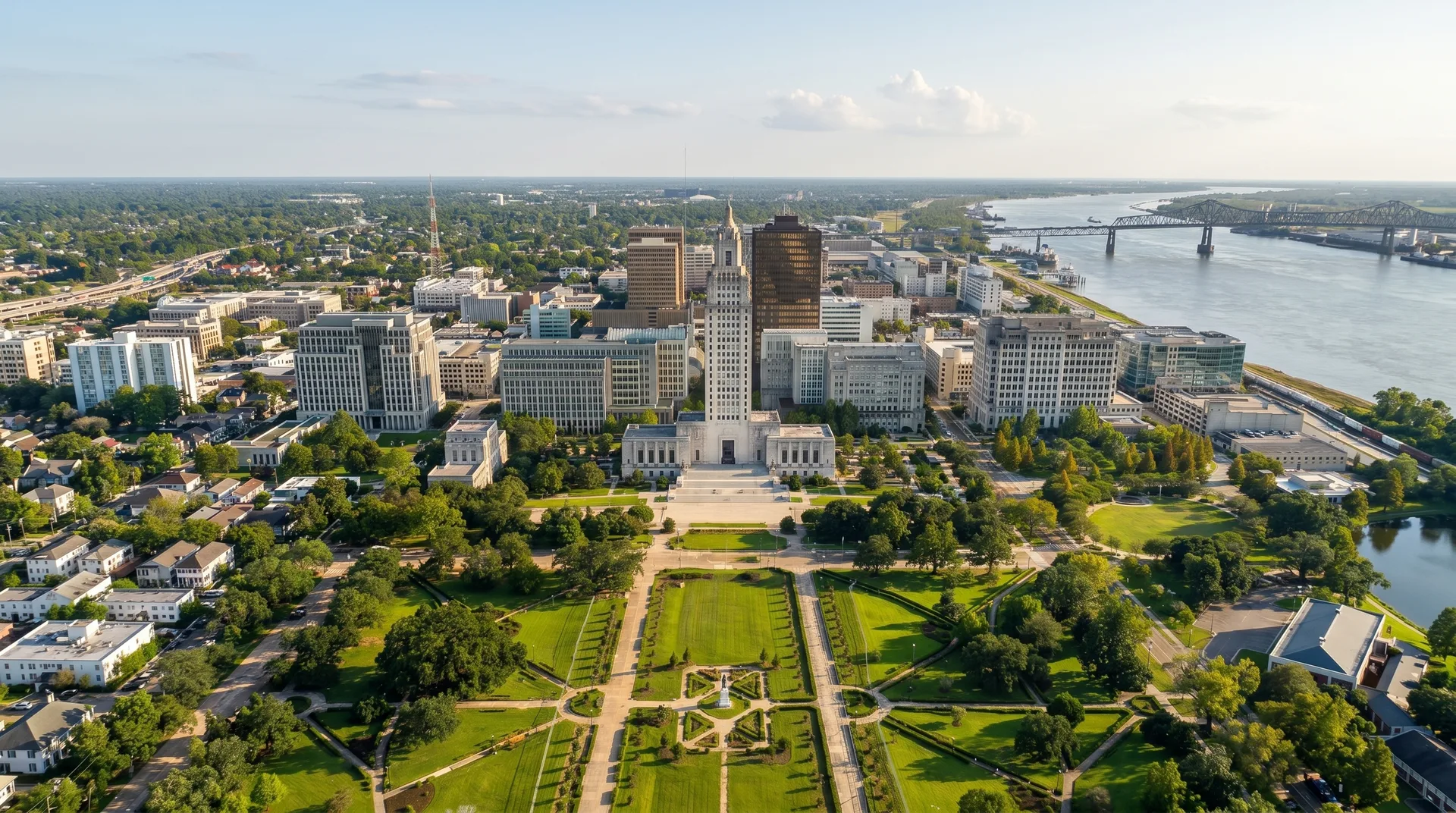
Baton Rouge, Louisiana, stands as a strategic logistics hub in the southern United States, positioned along the Mississippi River with direct access to major transportation networks. The city's location provides seamless connectivity to the Gulf of Mexico via the Mississippi River and to the broader interstate highway system through I-10 and I-12. Baton Rouge's infrastructure includes the Port of Greater Baton Rouge, one of the nation's largest inland ports, and the Baton Rouge Metropolitan Airport, supporting both domestic and international freight movement.
The economic landscape of Baton Rouge is dominated by the petrochemical industry, with numerous refineries and chemical plants operating in the area. The city also hosts significant agricultural processing facilities, manufacturing operations, and growing technology sectors. This industrial diversity creates substantial freight transportation demand, particularly for specialized equipment and hazardous materials that require certified carriers with appropriate safety protocols.
 Destination
Denver
Denver, Colorado, serves as a crucial logistics gateway to the Rocky Mountain region, offering unique advantages for freight distribution. Situated at the intersection of I-25 and I-70, Denver provides direct highway access to major markets in the western United States. The city's elevation and central location make it an ideal distribution point for companies serving the Mountain West, with Denver International Airport providing extensive air cargo capabilities and the Denver Union Station supporting rail freight operations.
The Denver metropolitan area has evolved into a diverse economic center, with strong presence in aerospace, telecommunications, healthcare, and technology industries. The region's proximity to energy resources, including oil, natural gas, and renewable energy projects, creates significant freight transportation needs. Denver's strategic position also makes it a key hub for e-commerce distribution, with numerous fulfillment centers located in the surrounding areas to serve the western United States market.










