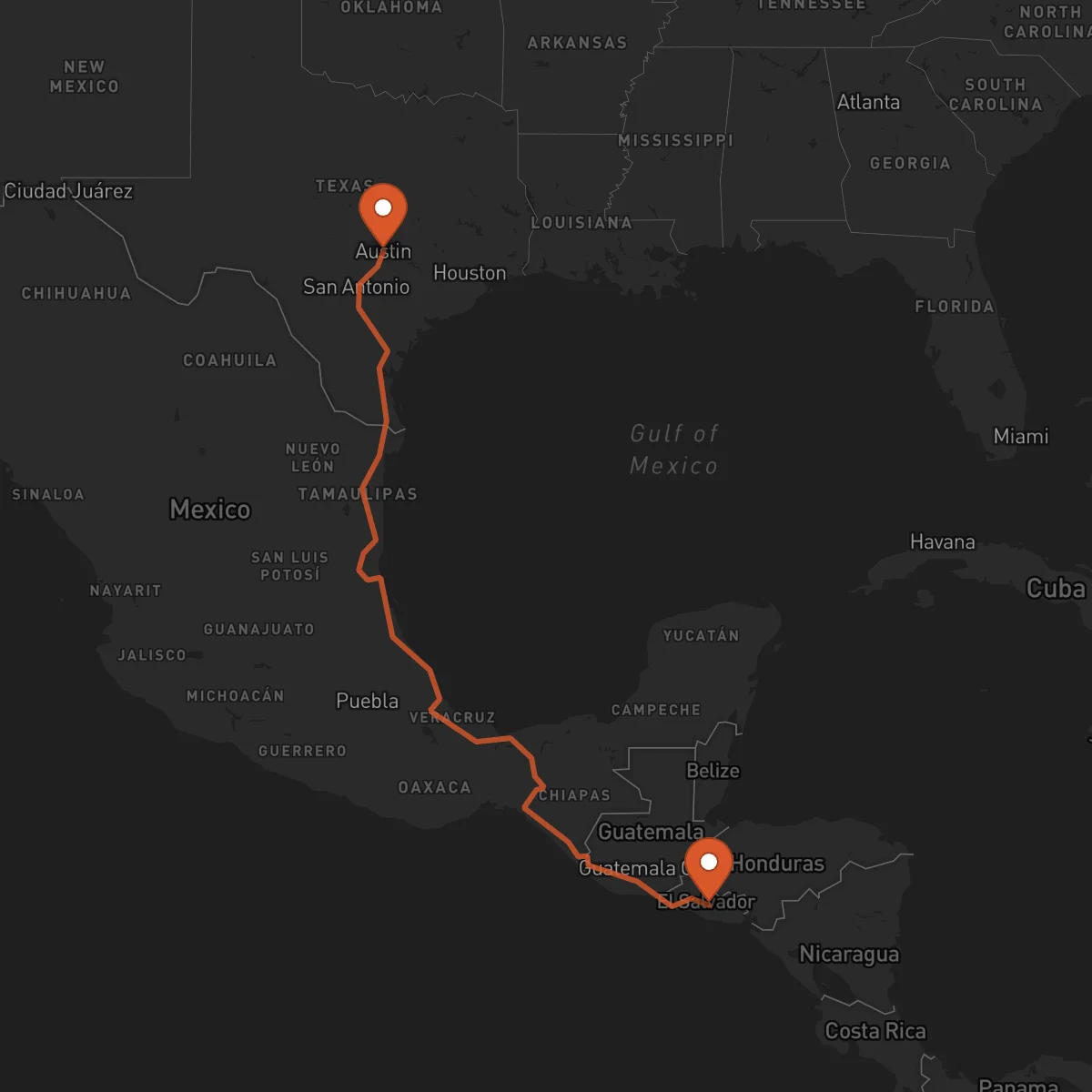
Austin to San Vicente
San Vicente → AustinFTL freight transportation service between Austin and San Vicente. Reliable logistics solutions for your business.
Route Description
Everything you need to know about the corridor Austin - San Vicente
The logistics corridor between Austin, Texas, and San Vicente, El Salvador, represents a vital trade route connecting the industrial heartland of the United States with Central America's growing markets. This cross-border corridor spans approximately 2,065 kilometers and facilitates the movement of diverse cargo types, from manufacturing components to finished goods, supporting the integrated supply chains between North and Central America.
The corridor traverses a complex network of transportation infrastructure, including major highways such as Interstate 35 from Austin through Mexico, connecting to the Pan-American Highway system that extends into Central America. Key border crossings at Laredo/Nuevo Laredo and other strategic points require specialized knowledge of customs procedures, documentation requirements, and regulatory compliance for both USMCA (United States-Mexico-Canada Agreement) and CAFTA-DR (Central America Free Trade Agreement) frameworks.
Control Terrestre's expertise in managing this corridor ensures seamless operations through our certified transportation partners who maintain C-TPAT, FAST, and BASC certifications. Our dedicated FTL services provide the reliability and security that manufacturers, distributors, and retailers demand when shipping time-sensitive or high-value cargo across international borders. We coordinate every aspect of the journey, from origin pickup in Austin's industrial zones to final delivery in San Vicente, maintaining consistent communication and real-time tracking throughout the entire transit.
Services for this Route
Available services for the corridor Austin - San Vicente
 Origin
Austin
Austin, Texas serves as a strategic logistics hub in the southern United States, offering excellent connectivity through multiple transportation modes. The city's location along Interstate 35 provides direct access to major markets in both the northern and southern United States, while Austin-Bergstrom International Airport supports air freight operations. The region's robust infrastructure includes extensive warehousing and distribution facilities, particularly in the surrounding industrial parks that accommodate the technology, manufacturing, and automotive sectors that dominate the local economy.
The Austin metropolitan area has experienced significant industrial growth, with companies in semiconductor manufacturing, aerospace, and advanced technology establishing major operations. This industrial base creates substantial freight movement, particularly for just-in-time manufacturing components and finished products requiring reliable transportation to international markets. The city's pro-business environment and skilled workforce continue to attract companies that depend on efficient logistics solutions to maintain competitive supply chains.
 Destination
San Vicente
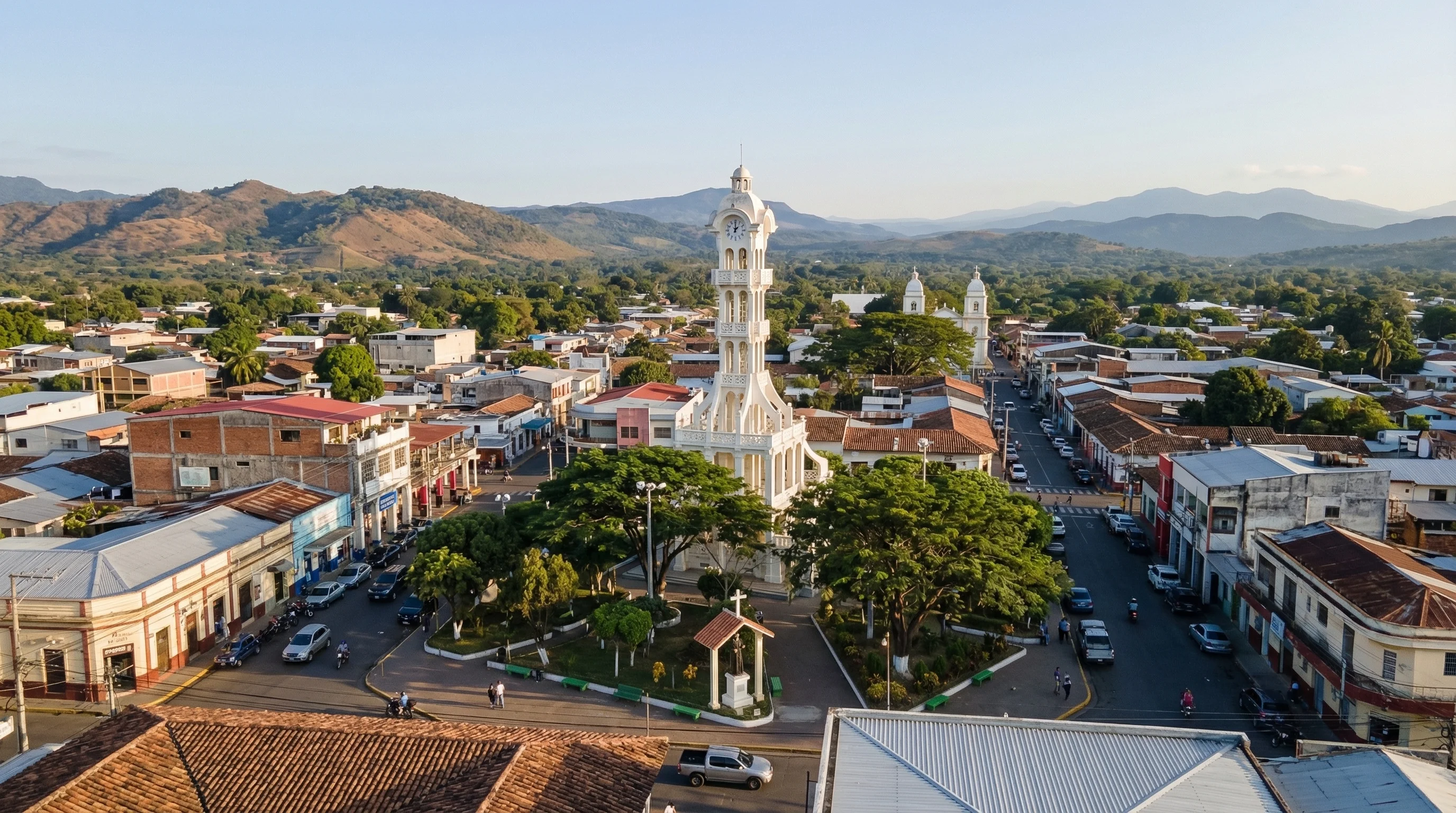
San Vicente, El Salvador, while smaller than the capital city of San Salvador, plays an important role in the country's logistics network due to its strategic central location. The region benefits from improving transportation infrastructure, including access to the CA-2 Pan-American Highway and connections to the Port of Acajutla, one of El Salvador's primary maritime gateways. This positioning makes San Vicente an increasingly viable destination for freight distribution throughout El Salvador and neighboring Central American countries.
The local economy in San Vicente and surrounding areas includes agricultural production, light manufacturing, and growing retail sectors that depend on reliable import of goods from North America. The region's developing industrial parks and distribution centers are attracting businesses that require consistent freight service for inventory management and customer fulfillment. Control Terrestre's services to San Vicente support these economic activities by providing the dedicated transportation capacity needed for businesses to maintain efficient operations and meet customer demands.










