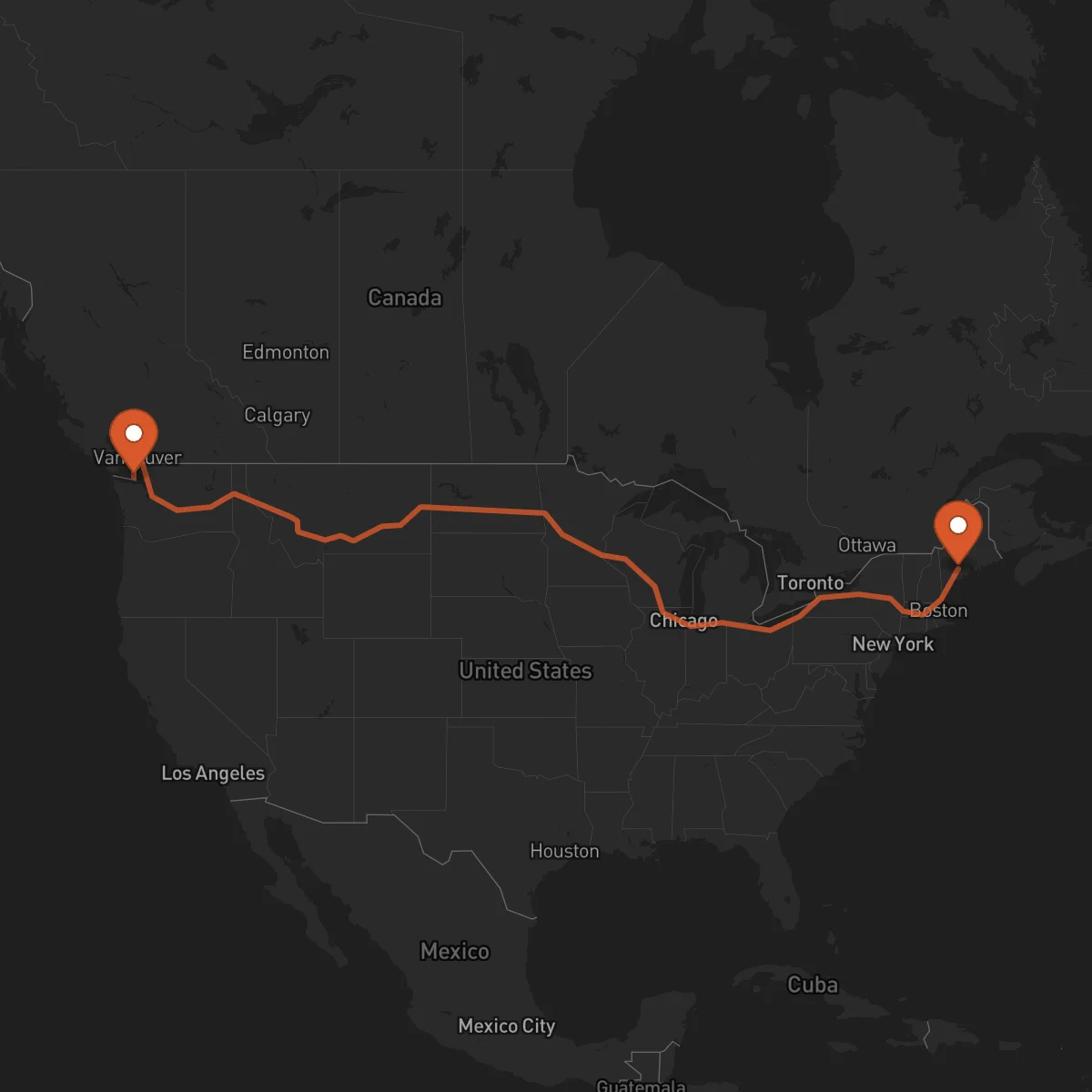
Augusta to Victoria
Victoria → AugustaFTL freight transportation service between Augusta and Victoria. Reliable logistics solutions for your business.
Route Description
Everything you need to know about the corridor Augusta - Victoria
The logistics corridor connecting Augusta, Maine, to Victoria, British Columbia, represents a vital cross-border transportation route spanning approximately 4,053 kilometers across the United States and Canada. This extensive corridor traverses diverse landscapes and connects the northeastern United States with the Pacific Northwest, serving as a critical link for trade between these regions. The route primarily follows major interstate highways through the United States before crossing into Canada, typically utilizing border crossings such as those in the Great Lakes region or Pacific Northwest, depending on the specific logistics requirements and seasonal considerations.
The economic significance of this corridor is substantial, facilitating the movement of goods between the industrial and manufacturing centers of the northeastern United States and the growing markets of western Canada. This route serves numerous industries including automotive parts, technology equipment, agricultural products, and general manufacturing goods. The corridor benefits from well-developed transportation infrastructure, including modern highways, intermodal facilities, and established customs procedures that streamline cross-border operations.
Control Terrestre specializes in managing the complexities of this extensive cross-border corridor, offering comprehensive FTL services that ensure efficient and reliable transportation. Our expertise in handling cross-border documentation, customs clearance, and regulatory compliance helps clients navigate the logistical challenges of moving freight across international borders. We provide dedicated support throughout the journey, ensuring that shipments maintain their integrity and arrive on schedule despite the considerable distance involved.
Services for this Route
Available services for the corridor Augusta - Victoria
 Origin
Augusta
Augusta, Maine, serves as a strategic starting point for logistics operations in the northeastern United States. Located in the heart of New England, Augusta benefits from its proximity to major transportation networks including Interstate 95, which provides direct access to key markets along the eastern seaboard. The city's location offers excellent connectivity to Boston, Montreal, and other major economic centers within a day's drive. Augusta's economy is supported by government services, healthcare, and education sectors, while its surrounding region features strong manufacturing and technology industries that generate significant freight volumes.
The transportation infrastructure in Augusta includes well-maintained highways, rail connections, and access to Portland International Jetport for air freight when needed. The city's position along major freight corridors makes it an ideal origin point for cross-country and cross-border shipments. Local warehousing and distribution facilities provide additional support for logistics operations, enabling efficient consolidation and preparation of freight for long-haul transportation to destinations across North America.
 Destination
Victoria
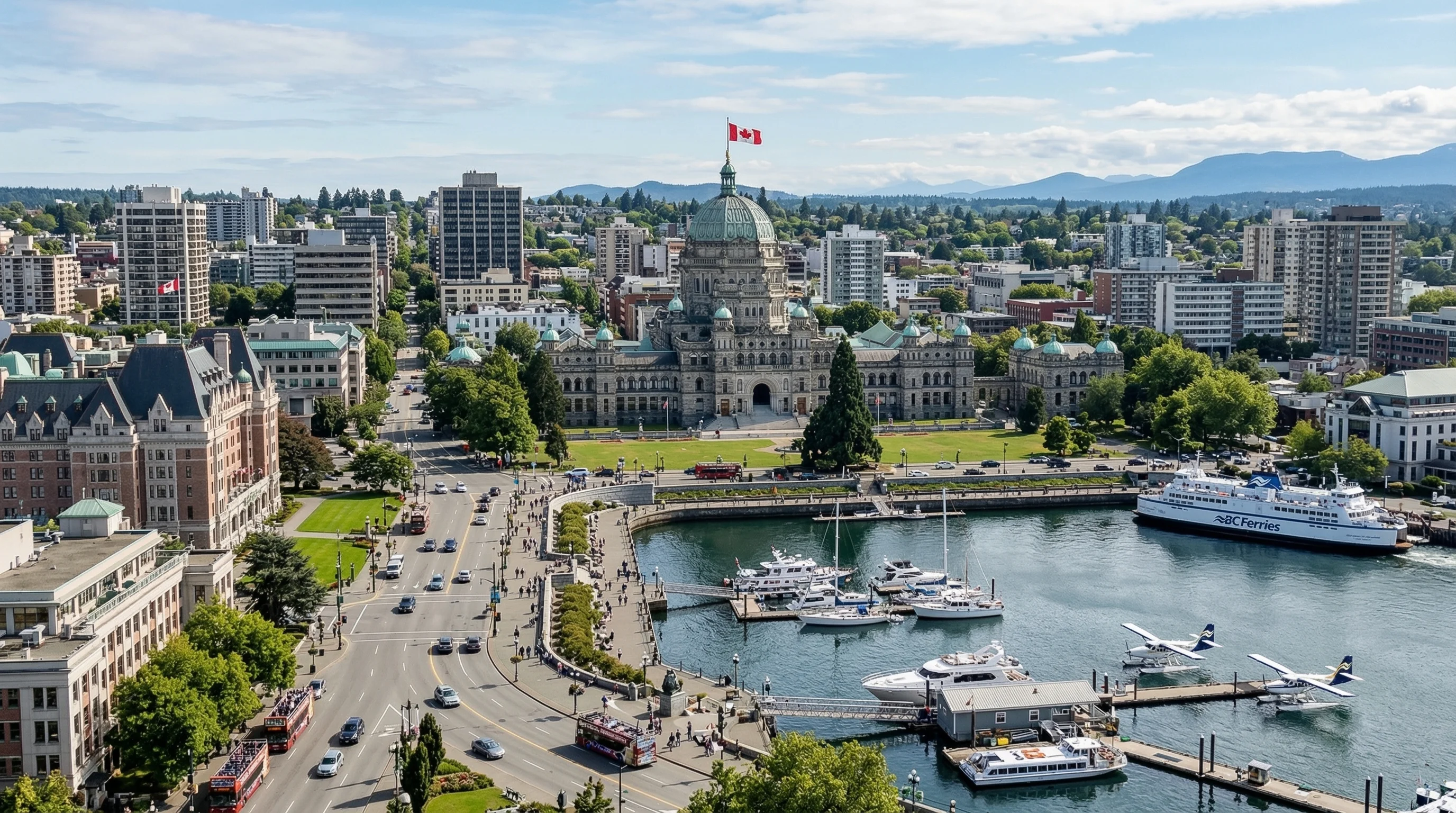
Victoria, British Columbia, represents a strategic endpoint for logistics operations on Canada's west coast. Located on Vancouver Island, Victoria serves as a gateway to the broader Pacific Northwest region and provides access to major ports and transportation hubs. While the city itself is primarily known for government services, tourism, and technology sectors, its location offers excellent connectivity to mainland British Columbia and the United States via ferry services and air transportation. The surrounding Vancouver Island region features strong agricultural, forestry, and manufacturing industries that contribute to freight movement through this corridor.
The transportation infrastructure supporting Victoria includes the BC Ferries system connecting the island to mainland ports, as well as Vancouver International Airport for air cargo operations. The city's port facilities handle various types of freight, and its road network provides reliable access to major transportation corridors leading to other parts of Canada and the United States. Victoria's strategic position makes it an important endpoint for cross-border freight movements, particularly for goods destined for Vancouver Island or requiring distribution throughout British Columbia's coastal regions.










