Augusta to Edmonton
Edmonton → AugustaFTL freight transportation service between Augusta and Edmonton. Reliable logistics solutions for your business.
Route Description
Everything you need to know about the corridor Augusta - Edmonton
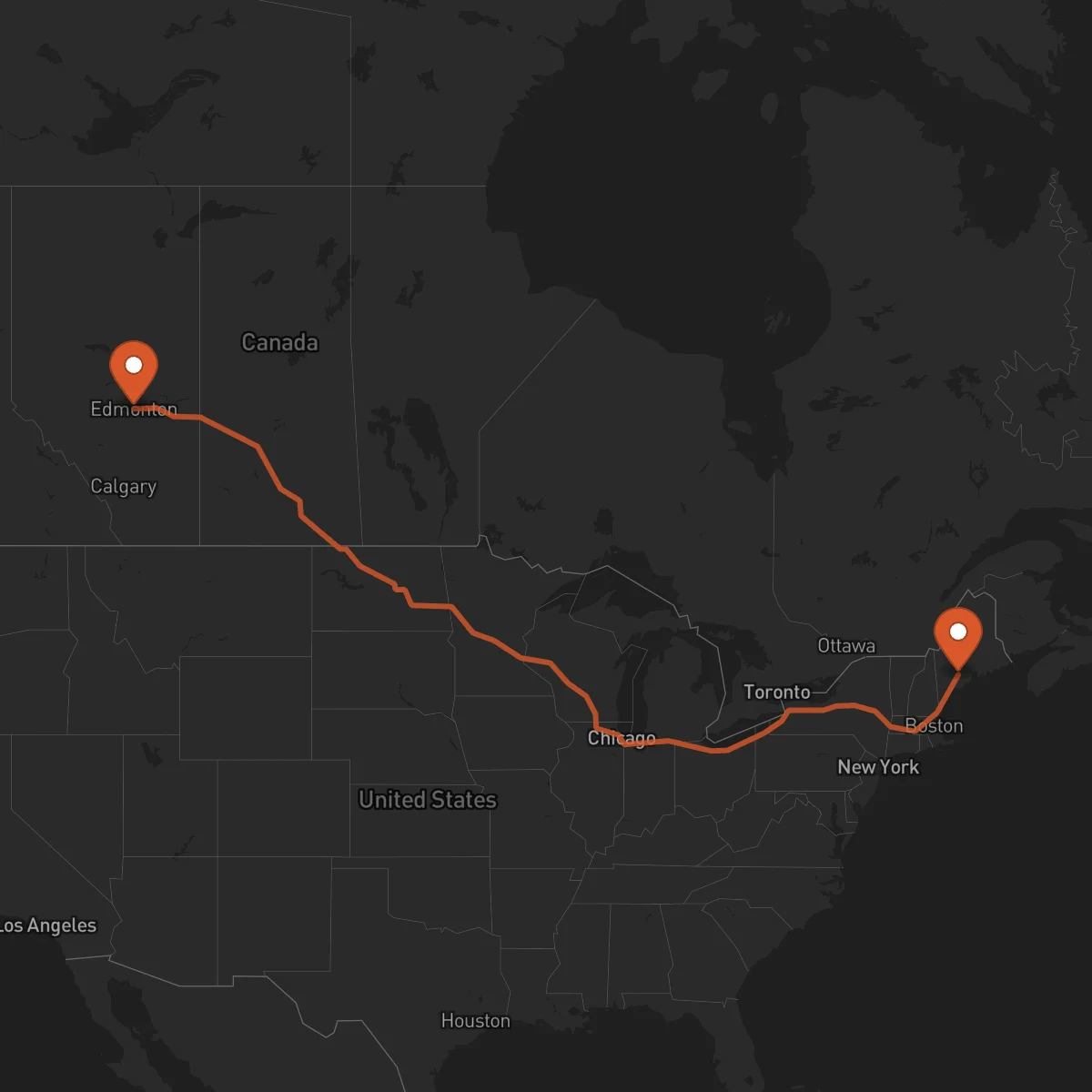
The Augusta to Edmonton corridor represents a critical cross-border freight route connecting the northeastern United States with western Canada. This 3,296 km transportation artery links Maine's Atlantic port access with Alberta's energy and industrial heartland, traversing diverse geographic regions and crossing the international border at multiple points. The corridor serves as a vital supply chain link for industries requiring reliable freight movement between these economic regions.
The economic significance of this route extends beyond simple point-to-point transportation. Augusta serves as a strategic gateway for goods entering or exiting the northeastern U.S. market, while Edmonton functions as a major distribution hub for western Canada's resource-based economy. This corridor facilitates trade in sectors including energy equipment, agricultural products, manufactured goods, and industrial machinery, supporting the integrated North American supply chain.
Key transportation infrastructure along this route includes Interstate 95 from Augusta to the Canadian border, followed by the Trans-Canada Highway system through New Brunswick, Quebec, and Ontario, before connecting to western Canadian highways. Major border crossings such as Calais-St. Stephen and other points provide customs clearance facilities. Control Terrestre's expertise in cross-border operations ensures seamless freight movement through these checkpoints, handling all necessary documentation and compliance requirements for full truckload shipments between Augusta and Edmonton.
Services for this Route
Available services for the corridor Augusta - Edmonton
 Origin
Augusta
Augusta, Maine serves as a strategic logistics hub for the northeastern United States, offering access to major Atlantic ports and extensive inland distribution networks. The city's location provides efficient connections to Boston, Montreal, and other key markets, making it an ideal origin point for freight destined for Canadian markets. Augusta's transportation infrastructure includes Interstate 95, rail connections, and proximity to Portland International Jetport, supporting multimodal freight operations.
The region's economy centers on healthcare, government services, and manufacturing, with growing logistics and distribution sectors. Augusta's industrial base includes paper products, technology components, and agricultural goods, creating consistent freight volumes moving through the area. The city's position as Maine's capital also generates substantial government-related freight traffic, while its proximity to Canada makes it a natural gateway for cross-border shipments to western provinces.
 Destination
Edmonton, Alberta stands as a major logistics and distribution center in western Canada, strategically positioned for freight movement throughout the prairie provinces and into the northern territories. The city's location at the crossroads of major highways, including the Yellowhead and Queen Elizabeth II, provides excellent connectivity for freight distribution. Edmonton International Airport and extensive rail networks complement the road infrastructure, supporting comprehensive freight handling capabilities.
The Edmonton region's economy is heavily influenced by the energy sector, with oil sands operations creating substantial freight demand for specialized equipment and supplies. Manufacturing, agriculture, and retail distribution also contribute significantly to freight volumes. The city's role as Alberta's capital generates government freight traffic, while its position as a gateway to northern Canada creates unique logistics opportunities. Edmonton's diverse industrial base and strategic location make it an essential destination for freight moving from the northeastern United States.










