Atlanta to Sacramento
Sacramento → AtlantaFTL freight transportation service between Atlanta and Sacramento. Reliable logistics solutions for your business.
Route Description
Everything you need to know about the corridor Atlanta - Sacramento
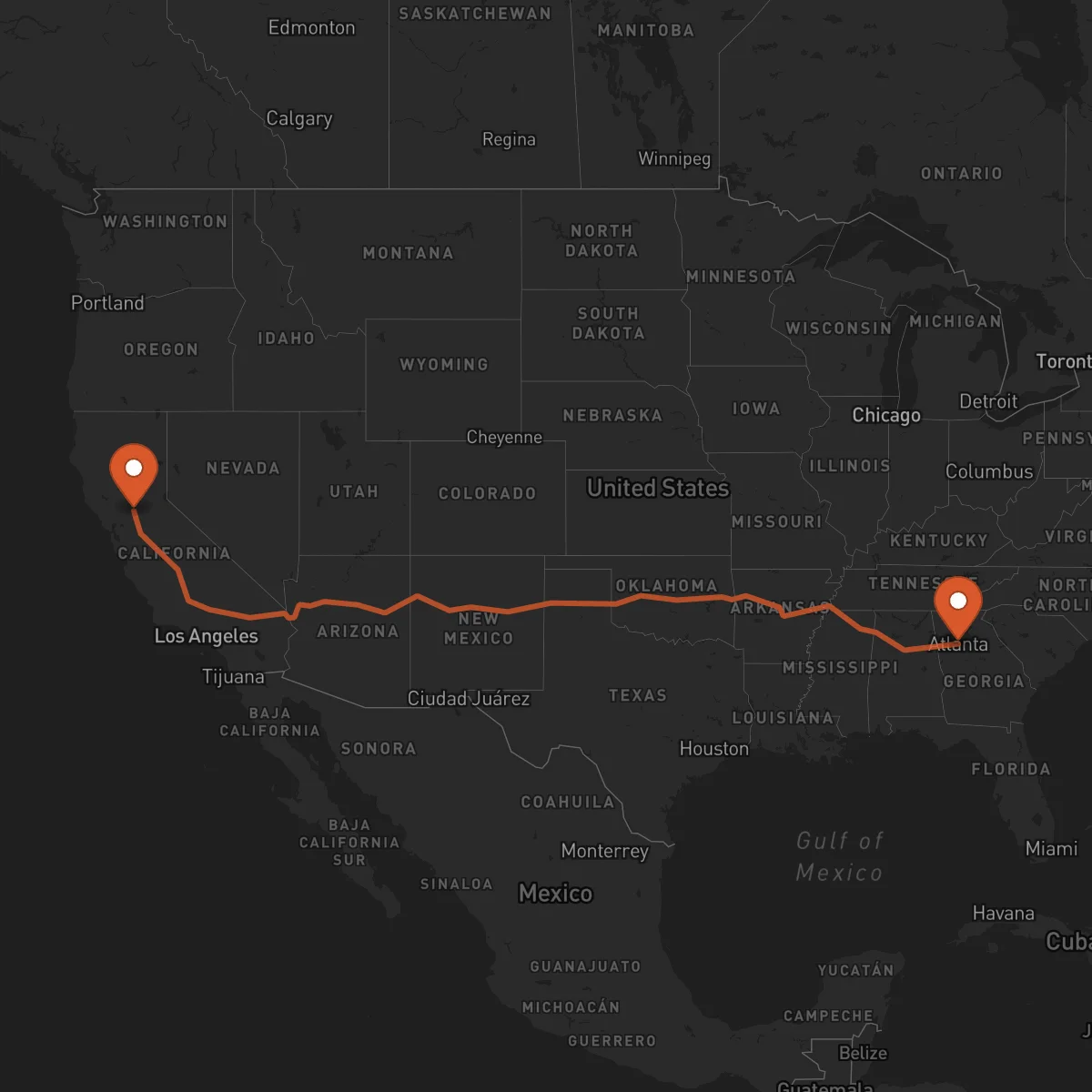
The logistics corridor connecting Atlanta, Georgia, to Sacramento, California, represents a vital transportation route across the United States, spanning approximately 3,351 kilometers. This east-west connection links the southeastern industrial hub with the West Coast's major distribution center, facilitating the movement of goods between two of America's most economically significant regions. The route traverses diverse terrain and crosses multiple states, making it a crucial artery for domestic freight transportation and supply chain operations.
The economic importance of this corridor cannot be overstated. Atlanta serves as a major logistics and transportation hub for the Southeast, while Sacramento functions as a key distribution point for the West Coast and gateway to Asian markets. This connection supports numerous industries including automotive, technology, agriculture, manufacturing, and retail. The corridor enables businesses to maintain efficient supply chains, moving everything from raw materials to finished products between these strategic economic centers.
Control Terrestre specializes in providing reliable full truckload (FTL) transportation services along this corridor, ensuring your cargo moves efficiently and securely across the country. Our network of certified carriers and strategic partnerships allows us to offer consistent, high-quality service regardless of the route's complexity or distance. We understand the unique challenges of cross-country transportation and provide solutions that keep your supply chain moving smoothly from origin to destination.
Services for this Route
Available services for the corridor Atlanta - Sacramento
 Origin
Atlanta
Atlanta, Georgia, stands as a premier logistics hub in the southeastern United States, offering exceptional connectivity and infrastructure for freight transportation. The city's strategic location provides access to major interstate highways including I-20, I-75, and I-85, creating a robust network for both regional and cross-country shipping. Atlanta's Hartsfield-Jackson International Airport, one of the world's busiest cargo airports, complements its ground transportation capabilities, making it a true multimodal logistics center.
The region's economy is diverse and dynamic, with strong presence in sectors such as automotive manufacturing, aerospace, technology, healthcare, and food processing. Atlanta's proximity to major ports like Savannah and Charleston enhances its role in international trade, while its central location in the Southeast makes it an ideal starting point for freight distribution across the eastern United States. The city's extensive warehousing and distribution facilities, combined with its skilled logistics workforce, create an optimal environment for efficient freight operations.
 Destination
Sacramento
Sacramento, California, serves as a crucial logistics gateway for the West Coast, strategically positioned to connect with major markets throughout Northern California and beyond. The city's location at the intersection of Interstate 5 and Interstate 80 provides excellent access to both north-south and east-west freight corridors. Sacramento's proximity to major ports like Oakland and its connection to the broader San Francisco Bay Area logistics network make it an essential distribution point for goods moving throughout the western United States.
The Sacramento region's economy is anchored by government services, agriculture, healthcare, and technology sectors. The area is particularly significant for food processing and distribution, given California's agricultural prominence. Sacramento's transportation infrastructure includes the Port of Sacramento, extensive rail connections, and proximity to major air cargo facilities. The region's commitment to sustainable logistics and green transportation initiatives aligns with modern supply chain requirements, making it an attractive destination for companies seeking efficient and environmentally responsible freight solutions.










