Atlanta to Raleigh
Raleigh → AtlantaFTL freight transportation service between Atlanta and Raleigh. Reliable logistics solutions for your business.
Route Description
Everything you need to know about the corridor Atlanta - Raleigh
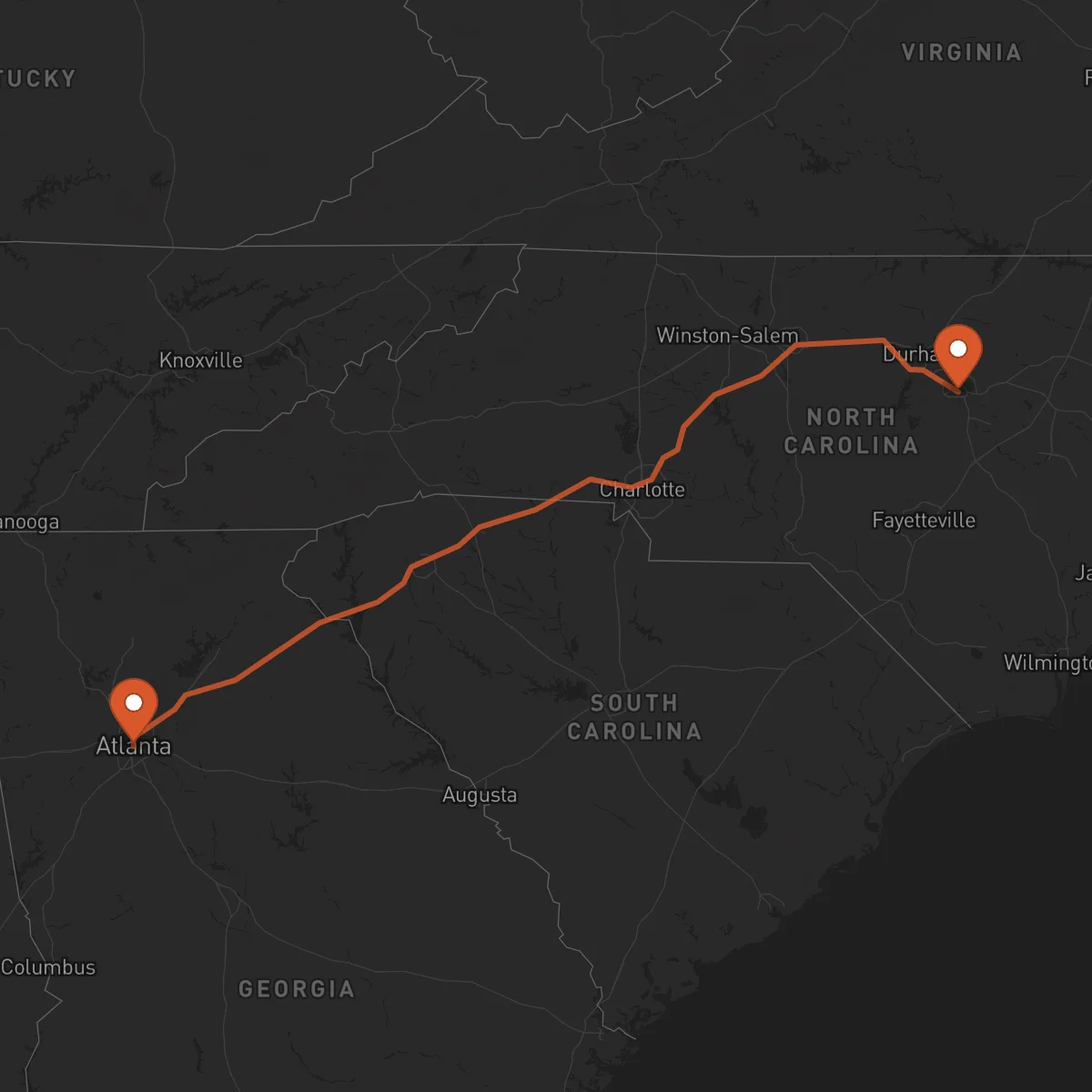
The Atlanta-Raleigh corridor represents a vital connection between two of the Southeast's most dynamic economic centers. This 572 km route links Georgia's capital with North Carolina's Research Triangle, facilitating the movement of goods between major industrial and technological hubs. The corridor serves as a crucial artery for commerce, connecting the Port of Savannah with inland markets and supporting the growing logistics needs of the southeastern United States.
The region's economic landscape is characterized by diverse industries, including advanced manufacturing, technology, pharmaceuticals, and automotive production. Atlanta's status as a major transportation hub complements Raleigh's emergence as a center for research and innovation, creating a synergistic relationship that drives demand for reliable freight transportation services. The corridor benefits from Atlanta's Hartsfield-Jackson International Airport and Raleigh-Durham International Airport, along with extensive rail networks that support intermodal operations.
Major industries utilizing this corridor include automotive parts manufacturing, pharmaceutical distribution, high-tech equipment, and consumer goods. The presence of numerous distribution centers and warehouses along the route has created a robust logistics ecosystem that requires specialized transportation solutions. Companies in the Research Triangle area rely on consistent supply chains from Atlanta's manufacturing base, while Georgia businesses depend on Raleigh's growing market for finished goods.
Control Terrestre optimizes operations on this corridor through our network of certified transportation providers and strategic partnerships. We understand the unique requirements of time-sensitive shipments between these markets, offering dedicated full truckload services that ensure your cargo moves efficiently. Our expertise in handling specialized freight, combined with real-time tracking capabilities, provides the reliability that businesses need when moving goods between Atlanta and Raleigh.
Services for this Route
Available services for the corridor Atlanta - Raleigh
 Origin
Atlanta
Atlanta stands as a premier logistics hub in the southeastern United States, offering unparalleled connectivity and infrastructure. The city's strategic location at the intersection of major interstates I-20, I-75, and I-85 creates a natural distribution point for goods moving throughout the region. Atlanta's extensive transportation network includes Hartsfield-Jackson International Airport, the world's busiest airport by passenger traffic, which also serves as a major cargo hub. The city's rail infrastructure, operated by Norfolk Southern and CSX, provides intermodal capabilities that complement our ground transportation services.
The economic landscape of Atlanta is diverse and robust, with strong representation in logistics, technology, media, and manufacturing sectors. The city hosts numerous Fortune 500 companies and serves as a regional headquarters for many national corporations. Atlanta's manufacturing base includes automotive assembly plants, food processing facilities, and advanced manufacturing operations. The presence of major distribution centers and the city's role as a gateway to the Southeast make it an ideal origin point for freight shipments to markets throughout the eastern United States.
 Destination
Raleigh
Raleigh's strategic position in North Carolina's Research Triangle creates a unique logistics environment that combines academic excellence with industrial strength. The city benefits from excellent transportation infrastructure, including proximity to major highways I-40 and I-85, which provide direct connections to Atlanta and other major markets. Raleigh-Durham International Airport offers cargo services that complement ground transportation, while the region's rail network supports intermodal freight movements.
The Raleigh area has experienced significant economic growth, driven by technology, research, and education sectors. The presence of Research Triangle Park, one of the largest research parks in the world, has attracted numerous high-tech companies and research institutions. Major industries in the region include biotechnology, pharmaceuticals, information technology, and advanced manufacturing. The area's strong educational institutions, including North Carolina State University, provide a skilled workforce that supports these industries. Raleigh's growing population and economic development have increased demand for efficient freight transportation services, particularly for time-sensitive shipments between the city and other major markets.










