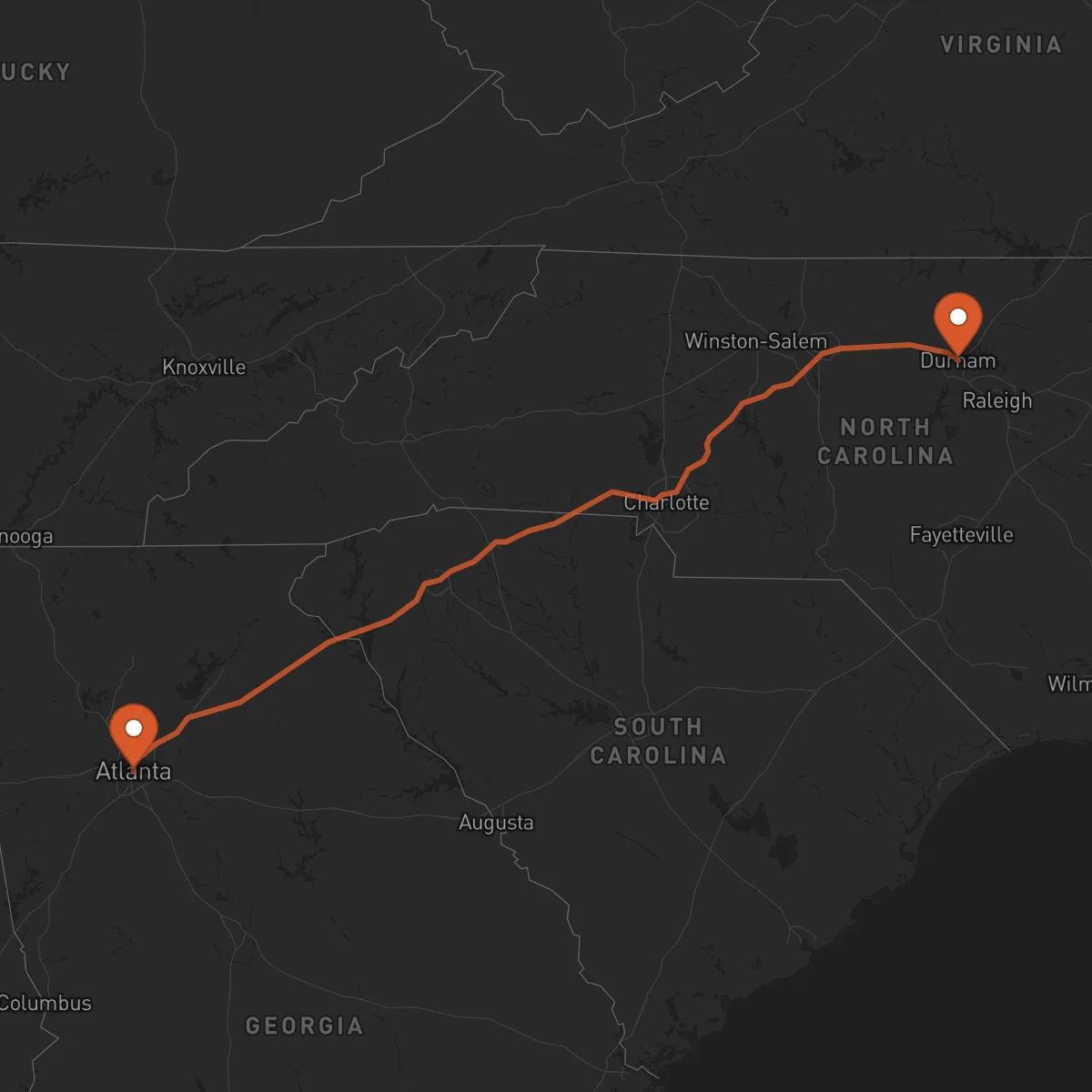
Atlanta to Durham
Durham → AtlantaFTL freight transportation service between Atlanta and Durham. Reliable logistics solutions for your business.
Route Description
Everything you need to know about the corridor Atlanta - Durham
The Atlanta to Durham corridor represents a vital logistics connection in the southeastern United States, spanning approximately 559 kilometers through Georgia and North Carolina. This strategic route links two major economic centers, facilitating the efficient movement of goods between Atlanta's bustling metropolitan area and Durham's thriving Research Triangle. The corridor's importance stems from its role in supporting the region's diverse industrial base, from Atlanta's status as a transportation and logistics hub to Durham's prominence in technology, healthcare, and education sectors.
The economic significance of this corridor is underscored by the presence of major industries along the route, including automotive manufacturing, aerospace, biotechnology, and advanced manufacturing. Atlanta's Hartsfield-Jackson International Airport, one of the world's busiest cargo facilities, and Durham's proximity to Research Triangle Park create substantial freight movement demands. The corridor benefits from excellent transportation infrastructure, primarily utilizing Interstate 85, which provides direct, high-capacity connectivity between these key markets.
Control Terrestre specializes in optimizing freight transportation along this critical corridor, offering dedicated full truckload (FTL) services that ensure timely and secure cargo delivery. Our extensive network of certified carriers and strategic partnerships enable us to provide reliable, efficient transportation solutions tailored to the specific needs of businesses operating between Atlanta and Durham. Whether handling time-sensitive shipments, specialized cargo, or high-volume freight, we leverage our expertise and technology to streamline logistics operations and enhance supply chain performance.
Services for this Route
Available services for the corridor Atlanta - Durham
 Origin
Atlanta
Atlanta, Georgia stands as a premier logistics hub in the southeastern United States, offering unparalleled strategic advantages for freight transportation. The city's location at the intersection of major interstate highways (I-20, I-75, and I-85) creates a central distribution point for the region. Atlanta's Hartsfield-Jackson International Airport, the world's busiest by passenger traffic, also ranks among the top cargo airports, providing exceptional air freight connectivity. The city's robust infrastructure includes multiple rail terminals and a deepwater port access via the Port of Savannah, making it a multimodal transportation powerhouse.
The economic landscape of Atlanta is diverse and dynamic, with strong representation in sectors such as information technology, telecommunications, financial services, and logistics. The presence of major corporations, including Delta Air Lines, Coca-Cola, and numerous Fortune 500 companies, generates substantial freight volume. Atlanta's growing automotive industry, with plants operated by Kia and Porsche, along with its thriving film and entertainment sector, further contributes to the demand for reliable freight transportation services.
 Destination
Durham
Durham, North Carolina, located in the heart of the Research Triangle, serves as a strategic logistics destination with unique advantages for freight transportation. The city's proximity to Research Triangle Park, one of the largest research and development centers in the United States, creates a high demand for specialized freight services. Durham's location within the Triangle region, which includes Raleigh and Chapel Hill, provides access to a highly educated workforce and a concentration of innovative companies in biotechnology, pharmaceuticals, and information technology.
The transportation infrastructure in Durham and the surrounding area is well-developed, with easy access to major highways including I-85 and I-40. The Raleigh-Durham International Airport offers robust cargo services, complementing the ground transportation network. Durham's economic base, anchored by healthcare, education, and technology sectors, generates diverse freight needs, from medical supplies and equipment to high-tech components and research materials. The city's growing population and expanding urban development continue to drive demand for efficient logistics solutions.










