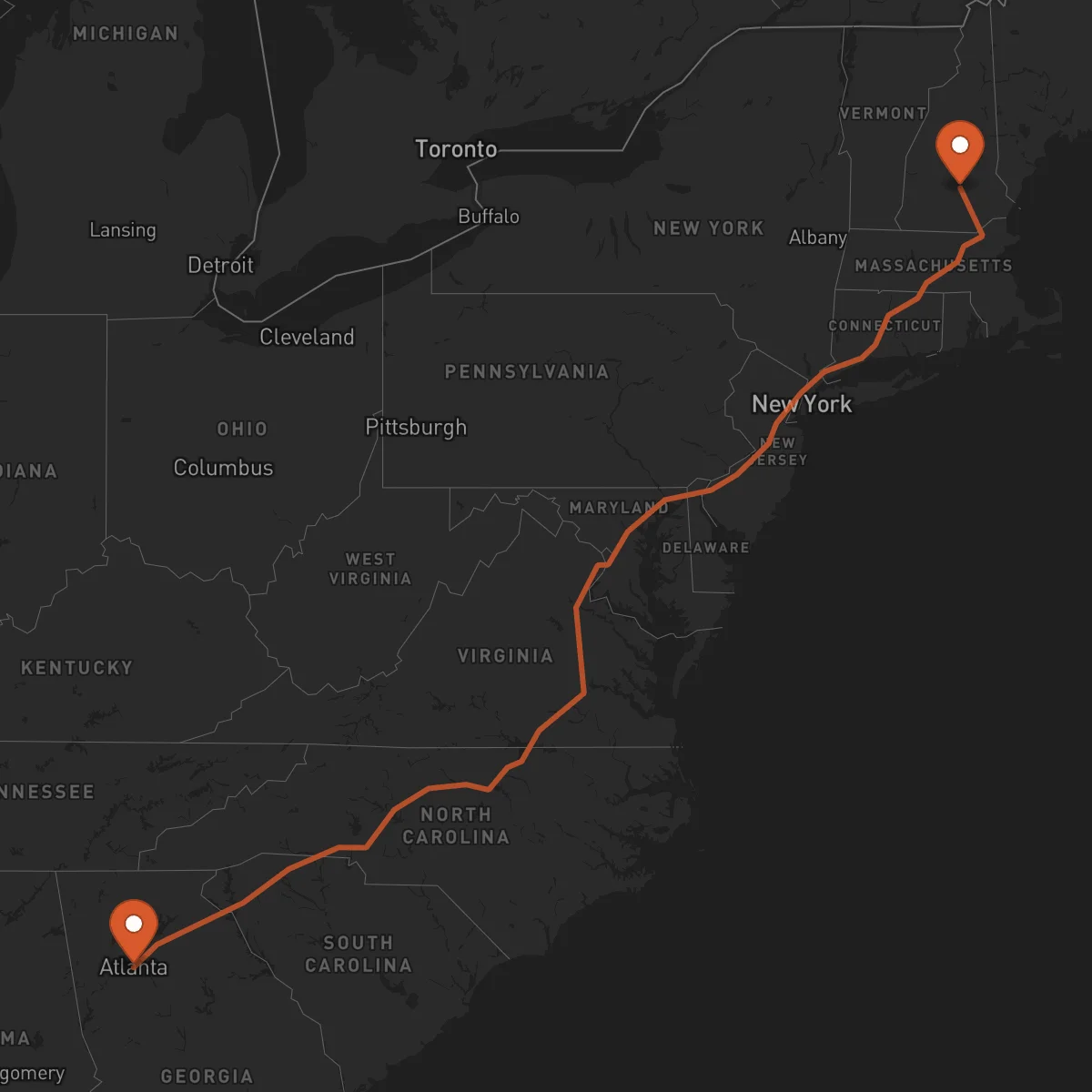
Atlanta to Concord
Concord → AtlantaFTL freight transportation service between Atlanta and Concord. Reliable logistics solutions for your business.
Route Description
Everything you need to know about the corridor Atlanta - Concord
The Atlanta to Concord corridor represents a vital freight transportation route connecting the Southeast with the Northeast of the United States. This 1,532 km journey traverses multiple states and crosses diverse economic regions, making it a strategic artery for businesses moving goods between Georgia and New Hampshire. The route passes through major metropolitan areas including Charlotte and Washington D.C., offering multiple logistical advantages for freight transportation.
The corridor serves numerous industries including automotive, manufacturing, technology, and retail. Atlanta, as a major logistics hub, provides excellent connectivity to national and international markets, while Concord benefits from its proximity to Boston and other New England economic centers. This route is particularly valuable for companies requiring time-sensitive deliveries between the Southeast and Northeast.
Key transportation infrastructure includes major highways such as I-85, I-95, and I-93, providing multiple routing options for freight carriers. These well-maintained interstates ensure reliable transit times and efficient cargo movement. The route also offers access to numerous distribution centers, warehouses, and intermodal facilities along the way.
Control Terrestre specializes in full truckload (FTL) services along this corridor, offering dedicated transportation solutions with our certified carriers. Our C-TPAT and FAST-certified partners ensure secure and efficient cross-border-like operations, even within domestic routes. We provide real-time tracking, specialized equipment options, and experienced drivers familiar with this important North-South freight corridor.
Services for this Route
Available services for the corridor Atlanta - Concord
 Origin
Atlanta
Atlanta serves as a major logistics and transportation hub in the Southeastern United States. The city's Hartsfield-Jackson International Airport, one of the busiest in the world, combined with extensive rail networks and highway systems, makes it a strategic origin point for freight transportation. Atlanta's location provides excellent access to both coastal ports and inland markets.
The city hosts diverse industries including automotive manufacturing, technology, film production, and logistics services. Major companies like Delta Air Lines, Coca-Cola, and numerous Fortune 500 corporations maintain headquarters or significant operations in the area. The Port of Savannah, accessible via major highways, enhances Atlanta's role as a gateway for international trade.
Atlanta's transportation infrastructure includes multiple interstate highways (I-20, I-75, I-85) that converge in the city, creating a robust network for freight movement. The city also features numerous warehousing and distribution facilities, intermodal yards, and logistics centers that support efficient cargo handling and storage.
 Destination
Concord
Concord, as the capital of New Hampshire, occupies a strategic position in New England's logistics network. Located just 20 miles north of Manchester and within easy reach of Boston, Concord provides excellent access to the Northeast's dense population centers and industrial areas. The city's location offers a balance between accessibility and lower congestion compared to major metropolitan areas.
The region's economy is diverse, with strong presence in healthcare, education, government services, and manufacturing. Concord and surrounding areas benefit from New Hampshire's business-friendly environment and proximity to Boston's technology and innovation corridor. The state's lack of sales tax makes it an attractive location for distribution centers and warehouses.
Transportation infrastructure in Concord includes access to major highways such as I-93 and I-89, providing direct connections to Boston, Montreal, and other key markets. The city is served by the Manchester-Boston Regional Airport for air freight needs, while rail connections through Pan Am Railways support intermodal transportation options. The region's road network is well-maintained and capable of handling heavy freight loads efficiently.










