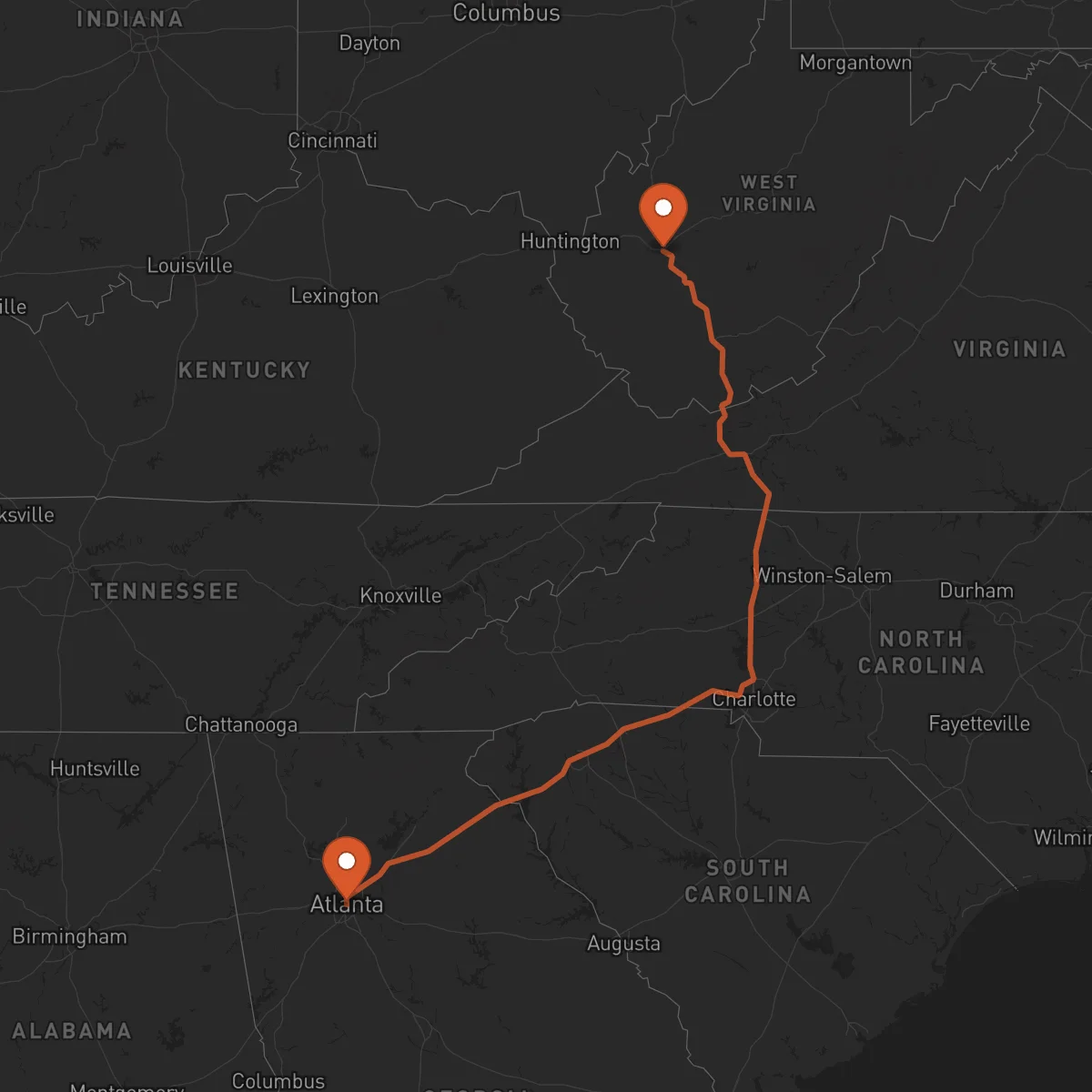
Atlanta to Charleston
Charleston → AtlantaFTL freight transportation service between Atlanta and Charleston. Reliable logistics solutions for your business.
Route Description
Everything you need to know about the corridor Atlanta - Charleston
The Atlanta to Charleston corridor represents a vital domestic logistics route connecting two key economic hubs in the southeastern United States. This 568 km corridor traverses diverse terrain and connects Georgia's largest metropolitan area with West Virginia's capital city, facilitating the movement of goods between major industrial centers. The route serves as a critical link for businesses operating across the Appalachian region and beyond, supporting the continuous flow of freight between these strategically positioned cities.
The corridor benefits from Georgia's robust logistics infrastructure and West Virginia's growing industrial sector. Atlanta, as a major transportation hub, provides access to extensive rail networks, international airports, and one of the nation's busiest ports via inland connections. Charleston, positioned along the Kanawha River and near major coal reserves, serves as a gateway to West Virginia's manufacturing and energy sectors. This complementary relationship creates substantial freight opportunities for companies operating along this route.
Primary industries utilizing this corridor include automotive manufacturing, chemical production, energy equipment, and consumer goods distribution. The route particularly serves companies moving heavy machinery, industrial components, and bulk materials between Georgia's manufacturing centers and West Virginia's industrial facilities. Additionally, the corridor supports agricultural product movement from Georgia's farms to West Virginia's markets, as well as reverse logistics for industrial operations.
Control Terrestre optimizes freight transportation along this corridor through our specialized FTL services. Our network of certified carriers provides dedicated full truckload solutions, ensuring efficient and reliable cargo movement between Atlanta and Charleston. We leverage our expertise in handling diverse freight types, from standard palletized goods to specialized industrial equipment, while maintaining the highest safety and compliance standards throughout the journey.
Services for this Route
Available services for the corridor Atlanta - Charleston
 Origin
Atlanta
Atlanta stands as a premier logistics hub in the southeastern United States, offering unparalleled strategic advantages for freight transportation. The city's location provides immediate access to major interstate highways, including I-75, I-85, and I-20, creating multiple routing options for efficient cargo movement. Atlanta's Hartsfield-Jackson International Airport, the world's busiest by passenger traffic, also serves as a major cargo hub, while the Port of Savannah's inland connections extend Atlanta's reach to global markets. The city's extensive rail network, operated by major Class I railroads, further enhances its multimodal transportation capabilities.
The metropolitan area hosts a diverse industrial base, with particular strengths in automotive manufacturing, aerospace, healthcare, and technology sectors. Major corporations maintain significant operations in Atlanta, generating substantial freight volume across various cargo types. The city's logistics infrastructure includes numerous warehousing and distribution centers, particularly in surrounding areas like Sandy Springs and Marietta, supporting just-in-time inventory management and efficient supply chain operations. Atlanta's business-friendly environment and skilled workforce continue to attract new industrial investments, further strengthening its position as a critical logistics origin point.
 Destination
Charleston
Charleston, West Virginia, serves as the state's primary commercial and industrial center, strategically positioned along the Kanawha River in the heart of the Appalachian region. The city's location provides access to both river transportation via the Kanawha River system and major highways, including I-64 and I-77, facilitating efficient freight movement throughout the region. Yeager Airport offers additional air cargo capabilities, while the nearby CSX and Norfolk Southern rail lines provide comprehensive rail freight options for businesses operating in the area.
The Charleston metropolitan area has developed a strong industrial base, particularly in chemical manufacturing, energy production, and healthcare services. The region's proximity to natural resources, including coal and natural gas reserves, has attracted numerous chemical and manufacturing companies, creating substantial freight transportation needs. Charleston's industrial parks and commercial zones support a wide range of manufacturing operations, from automotive parts to specialized industrial equipment. The city's growing healthcare sector and educational institutions also contribute to diverse freight requirements, making it a dynamic destination for logistics operations in the Appalachian region.










