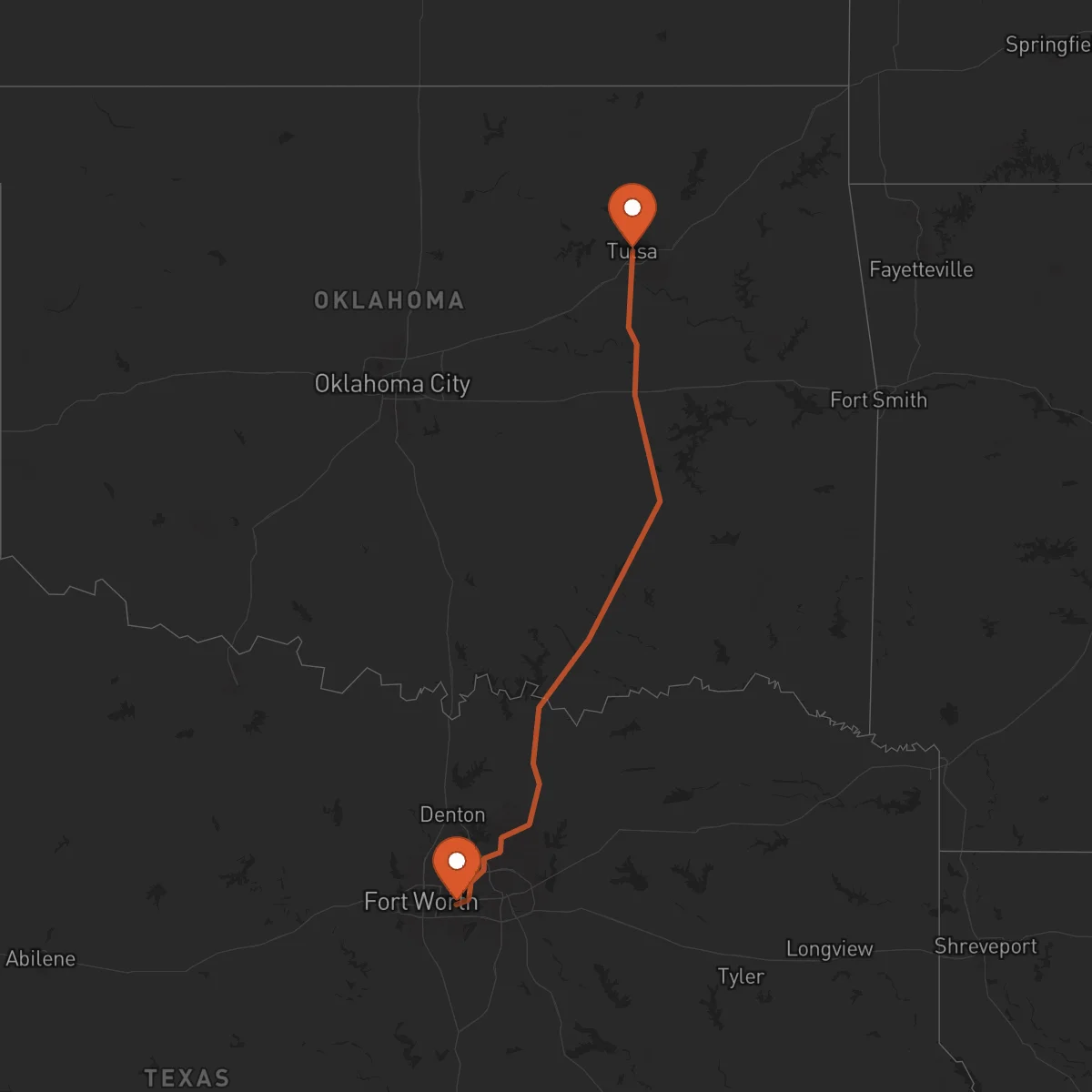
Arlington to Tulsa
Tulsa → ArlingtonFTL freight transportation service between Arlington and Tulsa. Reliable logistics solutions for your business.
Route Description
Everything you need to know about the corridor Arlington - Tulsa
The logistics corridor between Arlington, Texas, and Tulsa, Oklahoma, represents a vital domestic freight route spanning approximately 394 kilometers. This strategic connection links two dynamic economic centers in the southern United States, facilitating the efficient movement of goods across state lines. The corridor traverses diverse terrain and connects major industrial hubs, making it essential for businesses operating in both Texas and Oklahoma. With Control Terrestre's specialized FTL services, companies can leverage this route to optimize their supply chain operations and ensure timely deliveries between these key markets.
The economic significance of this corridor cannot be overstated. Arlington serves as a major logistics hub in the Dallas-Fort Worth metroplex, while Tulsa functions as an important center for energy, aerospace, and manufacturing industries in Oklahoma. The route passes through rapidly growing urban areas and established industrial zones, supporting a wide range of economic activities. This corridor particularly benefits from the robust economic growth in both states, with increasing demand for reliable freight transportation services to support expanding businesses and industries.
Several key industries rely heavily on this transportation corridor. The energy sector, particularly oil and gas operations, utilizes this route for equipment and supply transport. Manufacturing companies use it to move finished goods and raw materials between facilities. The retail and e-commerce sectors depend on this corridor for distribution of consumer products. Additionally, the automotive industry, with significant presence in both Arlington and Tulsa, requires consistent freight movement along this route for parts and vehicle transport.
The transportation infrastructure supporting this corridor is well-developed and reliable. Major highways including I-44 and US-75 provide direct connections between Arlington and Tulsa, offering multiple route options for freight carriers. These highways are known for their excellent maintenance and capacity to handle heavy freight traffic. Control Terrestre's experienced network of carriers utilizes this infrastructure efficiently, ensuring that your FTL shipments move smoothly and securely between these two important economic centers.
Services for this Route
Available services for the corridor Arlington - Tulsa
 Origin
Arlington
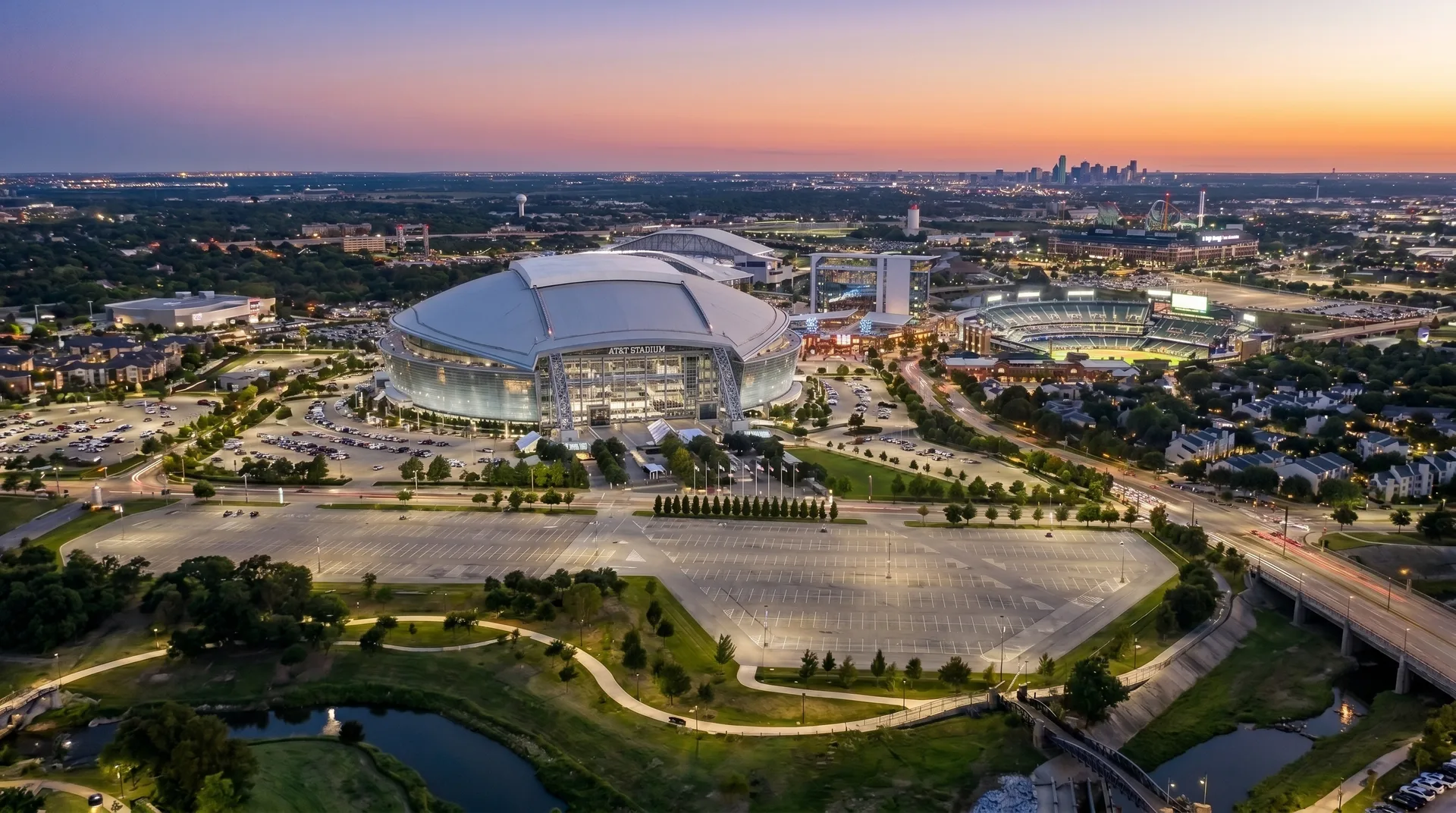
Arlington, Texas, serves as a strategic logistics hub within the Dallas-Fort Worth metroplex, one of the largest metropolitan areas in the United States. The city's location provides excellent access to major transportation networks, including interstate highways and proximity to Dallas/Fort Worth International Airport. Arlington's logistics infrastructure includes numerous warehousing facilities, distribution centers, and intermodal yards that support efficient freight operations. The city's central location in North Texas makes it an ideal origin point for shipments heading in multiple directions, including the vital corridor to Tulsa.
The economic landscape of Arlington is diverse and robust, with strong representation from several key industries. The city hosts major manufacturing facilities, particularly in the automotive sector, with General Motors operating a significant assembly plant. Arlington is also home to numerous technology companies, healthcare facilities, and educational institutions. The retail and e-commerce sectors have a strong presence, supported by the city's growing population and strategic location. Additionally, the entertainment and tourism industry contributes to the local economy, with attractions like AT&T Stadium and Six Flags Over Texas drawing millions of visitors annually.
 Destination
Tulsa
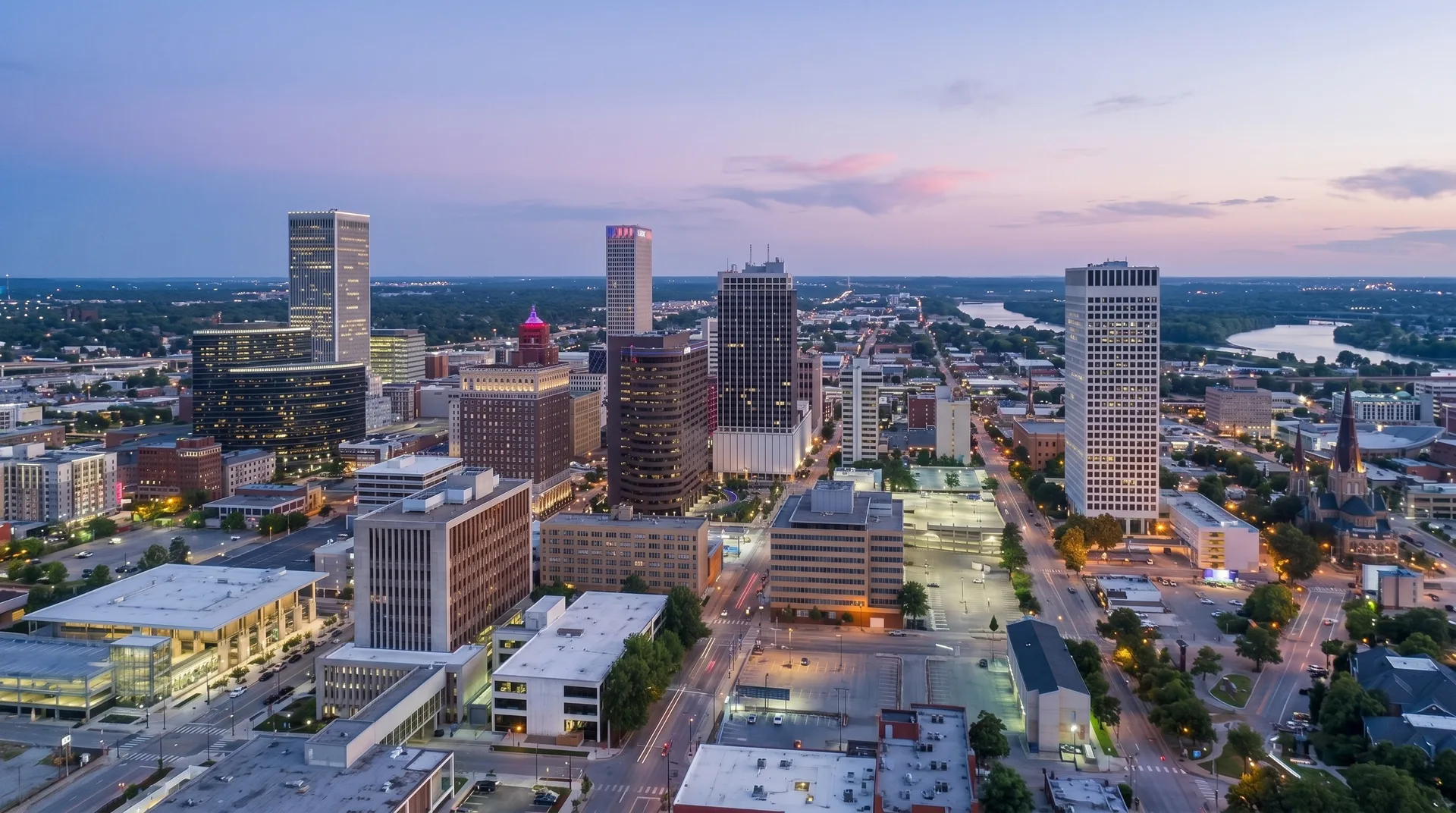
Tulsa, Oklahoma, stands as a strategic logistics center in the heart of the Midwest, offering exceptional connectivity and infrastructure for freight transportation. The city's location along major interstate highways and its proximity to rail networks make it an ideal destination for logistics operations. Tulsa's transportation infrastructure includes the Tulsa Port of Catoosa, providing access to international waterways, and multiple intermodal facilities that facilitate seamless freight movement. The city's central location in the United States makes it a natural distribution point for goods moving throughout the Midwest and beyond.
The economic profile of Tulsa is characterized by its strong energy sector, with many oil and gas companies maintaining headquarters or major operations in the city. The aerospace industry has a significant presence, with companies like American Airlines operating major maintenance facilities. Manufacturing remains a cornerstone of Tulsa's economy, with diverse production facilities ranging from machinery to food processing. The city has also developed a growing technology sector and maintains a strong healthcare industry. These varied economic activities create consistent demand for reliable freight transportation services, particularly along key corridors like the one connecting to Arlington.










